When a Pest Problem Becomes an Immediate Search
SEO for Pest Control Services helps pest control businesses reach customers who are actively looking for help with unwanted insects, rodents, termites, or other pest problems. These searches are often triggered by a specific situation rather than casual research. A homeowner may notice termites, a shop may find signs of rodents, or an office may suddenly face a cockroach problem. The customer usually wants useful information and a reliable service provider without wasting time.
This makes the customer journey different from many other local services. People may search by pest, problem, property type, or location. They may also check reviews, treatment details, safety information, and availability before contacting a company. A website that addresses these concerns clearly can become more useful at the exact moment when a customer needs professional assistance.
Build Content Around the Pest Problems Customers Actually Face
A pest control website should not depend on one general service page. Customers may search for termite control, cockroach control, bed bug treatment, mosquito control, rodent control, ant control, or other specific solutions. Each service involves different concerns, treatment expectations, and property situations. Giving these topics their own useful content can make the website more relevant to specific searches.
Service pages should explain the problem, common signs, treatment approach, preparation requirements, and what customers should expect after contacting the company. Avoid promising that every infestation will disappear after one treatment unless that claim can genuinely be supported. Clear information helps visitors understand the service while creating stronger topical relevance for search engines.
Match SEO for Pest Control Services With Different Search Intent
Someone searching “termite control” may be researching a serious property problem. Another person searching “pest control near me” may already be ready to call a provider. A customer looking for bed bug treatment may want to understand preparation before booking. These searches may belong to the same industry, but their intent can be very different.
Your content should reflect those differences. Educational pages can answer early-stage questions, while service pages can explain treatment options and booking processes. Local pages can address service coverage. This creates a connected website where customers can find the information they need without being pushed toward the same sales message on every page.
Make Local Search a Core Part of Pest Control SEO
Pest problems are location-dependent because treatment is usually performed at the customer’s home, office, shop, warehouse, or other property. A person searching for pest control generally wants a provider that serves their area. Local SEO can help connect the business with these searches when service locations are clearly communicated.
Location pages should provide genuine value. Explain the areas served, available treatments, property types handled, and how customers can request an inspection or quotation. Avoid producing dozens of pages where only the city name changes. Strong local content should give visitors a clear reason to trust that the business actually operates in their area.
Capture Urgent Pest Control Searches
Some pest problems cannot comfortably wait for weeks. Termites may raise concerns about property damage. Bed bugs can spread through living spaces. Rodents can create problems for homes and businesses. Cockroaches may become especially concerning in kitchens and food-related environments. When these situations occur, customers often want to understand their options quickly.
A pest control website should therefore make important information easy to find. Service availability, operating hours, enquiry options, treatment types, service areas, and inspection information should not be buried deep inside the website. If emergency or same-day services are genuinely available, explain the conditions clearly. If they are not, avoid creating expectations that the business cannot meet.
Explain Treatment Processes Without Overcomplicating Them
Customers may have concerns about what happens during pest control treatment. They may want to know whether preparation is required, how long the process takes, whether occupants need to leave, or when normal use of the treated area can resume. The exact answer depends on the pest, treatment method, property, and products used.
Useful content can explain the process at a practical level while encouraging customers to follow the technician’s instructions. Avoid making broad safety claims without evidence. A well-written service page should tell customers what they can reasonably expect and explain why a professional inspection may be necessary before selecting a treatment approach. A detailed SEO Audit can also help identify content gaps and technical issues affecting important service pages.
Build Trust Around Professional Pest Control Expertise
Pest control involves more than simply spraying a product. Customers want to know whether the provider can identify the source of the problem and select an appropriate treatment. Your website should therefore demonstrate genuine expertise through clear service explanations, technician information, real photographs, treatment processes, and relevant experience.
Trust signals should be factual rather than exaggerated. Instead of repeatedly calling the company “number one,” explain what the business actually does. Real project examples can also help when they are presented accurately. Showing the problem, inspection process, treatment approach, and relevant follow-up information gives potential customers a clearer understanding of the company’s work.
Create Separate Content for Residential and Commercial Pest Problems
A residential pest problem can involve bedrooms, kitchens, bathrooms, gardens, or other household areas. Commercial properties may involve offices, restaurants, warehouses, shops, hotels, or industrial spaces. The pest risks and operational requirements can vary significantly between these environments.
Commercial pest control content should therefore address business-specific concerns such as scheduling, operational disruption, recurring treatments, documentation, and property size where relevant. Residential pages can focus more on household concerns and preparation. Separating these needs creates more useful content and helps customers quickly find information relevant to their own property. A broader digital marketing strategy can then support these service pages through content, local visibility, and other search channels.
Help Customers Understand Inspections and Pest Assessments
Customers may assume that a pest control company can provide an exact treatment recommendation immediately over the phone. In reality, the appropriate solution can depend on the type of pest, extent of infestation, affected areas, entry points, property conditions, and previous treatment history. An inspection may therefore be important.
A dedicated page or section can explain what an inspection involves and what information customers should provide. This makes the enquiry process more transparent. It also helps the customer understand why a technician may need to inspect the property before confirming a treatment plan or quotation. A properly structured Google Business Profile can also make it easier for local customers to discover the business and request an inspection.
Use Pest-Specific FAQs to Answer Pre-Booking Questions
Frequently asked questions can address concerns that prevent customers from enquiring. People may ask how long a treatment takes, whether preparation is required, how often treatment should be repeated, whether follow-up visits are needed, or how to identify signs of an infestation.
These questions should be answered carefully and according to the actual service offered. Avoid giving one universal answer when treatment depends on the pest or property. Helpful FAQs can support conversational search while also reducing uncertainty for visitors who are considering professional pest control. Content should follow modern AI SEO principles by answering genuine questions naturally rather than repeating keywords.
Make Your Pest Control Website Easy to Contact
When someone discovers signs of an infestation, they may not want to spend several minutes searching for contact information. Important service pages should make the next step obvious. Customers should be able to find the phone number, enquiry form, service area, inspection option, or booking process without unnecessary navigation.
The website should also work properly on mobile devices. Many local service searches happen from smartphones, especially when the customer wants quick assistance. Fast-loading pages, readable service information, accessible contact buttons, and simple forms can reduce friction between the initial Google search and the actual enquiry. A professional SEO strategy can help ensure that technical performance and user experience support the site’s organic visibility.
Strengthen Technical SEO for Pest Control Websites
Technical SEO supports the entire structure of a pest control website. Important service pages should be crawlable, indexable, mobile-friendly, and connected through logical navigation. Page titles, headings, URLs, images, internal links, canonical signals, and structured data should all support clear website organisation.
Technical problems can become more difficult to manage as the website grows with pest-specific service pages and local landing pages. Duplicate content, broken links, poor indexing, slow pages, or weak internal linking can limit the usefulness of otherwise good content. A technical review can identify these issues and create a stronger foundation for future optimisation.
Connect Local Visibility With Google Business Profile
Google Business Profile can be particularly valuable for pest control businesses because customers often search for local providers through Google Search and Maps. A complete profile can help communicate the business location or service area, hours, website, services, photographs, reviews, and contact options.
The information should remain accurate and consistent with the website. Genuine photographs, service updates, and customer reviews can provide additional context for potential customers. Google Business Profile should work alongside the website rather than replacing the need for useful service content. Local visibility becomes stronger when both assets provide consistent and helpful information.
Create Content Around Seasonal Pest Searches
Pest activity and customer concerns can change throughout the year. Certain pest problems may receive more attention during particular weather conditions or seasons. Customers may also search for preventive treatments before an expected increase in pest activity.
Seasonal content can address these patterns without becoming repetitive. Articles can explain signs to watch for, prevention considerations, property preparation, and when professional inspection may be useful. This gives the website opportunities to answer timely customer questions while connecting educational content with relevant pest control services.
Turn Pest Control Searches Into Qualified Enquiries
The purpose of SEO is not simply to generate more website visits. A pest control business needs visitors who have a genuine service requirement. Service pages should therefore connect relevant search intent with clear information about treatment, service areas, inspection, and enquiry options.
Tracking calls, quote requests, booking forms, and other conversion actions can show which pages are producing useful business activity. A page receiving thousands of visitors but generating few relevant enquiries may require a different approach from a smaller page that attracts customers with a clear pest-related need. Measuring these actions helps guide future SEO decisions.
Turn One-Time Pest Problems Into Recurring Service Opportunities
Some pest control customers need help only once, while others require ongoing protection. Homes, restaurants, offices, warehouses, hotels, and commercial properties may benefit from scheduled inspections or recurring treatments depending on their individual requirements. Content around recurring pest control can explain why maintenance plans may be considered and what customers should expect from scheduled visits.
The key is to avoid presenting recurring service as the answer for every property. Different pests and environments require different approaches. A useful page can explain inspection frequency, treatment considerations, monitoring, follow-up visits, and the factors that influence a maintenance plan. This gives potential customers enough information to understand whether ongoing service may be relevant to their situation.
Build Commercial Pest Control Pages Around Operational Needs
Commercial pest control requires a different content approach because businesses may have customers, employees, inventory, equipment, and operating schedules to consider. A restaurant may have different concerns from a warehouse, while a hotel may need a different service arrangement from an office. These differences should be reflected in the website content.
A commercial service page can explain the types of properties served, available inspection and treatment options, scheduling considerations, recurring services, and enquiry process. The information should remain aligned with what the company actually provides. Industry-specific content can help attract more relevant commercial enquiries because visitors immediately see that the service understands their environment.
Use Pest-Specific Landing Pages to Capture High-Intent Searches
A customer searching for termite treatment already knows something about the problem. Someone searching for “pest control company near me” may still be comparing providers. These different searches require different landing pages. A termite page should focus on termite-related concerns, while a broader local service page can explain the company’s overall capabilities.
The same principle applies to bed bugs, cockroaches, rodents, mosquitoes, ants, and other services. Do not create a page simply because a keyword exists. Create it when the business has a genuine service to offer and enough useful information to make that page valuable. This creates a stronger website structure and avoids unnecessary duplication.
Strengthen SEO for Pest Control Services With Real Service Areas
Local relevance becomes more convincing when the website demonstrates genuine coverage. Instead of listing every nearby city, explain where technicians actually operate and which services are available in those locations. This can include residential areas, commercial zones, surrounding neighbourhoods, or broader service regions where appropriate.
A useful service-area structure can connect location pages with relevant pest services. For example, a local page can link to termite treatment, rodent control, or commercial pest management pages. This helps visitors explore relevant information while creating a clearer relationship between location and service content.
Use Genuine Reviews to Address Customer Concerns
Pest control involves trust. Customers may have concerns about treatment methods, professionalism, property access, follow-up service, and communication. Genuine customer reviews can provide useful evidence about the actual service experience. They can also reveal the qualities customers appreciate most.
Use reviews honestly and avoid creating artificial testimonials. If customers frequently mention punctual technicians, clear communication, thorough inspections, or effective follow-up, those themes can also inform website content. The goal is not to make unsupported claims but to show potential customers what they can realistically expect from the service.
Explain Pest Prevention Alongside Pest Treatment
People often search for pest control only after noticing a problem. However, prevention-related content can reach customers earlier. Articles can explain common entry points, sanitation considerations, moisture-related risks, storage practices, and signs that may justify professional inspection.
Prevention content should not encourage customers to ignore serious infestations or attempt unsafe treatment themselves. Instead, it can explain sensible preventive measures and when professional help may be appropriate. This creates useful educational content while naturally connecting readers with relevant pest control services.
Improve Internal Linking Across Pest Control Content
A well-organised website should connect related pest control topics. A termite article can link to termite treatment. A rodent prevention guide can connect to rodent control. A commercial pest management page can link to relevant inspection or recurring-service information. These connections help visitors move from research to a relevant service without starting another search.
Internal links should use natural, descriptive anchor text. They should also be placed where they provide genuine context. This creates a content network rather than a collection of isolated pages. It can also help search engines understand which pages represent broader topics and which pages provide specific service information.
Prepare SEO for Pest Control Services for Conversational Searches
Searchers may describe their problem in everyday language instead of using a professional service name. Someone might ask why they keep finding small insects in their kitchen or how to identify signs of termites in a property. These longer searches can reveal strong informational intent.
Content should therefore include natural explanations of symptoms, possible causes, treatment considerations, and professional inspection. Clear question-based sections can help users find answers quickly. At the same time, avoid pretending that online content can replace an on-site assessment when the actual pest or infestation level cannot be confirmed remotely.
Make Your Google Business Profile Support Local Pest Searches
GBP can help customers discover pest control companies through local search and Google Maps. Accurate service information, operating hours, photographs, reviews, website details, and contact options can make the profile more useful when someone is comparing local providers.
The profile should represent the real business and remain consistent with the website. If the business serves customers at their properties, service-area information should also be accurate. Regularly reviewing the profile can help prevent outdated information from creating confusion for customers who are ready to request an inspection or treatment.
Track Which Pest Searches Generate Actual Enquiries
Ranking for a pest-related keyword does not automatically mean the business is receiving valuable customers. A more meaningful measurement system connects SEO activity with actions such as calls, enquiry forms, inspection requests, quotation requests, and bookings.
Analyse these actions by service, location, and landing page where possible. A termite page may generate a different type of enquiry from a general pest control page. Understanding those differences helps determine which topics deserve additional content and optimisation. This makes the SEO strategy more closely connected with actual business activity.
Keep Pest Control Content Accurate and Current
Pest control information should not remain unchanged indefinitely. Service offerings can change, treatment processes can be updated, coverage areas can expand, and business contact details may change. Important pages should therefore be reviewed periodically for accuracy.
Check service descriptions, operating information, location coverage, contact details, photographs, FAQs, and calls to action. Remove claims that the business can no longer support. Updating content should mean improving its usefulness and accuracy rather than changing sentences simply to make a page appear fresh.
Why Choose Sanju Web SEO for Pest Control Services SEO?
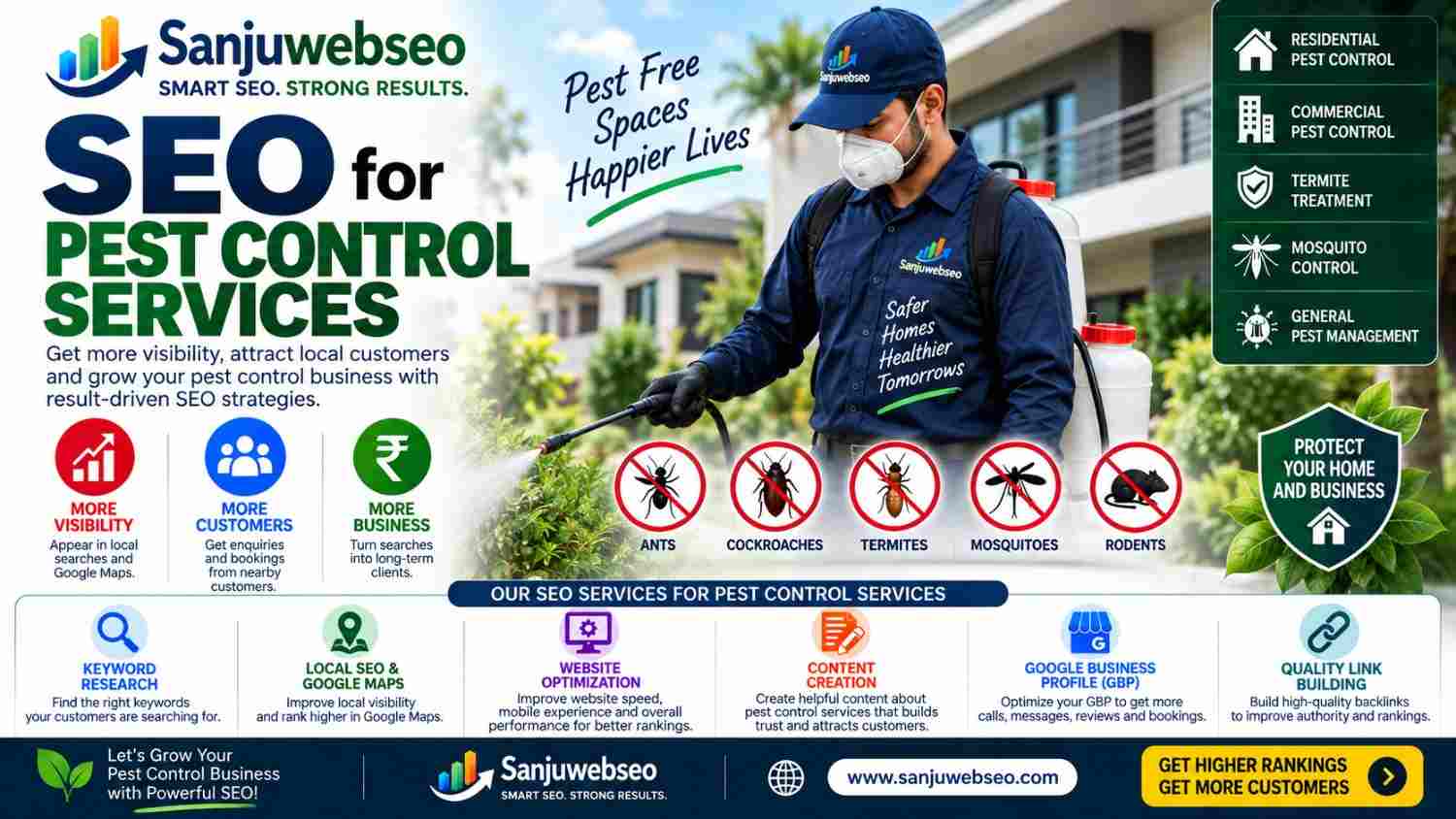
Sanju Web SEO can build an SEO strategy around the actual pest problems, services, locations, customer questions, and commercial goals of a pest control business. The approach can combine keyword research, technical optimisation, local SEO, service-page development, content planning, Google Business Profile optimisation, internal linking, and conversion-focused improvements.
The focus is on attracting relevant customers rather than generating traffic without business value. For practical insights about SEO, AI search, and digital marketing, you can also follow Sanju Web SEO on LinkedIn. A structured strategy can help build stronger local visibility while giving potential customers clearer information before they request professional pest control.
FAQ’s:-
Q1. How does SEO for Pest Control Services attract local customers?
SEO for Pest Control Services can help businesses appear when local customers search for pest treatment, pest control companies, or specific pest solutions nearby. Local optimisation can include service-area information, location-focused content, Google Business Profile optimisation, and relevant service pages. The website should clearly explain which areas the company serves and what treatments it provides. Customers should also be able to find contact details, inspection information, and booking options easily. The strategy should focus on genuine service coverage rather than creating pages for locations the business does not serve.
Q2. Which pest control services should SEO for Pest Control Services target?
SEO for Pest Control Services should focus on services the company genuinely provides and that match customer demand. Depending on the business, these may include termite control, cockroach control, bed bug treatment, mosquito control, rodent control, ant control, and general pest management. Commercial pest control may also require dedicated content for offices, restaurants, warehouses, hotels, or retail properties. Keyword priorities should be based on search intent, competition, location, service capability, and customer requirements rather than creating pages solely to target additional keywords.
Q3. Can SEO for Pest Control Services generate emergency enquiries?
SEO for Pest Control Services can help capture urgent searches when a website clearly explains available services, operating hours, service locations, and contact options. Customers dealing with rodents, bed bugs, termites, or other pest problems may want assistance quickly. However, SEO cannot guarantee emergency bookings. If a company provides same-day or emergency services, the website should state the actual conditions clearly. If advance scheduling is required, that should also be communicated. Accurate information helps customers understand whether the business can respond to their particular situation.
Q4. Why is local SEO important for Pest Control Services?
Local SEO is important for Pest Control Services because treatment is usually delivered at the customer’s property. People often search for providers in a particular city, neighbourhood, or nearby area. A strong local strategy can connect the business with these searches through location-focused pages, relevant service content, Google Business Profile optimisation, and consistent business information. Location pages should provide genuine value and explain actual service coverage. Simply repeating a location name throughout a page does not create strong local relevance. Useful local information should remain the priority.
Q5. How can SEO for Pest Control Services improve customer trust?
SEO for Pest Control Services can support trust by providing genuine information about the business, technicians, inspection process, treatment approach, service areas, and customer experience. Real photographs and authentic reviews can provide additional context. Customers may also want to understand what preparation is required and what happens during treatment. Clear explanations can reduce uncertainty before an enquiry. Avoid unsupported claims about guaranteed results, safety, or treatment effectiveness. Professional and accurate information gives visitors a more realistic understanding of the service they are considering.
Q6. Should pest control companies create separate pages for every pest?
Creating a separate page for every pest is not automatically necessary for SEO for Pest Control Services. A dedicated page is useful when the company genuinely provides that treatment and there is enough valuable information to explain the problem and service. Important topics may include termites, bed bugs, cockroaches, rodents, mosquitoes, or ants, depending on the business. Each page should offer meaningful information rather than simply changing the pest name. The content should explain relevant symptoms, treatment considerations, customer questions, and the appropriate next step.
Q7. Can SEO for Pest Control Services help attract commercial clients?
Yes, SEO for Pest Control Services can support commercial lead generation when the website addresses the needs of business customers separately. Offices, restaurants, hotels, warehouses, shops, and other properties may have different pest risks and scheduling requirements. A commercial pest control page can explain relevant services, property types, inspection options, recurring treatment arrangements, and enquiry processes. This helps business owners and managers quickly understand whether the company is suitable. Commercial content should always reflect the services and operational capabilities the pest control company can genuinely provide.
Q8. How can content marketing support SEO for Pest Control Services?
Content marketing can support SEO for Pest Control Services by answering questions customers ask before contacting a professional. Useful topics can include signs of termite activity, common causes of recurring cockroach problems, bed bug indicators, rodent entry points, pest prevention tips, and questions about professional inspections. Informational content can then link naturally to relevant service pages. The objective should be to provide accurate and useful information rather than publish large volumes of keyword-focused articles. Good content helps customers understand their situation and identify when professional assistance may be appropriate.
Q9. How long does SEO for Pest Control Services take to show results?
There is no fixed timeline for SEO for Pest Control Services because results depend on competition, website condition, location, content quality, technical health, authority, and the existing online presence. Some improvements may produce changes earlier, while competitive local searches can require continued optimisation. Performance should be evaluated through multiple signals, including impressions, rankings, relevant organic traffic, calls, inspection requests, quotation enquiries, and bookings. Measuring business actions alongside search visibility gives a more useful picture of whether the strategy is attracting customers who genuinely need pest control services.
Q10. Why should I choose Sanju Web SEO for SEO for Pest Control Services?
Sanju Web SEO can develop SEO for Pest Control Services around real customer problems, pest-specific searches, service areas, property types, and enquiry behaviour. The strategy can combine keyword research, technical SEO, local optimisation, useful service content, Google Business Profile work, internal linking, and conversion-focused improvements. Rather than relying on repetitive templates, the content can be structured around the actual services and customers of the pest control business. This can create a clearer path from relevant Google searches to inspection requests, quotations, and genuine service enquiries.