A Practical Guide to Creating Useful Location Pages That Attract Local Customers
Location Page SEO Best Practices in Indore help businesses create useful website pages for customers searching for services in specific areas. When people search for a service in a particular city or locality, they want relevant information about availability, service coverage, business details and ways to contact the provider. Therefore, a well-optimized location page should answer these questions clearly.
However, simply creating multiple pages by changing the city or locality name is not an effective SEO strategy. Each page needs a genuine purpose, relevant information and a clear connection to the services offered. Additionally, businesses should avoid publishing repetitive pages that provide little value to visitors.
Whether you operate a healthcare clinic, consultancy, restaurant, retail store or professional service company, location pages can support your local search strategy when they reflect genuine business coverage. This guide explains how to plan, write, optimize and maintain location-specific website pages for businesses targeting Indore.
What Is a Location Page in SEO?
A location page is a website page created to explain a business’s services, availability or physical presence in a particular geographical area.
For example, a company serving customers across Indore may create a dedicated page explaining its services, business details and customer support for that location.
A useful location page can include:
- Relevant service information
- Location-specific content
- Business contact details
- Address or service-area information
- Genuine photographs
- Customer questions and answers
- Relevant internal links
- Clear enquiry or contact options
However, a location page should not exist only to repeat a keyword. Instead, it should provide information that helps visitors understand whether the business can serve their requirements in that area.
Why Location Page SEO Matters for Businesses in Indore
Indore businesses may serve customers across different localities, commercial areas and surrounding regions. Therefore, location-specific content can help explain where a business operates and which customers it serves.
1. Targets Location-Based Search Intent
People frequently include a city or locality when searching for nearby services. For example, someone may search for a digital marketing agency in Indore or a particular service in Vijay Nagar.
A relevant location page can address this search intent by explaining the services available and the geographical area covered.
2. Provides Better Information to Local Customers
Customers need more than a business name and a location keyword. They may want to understand service availability, appointment procedures, pricing information, contact methods and other practical details.
Consequently, a useful location page can answer these questions before a customer enquires.
3. Supports Website Organization
Businesses serving multiple locations can organize their website around services and geographical areas. For example, a company may maintain a main services page alongside separate location pages where each page serves a distinct audience.
Additionally, clear internal links help visitors move between related services and locations.
4. Creates Relevant Conversion Opportunities
A well-structured location page can guide visitors toward meaningful actions. These may include calling the business, requesting a quotation, booking an appointment or submitting an enquiry.
However, the page must communicate accurate service availability rather than making unsupported claims about local offices or physical presence.
Location Page SEO Best Practices in Indore: 10 Essential Steps
Follow these practical steps to create useful location pages that support your local search strategy.
Step 1: Research Location-Based Keywords
Begin by understanding how potential customers search for your services.
Identify relevant combinations of service names, city names and locality terms. For example:
- SEO services in Indore
- Digital marketing agency in Indore
- Website development in Vijay Nagar
- Local SEO services in Indore
These examples illustrate keyword patterns, not verified search-volume figures.
Additionally, separate informational searches from commercial searches. Someone looking for SEO advice may need an educational article, whereas someone searching for an SEO agency may prefer a service or location page.
Use keyword research tools and available Search Console data to evaluate search demand. Most importantly, target only locations where your business can genuinely provide relevant services.
Step 2: Create a Clear Location Page Structure
Every location page should follow a logical structure. Visitors should understand the business offering without searching through unnecessary sections.
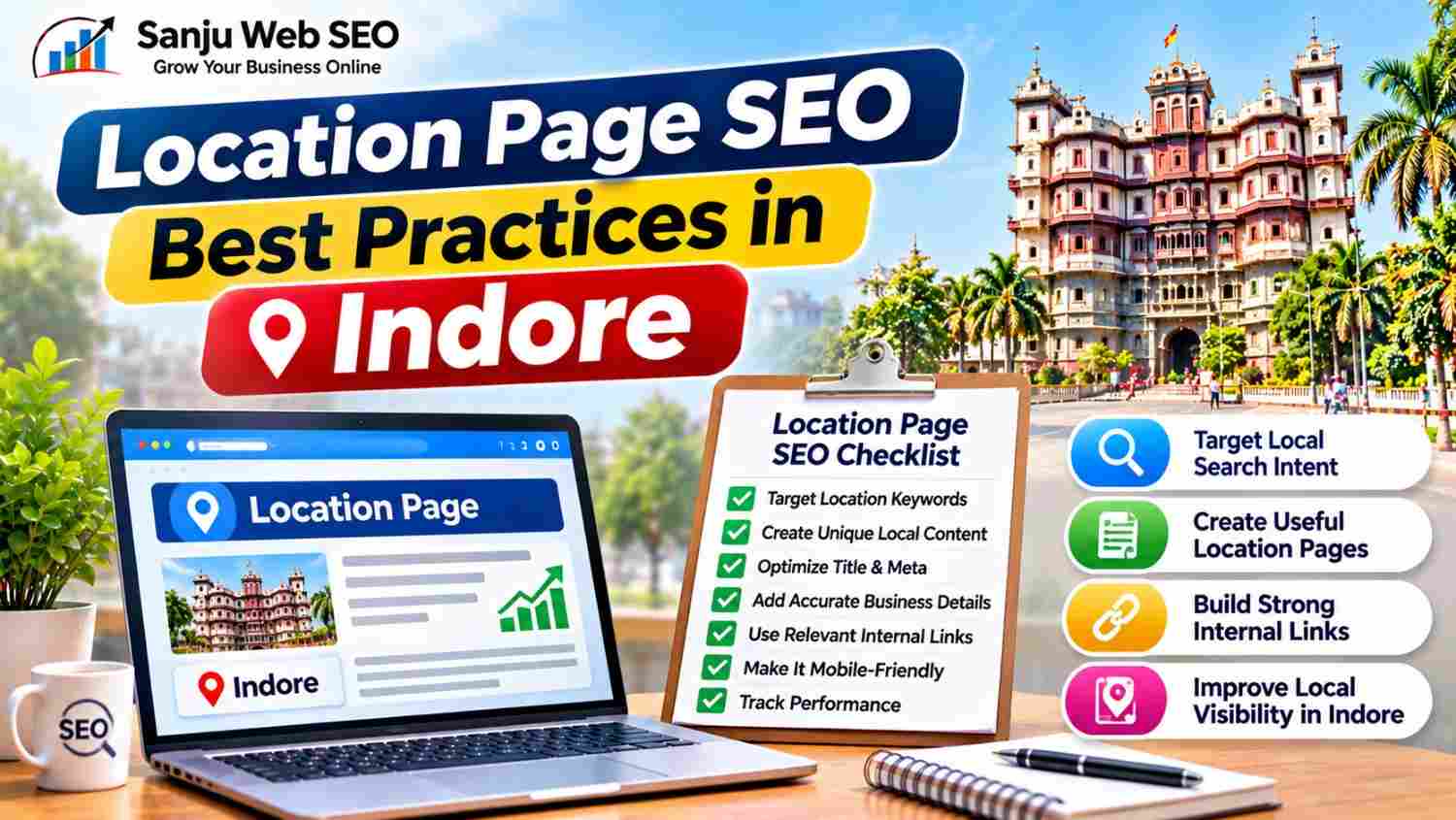
A practical structure may include:
- Main heading with the service and location
- Introduction explaining the service
- Business service details
- Location-specific information
- Reasons customers may choose the business
- Service availability and contact details
- Relevant FAQs
- Clear call to action
Furthermore, use descriptive H2 and H3 headings to organize information. Keep paragraphs readable and avoid repeating the same keyword in every heading.
Step 3: Write Unique and Useful Location-Specific Content
Unique content is one of the most important parts of location page optimization.
Avoid creating several pages where only the city name changes. Instead, explain information that genuinely matters to customers in each target area.
For example, a useful location page may discuss:
- Services available in that area
- Actual service coverage
- Appointment or consultation process
- Relevant customer requirements
- Genuine project examples
- Local contact or accessibility information
Additionally, use original photographs, genuine testimonials and relevant business information wherever available.
If two locations have almost identical service availability and no meaningful differences to explain, consider whether one broader page would serve visitors better.
Step 4: Optimize the SEO Title and Meta Description
Every location page should have a descriptive SEO title and meta description.
Include the primary service and location naturally. However, avoid writing titles that repeat multiple similar keywords.
For example:
SEO Title: Local SEO Services in Indore | Sanju Web SEO
Meta Description: Explore local SEO services in Indore to improve business visibility, optimize your website and attract relevant local customers.
The title should clearly communicate the page topic. Similarly, the meta description should summarize what visitors can expect.
Also, keep each page’s metadata distinct so search engines and users can understand its purpose.
Step 5: Use Location Keywords Naturally in Headings and Content
Place the primary location keyword in relevant areas of the page.
These may include:
- H1 heading
- Opening paragraph
- Relevant H2 headings
- SEO title
- Meta description
- URL slug
- Image alt text, when it accurately describes the image
Additionally, use natural variations related to the service and geographical area.
For example, a page targeting a service in Indore may also mention relevant service variations where they fit the content.
However, avoid keyword stuffing. Search engines and visitors need useful information, not repeated phrases that make the page difficult to read.
Step 6: Add Relevant Internal Links
Internal linking connects location pages with related website content.
For example, a location page can link to the main service page, a related educational blog and another genuinely relevant resource.
This helps visitors explore additional information while creating clearer relationships between website pages.
For businesses targeting Indore, relevant resources include Local SEO Services in Indore and the SEO Company in Indore page.
Additionally, use descriptive anchor text that explains the destination. Avoid inserting the same keyword-rich anchor repeatedly across every page.
Step 7: Maintain Accurate Business and Location Information
Location pages should display accurate business information.
Where appropriate, include the official business name, contact number, address, operating hours and service availability.
For businesses with multiple branches, make sure each location page displays the correct branch details.
However, service-area businesses should not claim to operate a physical office in every area they serve. Explain the actual service coverage clearly instead.
You can also connect relevant location information with your Google Business Profile, provided the profile represents the genuine business location or eligible service-area operation.
Step 8: Optimize Location Page Images
Relevant images can make location pages more informative and engaging.
Use genuine business photographs, team images, project examples or location-related visuals where appropriate.
For every important image:
- Use a descriptive file name.
- Add accurate alt text.
- Compress oversized image files.
- Choose suitable image dimensions.
- Use modern image formats where supported.
For example, an image showing your actual business premises may use descriptive alt text explaining the business location.
However, do not add city keywords to unrelated images. Alt text should describe the image for users who cannot see it.
Step 9: Improve Mobile Experience and Page Performance
Many local customers browse websites through smartphones. Therefore, location pages should work smoothly on smaller screens.
Check whether:
- Text is readable without zooming.
- Contact buttons are easy to tap.
- Phone numbers are clickable.
- Enquiry forms work properly.
- Images load efficiently.
- Important information appears clearly.
- Navigation remains simple.
Additionally, test the page using Google PageSpeed Insights and review its Core Web Vitals data.
A technically accessible and user-friendly page makes it easier for visitors to find information and contact your business.
Step 10: Monitor Location Page Performance
Publishing a location page is only the beginning. You should also monitor how it performs over time.
Use Google Search Console to review:
- Search impressions
- Clicks
- Average search position
- Queries generating impressions
- Page indexing status
- Search performance changes
Additionally, use Google Analytics to understand relevant website engagement and enquiry activity.
If a page receives impressions but few clicks, review its title and meta description. Similarly, if visitors arrive but do not enquire, examine the page’s content, contact options and overall user experience.
Use actual performance data to decide what needs improvement rather than making changes based on assumptions.
Common Location Page SEO Mistakes to Avoid
Even well-designed websites can lose content quality when location pages are created without a clear strategy.
Avoid these common mistakes:
- Creating near-identical location pages: Each page should provide meaningful information for its intended audience.
- Stuffing location keywords: Use service and location terms naturally.
- Publishing unsupported local claims: Do not claim a physical office or local presence that does not exist.
- Using generic content: Explain genuine services, coverage and customer requirements.
- Ignoring internal links: Connect relevant location pages with service pages and educational resources.
- Using irrelevant images: Select visuals that accurately represent the business or topic.
- Ignoring mobile usability: Make contact details and important information easy to access.
- Forgetting performance tracking: Review indexing, impressions, clicks and enquiries regularly.
By avoiding these issues, businesses can maintain a more useful and organized location-page strategy.
How Location Pages Work With Other Local SEO Activities
Location pages are one part of a broader local SEO strategy. They work alongside website optimization, Google Business Profile management, local keyword research and citation consistency.
For example, accurate business information helps customers verify the company. Meanwhile, location-specific website content explains the services available in a particular area.
Similarly, local citations can maintain consistent business information across relevant directories. Review management and useful service pages can also support the customer journey.
Therefore, businesses should coordinate these activities rather than treating location pages as an isolated ranking technique.
How Sanju Web SEO Approaches Location Page Optimization in Indore
At Sanju Web SEO, location page optimization focuses on search intent, content quality, website structure and genuine service coverage.
The process can include:
- Researching relevant location-based keywords
- Reviewing existing website pages
- Identifying content gaps
- Planning useful location-specific sections
- Optimizing titles and meta descriptions
- Improving internal linking
- Reviewing mobile usability
- Monitoring search performance
Furthermore, existing pages should be reviewed before creating new ones. This helps reduce unnecessary duplication and gives every published page a clearer purpose.
The objective is to create useful location pages that help visitors understand the business and take the next step.
You can also connect with Sanju Web SEO on LinkedIn for practical SEO insights, website optimization guidance and local search updates.
Conclusion
Location pages can help businesses explain their services and geographical coverage to potential customers. However, their value depends on content quality, accurate information and genuine relevance to the target area.
A strong strategy includes keyword research, clear page structure, unique content, relevant internal links, accurate business details and regular performance monitoring.
By following these Location Page SEO Best Practices in Indore, businesses can build more useful location pages and create a better experience for local visitors.
If you need help improving your website’s local search presence, visit Sanju Web SEO or call +91 9302110432 to discuss your requirements. You can also connect with us on LinkedIn for more local SEO insights, practical location-page optimization advice, Google Business Profile updates and strategies to strengthen your business visibility online.
FAQ’s:-
Q1. What Are Location Page SEO Best Practices in Indore?
Location Page SEO Best Practices in Indore involve creating useful pages that explain business services, geographical coverage and customer information for a specific location. Additionally, these pages should include relevant keywords, clear headings, accurate contact details and useful internal links.
Q2. Why Are Location Page SEO Best Practices in Indore Important for Local Businesses?
Location Page SEO Best Practices in Indore help businesses organize their website content around genuine geographical service areas. Moreover, useful location pages can answer customer questions and explain service availability. However, creating location pages alone does not guarantee higher search rankings.
Q3. How Do I Create a Location Page Using Location Page SEO Best Practices in Indore?
Start with location-based keyword research and define the page’s purpose. Next, create a clear heading structure and write original content about services and actual coverage. Additionally, include relevant contact information, internal links and a clear call to action.
Q4. Should Location Page SEO Best Practices in Indore Include Unique Content?
Yes, every location page should provide meaningful information for its intended audience. For example, explain genuine service availability, customer requirements and relevant local details. Furthermore, avoid publishing several pages that differ only by city or locality names.
Q5. How Do Location Page SEO Best Practices in Indore Help Prevent Duplicate Content?
A strong location-page strategy focuses on unique page purposes and useful information. Instead of copying the same content across multiple URLs, create pages only when they serve distinct audiences or geographical requirements. Consequently, each page can provide a clearer value to visitors.
Q6. Which Keywords Should I Target With Location Page SEO Best Practices in Indore?
Target relevant service-based and location-based keywords that match your actual offerings. For example, combine a service name with Indore or a relevant locality when appropriate. Additionally, review Search Console data and keyword research tools to understand actual search opportunities.
Q7. How Important Are Internal Links in Location Page SEO Best Practices in Indore?
Internal links connect location pages with relevant services, blogs and other website resources. Moreover, descriptive anchor text helps visitors understand where a link leads. Therefore, include links that genuinely support the topic instead of adding unnecessary keyword-rich links.
Q8. Can Location Page SEO Best Practices in Indore Improve Mobile User Experience?
Yes, location pages should work properly on smartphones and other screen sizes. Make sure text is readable, contact buttons are easy to use and enquiry forms function correctly. Additionally, optimize images and review page performance to improve the browsing experience.
Q9. How Can I Measure Results From Location Page SEO Best Practices in Indore?
Use Google Search Console to monitor impressions, clicks, search queries and indexing status. Additionally, review website engagement and enquiry activity through Google Analytics. These measurements help identify pages that need content, metadata or user-experience improvements.
Q10. Can Sanju Web SEO Help Implement Location Page SEO Best Practices in Indore?
Yes, Sanju Web SEO provides website and local SEO support that can include location keyword research, content planning, page optimization and internal linking. Additionally, businesses can receive guidance on avoiding duplicate pages and improving location-specific website content.