
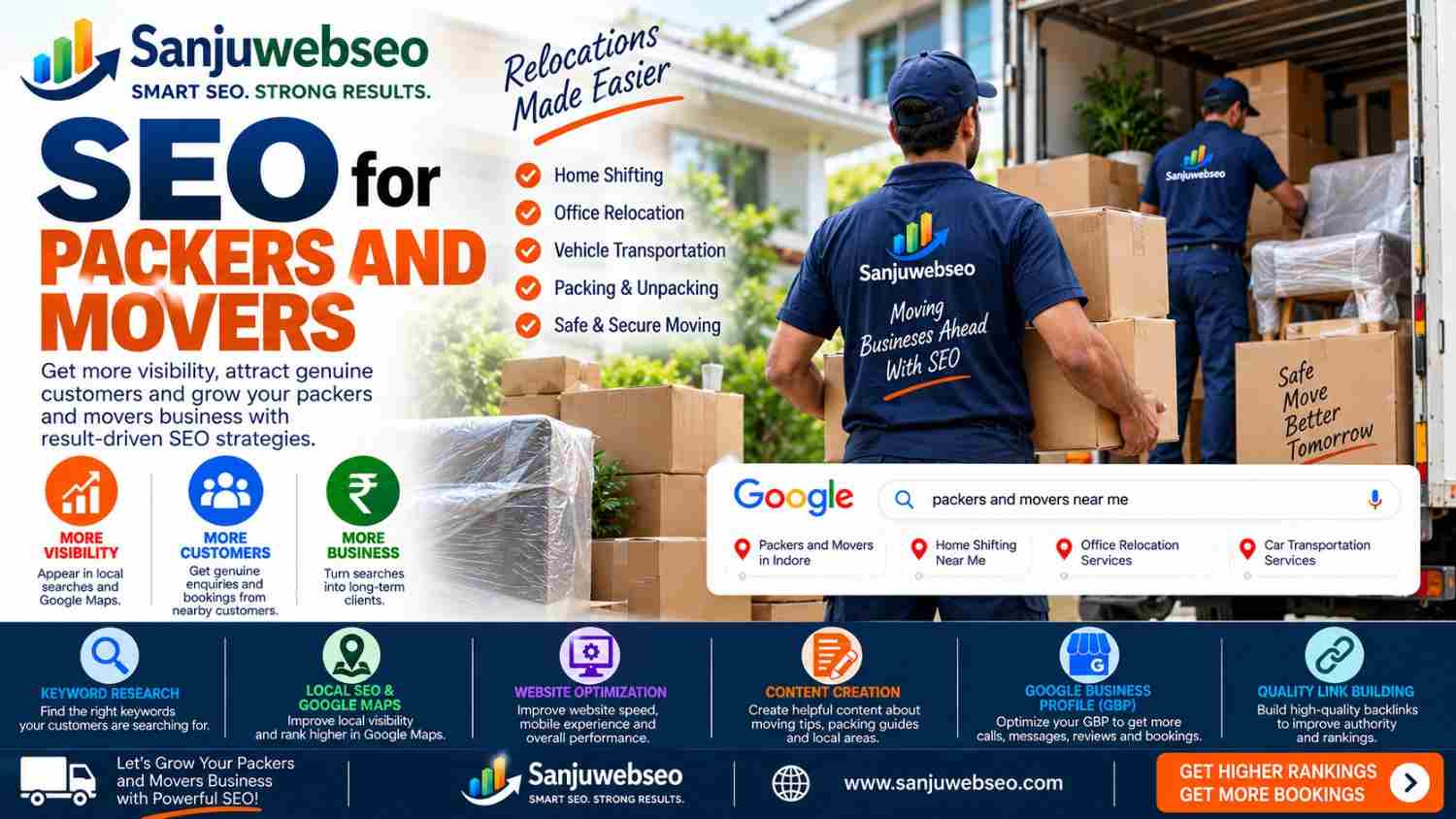
When Moving Plans Turn Into Google Searches
SEO for Packers and Movers helps moving companies reach customers who are actively searching for relocation and shifting services. A person planning a move may be changing cities, shifting to a new home, relocating an office, or transporting selected household items. Their search often starts when they need to understand available services, compare providers, estimate costs, and find a company that can handle the move properly.
The customer journey can also become complicated because moving involves timing, packing, transportation, loading, unloading, and delivery. Someone searching for local shifting services has different requirements from a customer planning an interstate relocation. A useful SEO strategy should therefore address these different situations instead of treating every moving enquiry as the same type of search.
Build Content Around Different Types of Moving Services
Packers and movers businesses often provide several services under one brand. These may include home relocation, office shifting, local moving, domestic relocation, interstate moving, vehicle transportation, packing services, loading and unloading, and storage solutions. Each service can attract customers with different questions and expectations.
Important services should have clear information explaining what is included, which locations are covered, how the process works, and what customers should prepare before moving day. A dedicated service page can also explain factors that may affect pricing or scheduling. This gives visitors useful information before they request a quotation and helps search engines understand the actual services offered.
Match SEO for Packers and Movers With the Moving Journey
Moving customers rarely make a decision based on one search. They may first research moving companies, then investigate packing services, compare locations, check reviews, and finally contact a few providers. Your website should support this journey instead of presenting the same sales message on every page.
For example, an informational article can explain how to prepare household items for relocation. A service page can explain professional packing and moving. A location page can address service availability in a particular city. Connecting these pages gives customers a logical path from initial research to enquiry. It also creates a more useful content structure for organic search.
Make Local Moving Searches Easy to Discover
Local relocation searches are highly dependent on location. A customer may search for packers and movers in their city, neighbourhood, or destination area. They want to know whether the company actually operates there and whether it can handle their type of move.
Local SEO should therefore clearly communicate genuine service areas. Location pages can explain available moving services, common relocation requirements, service coverage, and enquiry options. Avoid creating pages for every possible location when the business does not genuinely serve those areas. Useful local information is more valuable than repetitive city-name variations.
Capture Interstate and Long-Distance Relocation Searches
Customers moving between cities may have more questions than someone making a local shift. They may want information about transportation, packing, delivery timelines, vehicle movement, documentation, and how the quotation is calculated. The website should address these concerns without making promises that depend on factors outside the company’s control.
A dedicated long-distance or interstate moving page can explain the overall process from packing to delivery. It can also describe what information the customer should provide when requesting a quote. This helps visitors understand the service before contacting the business and can result in more complete enquiries.
Explain Packing Services in Practical Detail
Packing is one of the most important parts of a relocation because different belongings require different handling. Household furniture, appliances, fragile items, electronics, kitchenware, documents, and other possessions may require different packing considerations. Customers want to know whether professional packing is included and what the service actually covers.
A packing service page should explain the general process, materials used where applicable, preparation requirements, and the types of items handled. Avoid making absolute claims about damage prevention. Instead, explain how professional packing is intended to reduce handling risks and organise the move more efficiently. Clear information can help customers understand the difference between basic transportation and a complete moving service.
Build Trust Before Customers Hand Over Their Belongings
Relocation requires a significant level of trust. Customers are allowing another company to handle personal belongings, furniture, appliances, documents, and other valuable items. A website should therefore provide genuine evidence that the business understands the responsibilities involved in moving.
Real photographs, company information, service details, customer reviews, team information, and genuine moving examples can strengthen the overall experience. If the business has relevant experience with residential or commercial relocation, explain it clearly. Avoid unsupported claims such as “100% safe” or guaranteed damage-free transportation when those promises cannot be substantiated.
Make Moving Cost Information More Transparent
Price is often one of the first questions asked by relocation customers. However, moving costs can vary considerably depending on distance, property size, number of items, packing requirements, labour, vehicle type, floors, access conditions, additional services, and other factors.
Instead of presenting one universal price, explain the factors that influence a quotation. A quote form can collect information such as pickup location, destination, property type, approximate household size, moving date, and additional requirements. This makes the enquiry process more useful and can help the business provide a more relevant estimate.
Create Content for Home and Office Relocation Separately
Residential relocation and office shifting involve different priorities. A family may focus on furniture, appliances, fragile belongings, personal items, and moving schedules. An office may need to consider workstations, computers, documents, equipment, employee coordination, and minimising business disruption.
Separate content can address these requirements more effectively. An office shifting page should speak to business owners and administrators, while a home relocation page should address household concerns. This improves relevance and prevents the website from using one generic moving message for every customer type.
Make Destination-Based Searches Part of Your Strategy
Some customers search based on where they are moving rather than where they currently live. They may look for movers from one city to another or search for a moving company that serves a specific destination. These searches can reveal strong relocation intent.
Content can address genuine routes or destination services when the business actually handles them. Explain service coverage and the type of relocation supported. Avoid creating hundreds of route pages with nearly identical content. A smaller number of useful pages can provide more value when they contain meaningful information about the actual moving service.
Help Customers Prepare for Moving Day
A useful website should not only sell moving services. It should also help customers prepare for the relocation. Moving checklists, packing guidance, document reminders, furniture preparation tips, and scheduling advice can answer questions that customers often have before moving day.
This educational content can attract people earlier in the decision process. It can then connect naturally with relevant service pages. For example, a moving checklist can explain when professional packing may be useful and link readers toward the company’s packing service. Helpful information creates a smoother journey from research to enquiry.
Make Your Website Easy to Use When Customers Are Ready to Move
Moving enquiries are often time-sensitive. Customers may have a fixed possession date, rental deadline, office handover, or travel schedule. They should not have to search through multiple pages to find the contact number, quotation form, service areas, or available moving options.
Mobile usability is particularly important because many customers research services from smartphones. Pages should load efficiently, service information should be readable, and enquiry forms should remain simple. Clear calls to action can help visitors move from research to quotation without unnecessary friction.
Strengthen Technical SEO for Packers and Movers Websites
Technical SEO provides the foundation for service and location content. Important pages should be crawlable, indexable, mobile-friendly, and logically connected. Page titles, headings, URLs, images, internal links, structured data, and navigation should support a clear website architecture.
This becomes increasingly important as a moving company adds service pages, location pages, destination content, and moving guides. Duplicate pages, broken links, weak internal linking, or poor mobile performance can reduce the effectiveness of otherwise useful content. A structured technical approach helps keep the growing website organised.
Connect Moving Services With Google Business Profile
Google Business Profile can help local moving companies appear when customers search for packers and movers nearby. Accurate business information, service details, photographs, reviews, website information, and operating hours can help potential customers understand the company before contacting it.
The profile should accurately represent the actual business and service coverage. If the company serves customers at their properties, the service area should be communicated correctly. Website content and Google Business Profile should complement each other, giving customers consistent information across the places where they discover the business.
Turn Relocation Searches Into Better-Qualified Enquiries
A visitor searching for packers and movers may need a quotation immediately, while another may still be comparing options. Your website should support both stages. Service pages can explain the process, while quote forms can collect the information required to understand the customer’s move.
Track actions such as calls, quotation requests, enquiry forms, WhatsApp conversations, and booking-related actions where applicable. This helps identify which services, locations, and content pieces are contributing to actual business enquiries. SEO becomes more useful when optimisation decisions are connected with customer actions rather than traffic and rankings alone.
Make Storage Services Part of the Moving Journey
Some customers need more than transportation. They may have a gap between leaving their current property and moving into the next one. Others may be renovating their home, relocating an office, or temporarily storing furniture and personal belongings. If the moving company provides storage, this service deserves useful content instead of being hidden inside a general services page.
A dedicated storage section can explain who may need temporary storage, what types of belongings can be stored, how the process works, and how customers can request details. The information should reflect the actual facilities and terms offered by the business. Clear storage content can also connect naturally with relocation pages, helping customers discover an additional service while planning their move.
Build Destination Content Around Genuine Moving Routes
Customers sometimes search using a specific relocation route, such as moving from one city to another. These searches can indicate a clear requirement because the customer already knows the origin and destination. If a moving company regularly handles a particular route, useful route-based content can explain the available service and important considerations.
However, every possible city combination does not need its own page. Creating hundreds of pages with nearly identical wording can make the website repetitive. Focus on routes the company genuinely serves and provide meaningful information about the relocation process. This can include service coverage, packing options, transportation, quotation requirements, and relevant preparation advice.
Use Moving Checklists to Attract Customers Earlier
A moving checklist can help customers organise tasks before relocation day. Packing documents, sorting belongings, labelling boxes, arranging utilities, preparing appliances, confirming the moving date, and coordinating access are common planning considerations. Useful checklist content can attract people before they are ready to choose a moving company.
This type of article can then connect naturally with relevant services. Someone reading about packing preparation may need professional packing assistance. A person reviewing a relocation checklist may also want transportation or storage information. Educational content therefore becomes part of the customer journey rather than existing only to target informational keywords.
Strengthen SEO for Packers and Movers With Genuine Reviews
Choosing a moving company involves trust because customers are handing over their belongings for transportation. Genuine reviews can help potential customers understand how previous clients experienced communication, punctuality, packing, handling, transportation, and delivery. These details can answer questions that a promotional service page may not address.
Reviews should remain authentic and should never be manufactured simply for search visibility. Businesses can use genuine customer feedback to understand which parts of their service deserve clearer explanation. If customers regularly mention communication or careful handling, the website can explain the actual processes behind those experiences. This creates stronger evidence without making unsupported promises.
Explain What Happens During Loading and Unloading
Customers may understand the basic idea of moving but still have questions about what happens on the actual moving day. They may want to know how belongings are organised, how larger furniture is handled, what preparation is required, and how unloading works at the destination. Clear explanations can reduce uncertainty before booking.
The website should describe the actual process followed by the business. If certain access conditions, lift availability, parking arrangements, or additional labour can affect the move, explain those factors during the enquiry process. This can help customers provide accurate information and reduce avoidable surprises when the moving team arrives.
Make SEO for Packers and Movers More Useful With Cost Guides
Moving cost content can attract customers who are still comparing options. Instead of presenting an unrealistic universal price, explain the factors that may influence the quotation. Distance, volume of belongings, packing requirements, property size, floors, access, labour, vehicle requirements, storage, and additional services can all affect the final estimate.
A useful cost guide should also explain what information customers should provide when requesting a quotation. This makes the process easier for both sides. Customers receive clearer expectations, while the moving company can collect better information before preparing an estimate. Transparent explanations are generally more useful than aggressive price claims.
Connect Moving Content Through Smart Internal Links
Internal linking can help visitors move naturally from informational content toward relevant services. A moving checklist can connect to packing services. A relocation guide can connect to home shifting. A page about commercial relocation can lead to office shifting information. These connections create a logical path based on what the visitor is currently researching.
Links should be added where they genuinely help the reader. Descriptive anchor text can tell visitors what they will find after clicking. For example, content discussing local relocation can naturally connect to a relevant local SEO strategy when discussing how moving companies can build visibility in their service area. One relevant link is better than several forced links in the same paragraph.
Use Google Business Profile for Local Moving Searches
Google Business Profile can support local discovery when customers search for packers and movers, home shifting services, or relocation providers nearby. Accurate business details, service information, photographs, reviews, operating information, and website details can help potential customers evaluate the company before making contact.
The profile should accurately represent the actual business and its service coverage. Website information should also remain consistent with the profile. If the company provides services across several locations, those areas should be communicated honestly. A properly maintained Google Business Profile can complement website SEO and provide another useful discovery point for customers with local moving requirements.
Prepare SEO for Packers and Movers for Conversational Search
Customers do not always describe their relocation needs using short keywords. They may ask complete questions such as how much it costs to move a two-bedroom home, what should be packed before movers arrive, or whether professional packing is available for fragile items. These longer searches reveal specific concerns that useful content can address.
Create clear answers around real moving questions rather than repeating keyword variations. Guides, FAQs, service explanations, and comparison-style content can help visitors understand their options. Modern search systems can also use clearly structured information to understand a page’s subject. The priority should remain useful, accurate content that answers the customer’s actual question.
Improve Mobile Experience for Customers Planning a Move
Moving decisions are often made while customers are busy arranging other parts of their relocation. They may search from a smartphone while visiting a property, checking dates, or comparing service providers. Important information should therefore remain easy to access on smaller screens.
Contact numbers, quotation forms, service areas, moving services, and key information should not be buried. Pages should load efficiently and navigation should remain simple. A customer who cannot quickly find the information they need may leave the website and contact another provider. Mobile usability is therefore part of the overall path from search visibility to enquiry.
Measure SEO for Packers and Movers Through Real Enquiries
Organic traffic and rankings can show whether a website is gaining visibility, but they do not tell the complete business story. A moving company should also track calls, quotation requests, enquiry forms, WhatsApp conversations, booking actions, and other meaningful customer interactions. These signals can reveal whether SEO is attracting genuine relocation prospects.
Performance can be reviewed by service, location, and landing page. A home relocation page may generate different enquiries from an office shifting page or a route-specific page. Understanding these differences helps determine where additional content or optimisation may be useful. Measurement should therefore connect search performance with actual customer behaviour.
Keep Moving Information Accurate as Services Change
Packers and movers businesses can change their service areas, vehicle options, storage arrangements, packing services, schedules, or operating information over time. Website content should reflect those changes. Outdated information can create confusion and may result in enquiries that the company cannot fulfil.
Review important service and location pages periodically. Check contact information, service coverage, quotation processes, photographs, FAQs, and calls to action. Remove claims that are no longer accurate. Content updates should focus on keeping the website genuinely useful rather than changing words simply to make an old page appear new.
Why Choose Sanju Web SEO for Packers and Movers SEO?
Sanju Web SEO can structure SEO for Packers and Movers around the actual relocation journey, including local shifting, interstate moving, packing, storage, destination searches, cost questions, trust signals, and booking behaviour. The strategy can combine keyword research, technical SEO, local optimisation, content development, internal linking, Google Business Profile optimisation, and conversion-focused improvements.
The focus is on building useful visibility for customers who have a genuine moving requirement. You can also follow Sanju Web SEO on LinkedIn for practical insights about SEO, AI search, and digital marketing. A structured approach can help connect relevant searches with clearer service information and better-qualified relocation enquiries.
FAQ’s:-
Q1. How does SEO for Packers and Movers help attract customers?
SEO for Packers and Movers can help relocation companies appear when people search for moving, shifting, packing, transportation, or storage services. The strategy can target different customer situations rather than one broad keyword. Useful service pages, location content, moving guides, Google Business Profile optimisation, and technical improvements can all contribute to visibility. The website should then make it easy for visitors to understand available services, service areas, quotation requirements, and contact options. This creates a clearer path from a customer’s initial Google search to a genuine moving enquiry.
Q2. Which services should SEO for Packers and Movers target?
SEO for Packers and Movers should focus on services the company genuinely provides. Depending on the business, these can include home relocation, office shifting, local moving, interstate relocation, professional packing, loading and unloading, vehicle transportation, and storage services. Each important service can address different customer questions and search intent. Keyword priorities should depend on actual demand, competition, location, service capability, and business goals. Creating pages for services that the company does not provide can create poor customer experiences and should be avoided.
Q3. Can SEO for Packers and Movers generate local moving enquiries?
Yes, SEO for Packers and Movers can support local enquiries by improving visibility for searches connected with a genuine service area. Local pages can explain the locations served, available moving services, customer requirements, and enquiry process. Google Business Profile can also help customers discover a moving company through local search and Maps. Location information should remain accurate. Creating pages for every nearby city without providing meaningful local information can make the website repetitive. Genuine service coverage should always determine the locations targeted through local SEO.
Q4. How can SEO for Packers and Movers help with interstate relocation?
SEO for Packers and Movers can target customers planning long-distance or interstate moves by creating useful content around the relocation process. Such pages can explain packing, transportation, quotation requirements, delivery considerations, and the information customers should provide before booking. Route-specific pages can also be useful when the company genuinely handles those routes. However, creating large numbers of nearly identical route pages can reduce content quality. The focus should remain on meaningful information that helps customers understand the actual interstate relocation service available.
Q5. How can SEO for Packers and Movers address moving cost concerns?
SEO for Packers and Movers can address cost-related searches by explaining the factors that influence relocation quotations. Distance, household size, volume of belongings, packing requirements, labour, access conditions, vehicle requirements, storage, and additional services can affect the final estimate. Instead of promising one fixed price for every move, the website can explain what information is needed to prepare a quotation. This can make enquiries more useful and help customers understand why moving costs vary between properties, destinations, service types, and individual relocation requirements.
Q6. Should packers and movers create separate pages for every destination?
Creating destination pages can be useful for SEO for Packers and Movers when the company genuinely serves those destinations and there is meaningful information to provide. A useful page can explain the route, available services, packing options, service coverage, and quotation process. However, simply replacing one city name with another creates repetitive content. Businesses should prioritise genuine routes and important destinations rather than producing hundreds of almost identical pages. Each page should offer information that helps a customer understand the actual relocation service available for that destination.
Q7. Can moving guides support SEO for Packers and Movers?
Yes. Moving guides can support SEO for Packers and Movers by answering questions customers have before selecting a relocation company. Useful topics may include packing checklists, moving-day preparation, fragile-item handling, appliance preparation, documentation, and planning timelines. These guides can attract customers during the research stage and then connect naturally with relevant moving services. The content should provide practical information rather than exist only for keyword placement. Helpful guides can also give customers a clearer understanding of what they need to prepare before professional movers arrive.
Q8. How important are reviews for SEO for Packers and Movers?
Reviews are important to the broader SEO for Packers and Movers strategy because relocation involves handing personal belongings to another company. Genuine reviews can help potential customers understand experiences related to communication, punctuality, packing, handling, transportation, and delivery. Reviews should never be manufactured or manipulated for SEO purposes. Businesses can instead use authentic customer feedback to identify common trust concerns and explain their actual processes more clearly. Combined with accurate service information and real photographs, genuine reviews can give potential customers additional context while comparing moving providers.
Q9. How long does SEO for Packers and Movers take to show results?
SEO for Packers and Movers does not have a fixed timeline because results depend on competition, location, website quality, technical health, content depth, authority, and the existing online presence. Some improvements may produce earlier changes, while competitive local or destination searches can require sustained optimisation. Progress should be measured through multiple signals, including search impressions, rankings, relevant organic traffic, calls, quotation requests, forms, and bookings. Looking at actual customer actions alongside search visibility provides a more useful understanding of whether SEO is attracting genuine relocation opportunities.
Q10. Why should I choose Sanju Web SEO for SEO for Packers and Movers?
Sanju Web SEO can develop SEO for Packers and Movers around actual customer journeys, including local shifting, home relocation, office moving, interstate routes, packing, storage, pricing questions, and service enquiries. The strategy can combine keyword research, technical SEO, local optimisation, content creation, Google Business Profile work, internal linking, and conversion-focused improvements. Instead of relying on repetitive location pages, the content can be structured around genuine services and customer requirements. This approach aims to create relevant search visibility and a clearer path from relocation searches to qualified enquiries.