When a Cleaning Problem Turns Into a Google Search
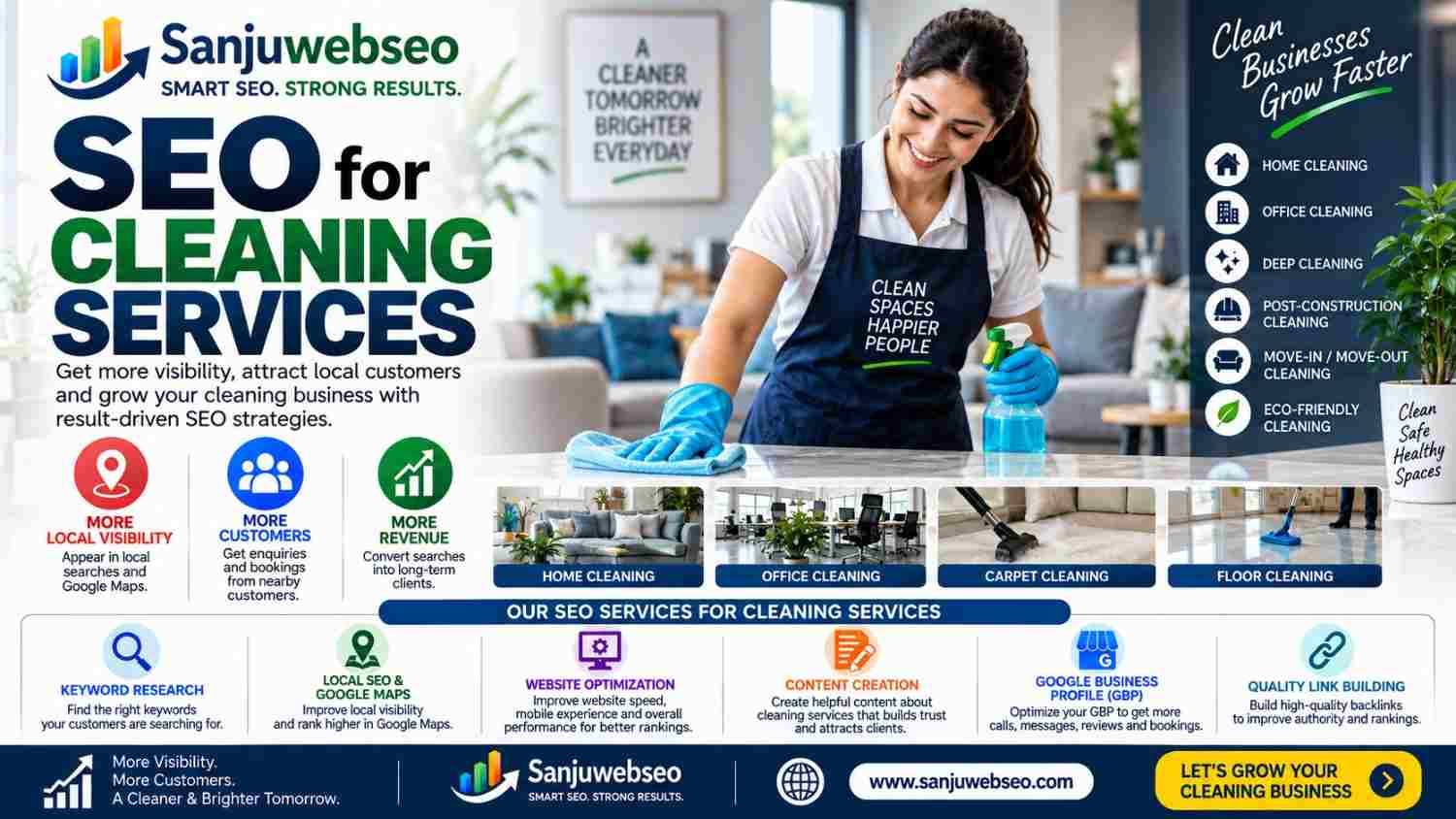
SEO for Cleaning Services helps cleaning businesses reach people who are actively searching for professional cleaning solutions. A customer may need home cleaning, office cleaning, deep cleaning, move-out cleaning, or help preparing a property after renovation. In many cases, the search starts with a specific problem rather than a company name. The customer may search for a cleaning service nearby, compare available options, check reviews, or look for information before requesting a quote.
That means a cleaning company should not build its website around one broad service phrase alone. The site needs to answer different situations that lead customers to search. A visitor looking for weekly home cleaning needs different information from a property manager searching for commercial cleaning. Understanding these differences helps create pages that match real search intent and attract more relevant enquiries.
Build Cleaning Content Around the Services People Actually Need
Cleaning businesses often provide more services than their homepage can explain properly. Residential cleaning, deep cleaning, office cleaning, move-in cleaning, move-out cleaning, carpet cleaning, bathroom cleaning, kitchen cleaning, post-construction cleaning, and specialised cleaning can have completely different customer expectations. Each important service deserves clear information instead of being hidden inside a generic service list.
A useful service page should explain what the service covers, who may need it, what areas are cleaned, how preparation works, and what customers should consider before booking. This gives visitors practical information before they contact the company. It also gives search engines stronger context about the services being offered. Most importantly, the page becomes useful for a customer who already knows what type of cleaning they need.
Make SEO for Cleaning Services Match Different Customer Situations
A customer does not always search for a cleaning company using the word “cleaning.” They may search for help after moving house, before handing over a rental property, before an event, after renovation work, or when their office requires regular maintenance. These situations reveal valuable search intent that a generic cleaning page may completely miss.
Content should therefore address the circumstances behind the service. A move-out cleaning page can explain preparation and property handover concerns. An office cleaning page can discuss schedules, workspaces, common areas, and ongoing maintenance. Meanwhile, a post-construction cleaning page can address dust, debris, and final preparation. This creates a website that reflects how customers actually think about cleaning.
Local Search Matters When Customers Need Someone Nearby
Cleaning is strongly connected with location because the service is performed at the customer’s property. Someone searching for a cleaning company usually wants a provider that actually serves their neighbourhood, city, or surrounding area. Local SEO can help the business become visible for these searches when the website clearly communicates its service locations and relevant service coverage.
Location information should be useful rather than repetitive. Explain which areas are served, what services are available there, and how customers can request a quote or schedule an appointment. Google Business Profile also becomes important because customers may discover a cleaning company directly through Maps. Consistent business information across the website and local profile helps create a clearer customer experience.
Capture Urgent Cleaning Requirements
Some cleaning searches happen because the customer has a deadline. A property may need to be cleaned before a tenant moves in. An office may require cleaning before reopening. A newly renovated space may need preparation before people can use it. These customers are often looking for quick answers about availability, service coverage, timing, and pricing.
A cleaning website should make these details easy to locate. If the business offers same-day, emergency, weekend, or flexible scheduling, it should clearly state the actual availability instead of making a broad promise. If booking is required, explain that too. Clear information helps reduce unnecessary enquiries and allows serious customers to understand whether the company can meet their requirements.
Explain What Each Cleaning Service Includes
One of the biggest questions customers have before booking is simple: “What exactly will you clean?” A service page should answer this directly. For example, a deep cleaning page can explain whether kitchens, bathrooms, floors, surfaces, fixtures, and other areas are included. Customers should not have to guess what the quoted service covers.
Clear service descriptions also help prevent misunderstandings after booking. If certain tasks require additional charges or separate arrangements, explain them before the customer commits. This does not mean publishing complicated terms everywhere. A straightforward explanation of inclusions, exclusions, preparation requirements, and optional services can make the website more transparent and useful.
Show the Difference Between Regular and Deep Cleaning
Customers sometimes use “house cleaning” and “deep cleaning” interchangeably, even though their expectations may be different. A website can educate visitors by explaining how regular cleaning differs from a more detailed cleaning service. This can help customers select the service that actually fits their property and current situation.
For example, regular cleaning may focus on maintaining an already manageable space, while deep cleaning may involve more detailed attention to areas that have accumulated dirt over time. The exact scope depends on the provider. Explaining the difference clearly can improve enquiries because customers arrive with a better understanding of what they are requesting.
Build Trust Before Someone Lets You Into Their Property
Cleaning services involve entering homes, offices, commercial spaces, and sometimes sensitive environments. Customers therefore want reassurance before allowing a company to work on their property. A website should provide genuine information about the business, cleaning process, staff, service standards, experience, and customer feedback where available.
Real photographs can also help. Show actual teams, equipment, completed work, and service environments instead of relying entirely on stock imagery. Reviews should be genuine and presented in a way that gives useful context. Trust is especially important when customers are comparing several local cleaning companies and deciding whom they feel comfortable contacting.
Make Cleaning Quotes Easier to Understand
Cleaning prices can vary because properties are different. Size, number of rooms, level of dirt, cleaning type, frequency, property condition, additional tasks, and location can all affect the final quote. A website should avoid creating unrealistic expectations by presenting one universal price for every situation.
Instead, explain the main factors that influence pricing and tell customers what information is needed for an accurate estimate. An online enquiry form can ask for property type, approximate size, service required, preferred date, and other relevant details. This can make the quotation process more efficient while helping the cleaning company receive better-qualified enquiries.
Use Before-and-After Content With Real Context
Cleaning is a visual service, so genuine before-and-after content can be particularly useful. However, photographs should represent actual work completed by the business. A short explanation can describe the original condition, the service performed, and the areas that required additional attention.
This type of content can support both trust and engagement. It gives potential customers a realistic idea of what professional cleaning can involve. Avoid presenting every project as a dramatic transformation or making claims that the photographs cannot support. Honest visual evidence is more valuable than exaggerated promotional content because customers want to understand the actual service experience.
Build SEO for Cleaning Services Around Property Types
Different properties can have different cleaning requirements. A residential customer may care about bedrooms, kitchens, bathrooms, floors, and recurring schedules. An office manager may focus on workspaces, reception areas, washrooms, common areas, and cleaning frequency. Commercial properties may require different procedures depending on their size and purpose.
Creating useful content around genuine property types can therefore improve relevance. A page for office cleaning should speak to office managers rather than simply replacing “home” with “office.” Likewise, residential cleaning content should focus on the questions homeowners and tenants actually ask. Industry-specific language makes each page more useful and reduces repetitive SEO content.
Make the Website Easy to Use on a Phone
Many cleaning searches happen when customers are away from a desktop computer. A person may be standing in a property, preparing for a move, or trying to arrange cleaning quickly. The website should therefore make important actions easy on mobile devices. Contact information, service details, quote forms, directions, and booking options should be easy to locate.
Page speed also matters to the overall user experience. Large images, unnecessary scripts, confusing navigation, and poorly designed forms can create friction. A customer who struggles to request a quote may simply return to Google and contact another provider. Good SEO should therefore consider the entire path from search result to enquiry.
Keep Technical SEO Strong for Cleaning Websites
Technical SEO creates the foundation on which cleaning service content can perform. Important pages should be crawlable, indexable, mobile-friendly, and logically connected. Titles, meta descriptions, headings, URLs, images, internal links, canonical signals, and structured data should support the website’s overall organisation.
Technical issues can become particularly important as a cleaning business adds service and location pages. Duplicate pages, broken links, thin content, poor navigation, or incorrect indexing can weaken the site structure. A proper audit can identify these problems before more content is created. You can also explore the broader SEO and website optimisation work available through Sanju Web SEO.
Turn Google Business Profile Into a Local Cleaning Asset
Google Business Profile can help cleaning companies reach customers who are already looking for nearby services. A well-maintained profile can communicate the business name, service area, hours, website, photographs, reviews, and available services. These details can influence whether a searcher decides to investigate the business further.
The profile should match the information on the website and represent the real business accurately. Regularly adding genuine updates and photographs can keep the profile useful. Customer reviews should also be handled professionally. For businesses targeting local cleaning searches, Google Business Profile should work alongside website SEO rather than being treated as a separate marketing activity.
Turn Recurring Cleaning Needs Into Long-Term Customers
Cleaning is often not a one-time requirement. Homes, offices, clinics, commercial spaces, rental properties, and other premises may need cleaning on a weekly, fortnightly, or monthly basis. This creates an opportunity to build content around recurring cleaning needs rather than focusing only on one-time bookings. Pages can explain scheduling options, service frequency, preparation, and the situations where regular professional cleaning can be useful.
This type of content can attract customers at different stages of their decision journey. Someone may initially search for a deep cleaning service and later realise they need ongoing maintenance. A clear website can introduce suitable recurring options without pressuring visitors. When the service information is transparent, customers can understand what is available and decide whether regular cleaning fits their property and routine.
Build Commercial Cleaning Content Around Business Needs
Commercial customers usually have different requirements from residential customers. An office manager may care about cleaning schedules, employee areas, washrooms, reception spaces, common areas, and minimal disruption during working hours. A property manager may have different priorities, while a retail or hospitality business may require cleaning around customer traffic and operating hours.
Commercial cleaning pages should therefore speak directly to these needs. Explain the types of properties served, available schedules, service areas, cleaning scope, and enquiry process. Avoid creating one generic page and simply inserting different business names. Useful commercial content should demonstrate an understanding of how cleaning requirements change according to the property and its daily operations.
Strengthen Local SEO for Cleaning Services Without Creating Duplicate Pages
Location-based searches can be valuable for cleaning companies, but creating dozens of pages with almost identical content can weaken the overall quality of the website. A location page should exist because the company genuinely serves that area and can provide useful local information.
Each useful location page can mention actual service coverage, relevant cleaning services, accessibility, customer requirements, and how to request a quote. Local information should feel natural rather than repeatedly inserting the city name into every sentence. This approach creates a better experience for visitors while giving search engines meaningful local context.
Use Customer Reviews to Answer Real Trust Questions
Reviews can reveal what customers actually value in a cleaning service. Some may mention punctuality, communication, attention to detail, professional behaviour, flexibility, or the condition of the property after cleaning. These themes can help a business understand which trust factors should be explained on its website.
Do not rely on reviews simply as a collection of positive statements. Use genuine feedback as insight into the customer experience. A website can explain its process around the qualities customers frequently mention, while Google Business Profile can provide an independent place for customers to share their experiences. Reviews should always remain authentic and should not be manufactured for SEO purposes.
Connect SEO for Cleaning Services With Conversion-Focused Pages
Getting a visitor to a cleaning website is only one step. The next challenge is helping that visitor understand what to do. Every important service page should have a logical path toward an enquiry, quotation, call, or booking. The action should match the customer’s intent.
For example, someone researching deep cleaning may first need service details before requesting a quote. Someone looking for urgent move-out cleaning may want availability and contact information immediately. Calls to action should therefore be relevant to the page rather than repeating the same generic message everywhere. This can make the journey from search to enquiry smoother.
Use Internal Links to Guide Customers Through Cleaning Services
A strong cleaning website should allow visitors to move naturally between related information. A deep cleaning page can link to a home cleaning guide. An office cleaning page can connect with commercial cleaning information. A move-out cleaning article can direct readers toward the relevant service page. This creates a useful pathway instead of leaving every page isolated.
Internal linking also helps search engines understand the relationship between different sections of the website. Use descriptive anchor text that tells visitors what they will find after clicking. Links should be added because they provide useful context, not simply to increase the number of internal links on a page.
Prepare SEO for Cleaning Services for AI and Conversational Search
People increasingly phrase searches as complete questions. Instead of searching only for “office cleaning,” someone may ask which cleaning service is suitable for a small office or what should be included in a move-out cleaning. Content that directly answers these questions can provide useful context for modern search experiences.
Clear definitions, practical explanations, service comparisons, FAQs, and concise answers can strengthen the information architecture of a cleaning website. However, content should still be written for real customers first. Avoid filling pages with unnatural question-and-answer variations simply to target every possible search phrase.
Measure Cleaning SEO Through Enquiries, Not Traffic Alone
Organic traffic can show that people are finding a website, but it does not automatically indicate business value. Cleaning companies should also monitor calls, quotation requests, contact forms, booking actions, direction requests, and other meaningful conversions. These metrics help reveal whether SEO is attracting people who actually need cleaning services.
Performance can also be reviewed by service and location. A page receiving fewer visitors but generating regular qualified enquiries may be more commercially useful than a high-traffic informational article. Tracking these actions helps shape future keyword research and content decisions around genuine customer demand rather than rankings alone.
Keep Improving Content as Cleaning Services Change
A cleaning business can change its services, coverage areas, equipment, scheduling options, or target customers over time. Website content should change with it. Outdated service information can create confusion and may lead to poor-quality enquiries.
Review important pages periodically. Check whether the listed services are still available, whether location information is accurate, whether contact details work, and whether the content still answers customer questions. Freshness does not mean changing words unnecessarily. It means keeping important business information accurate and useful.
Why Choose Sanju Web SEO for Cleaning Services SEO?
Sanju Web SEO can build a cleaning SEO strategy around actual customer journeys instead of producing repetitive service and location pages. The approach can combine keyword research, technical optimisation, content planning, local search, Google Business Profile work, internal linking, conversion-focused improvements, and ongoing performance analysis. The focus remains on connecting the right cleaning services with people who are actively searching for them.
The strategy can also connect SEO with broader digital marketing requirements when appropriate. For practical insights about SEO, AI search, and digital marketing, you can follow Sanju Web SEO on LinkedIn. The objective is to create useful visibility, attract relevant cleaning enquiries, and build a stronger organic presence over time.
FAQ’s:-
Q1. How does SEO for Cleaning Services attract local customers?
SEO for Cleaning Services can help a cleaning company appear when people search for cleaning providers in their area. Local optimisation can include service-area pages, location information, Google Business Profile optimisation, relevant service content, and consistent business details. The website should clearly explain where the company operates and which cleaning services are available. Local visibility becomes more useful when visitors can quickly understand the service, confirm coverage, and contact the company. The strategy should focus on genuine service areas rather than creating location pages for places the business does not actually serve.
Q2. What services should SEO for Cleaning Services target?
SEO for Cleaning Services can target services that the company genuinely provides and that customers commonly search for. Depending on the business, these may include house cleaning, deep cleaning, office cleaning, move-in cleaning, move-out cleaning, carpet cleaning, kitchen cleaning, bathroom cleaning, post-construction cleaning, or recurring cleaning. Each important service should have useful information explaining its scope and customer requirements. Keyword priorities should depend on search intent, competition, location, business capability, and actual customer demand rather than creating pages simply to include more keywords.
Q3. Can SEO for Cleaning Services help with commercial cleaning leads?
Yes, SEO for Cleaning Services can support commercial cleaning visibility by creating content specifically for business customers. Offices, retail properties, commercial buildings, and other workplaces can have different cleaning requirements. A dedicated commercial cleaning page can explain service schedules, property types, cleaning areas, operating-hour considerations, and the quotation process. This helps search engines understand the service while giving business decision-makers more relevant information. Commercial SEO should focus on genuine capabilities and should avoid making unsupported claims about cleaning standards, staff, equipment, or availability.
Q4. Why are location pages important for SEO for Cleaning Services?
Location pages can support SEO for Cleaning Services because customers often search for cleaning companies by city, neighbourhood, or service area. A useful location page should provide genuine information about where the business operates and which services are available there. Simply changing the location name on identical pages does not provide much value. Stronger pages combine local relevance with useful service information, contact options, and clear coverage details. This helps potential customers determine whether the cleaning company is actually suitable for their property and location.
Q5. How does SEO for Cleaning Services help customers understand pricing?
SEO for Cleaning Services can address pricing concerns by explaining the factors that commonly influence cleaning estimates. Property size, cleaning type, condition, frequency, number of rooms, additional tasks, and other requirements can affect the final cost. Instead of promising one fixed price for every property, the website can explain what information is needed to prepare an accurate quotation. This creates clearer expectations before the customer contacts the business. Transparent pricing information can also help reduce enquiries from customers whose requirements do not match the available service.
Q6. Can reviews improve SEO for Cleaning Services?
Reviews can support the broader SEO for Cleaning Services strategy by contributing to local trust and helping potential customers understand the service experience. Genuine reviews may mention punctuality, communication, cleaning quality, professionalism, or flexibility. These customer experiences can help a business identify topics worth explaining on its website. Reviews should remain authentic and should not be created or manipulated for search rankings. A strong approach combines genuine customer feedback with accurate service information, real photographs, and clear business details across the website and Google Business Profile.
Q7. Should cleaning companies create separate pages for every location?
Creating separate pages for every location is not automatically necessary for SEO for Cleaning Services. A location page is most useful when the company genuinely serves that area and there is enough unique information to provide. Pages with only the city name changed can become repetitive and offer little additional value. Instead, businesses should prioritise important service areas and create genuinely useful local content. The page should explain actual coverage, relevant cleaning services, customer requirements, and how people in that area can contact or request a quotation.
Q8. How can SEO for Cleaning Services generate recurring customers?
SEO for Cleaning Services can attract recurring customers by addressing searches related to regular home, office, commercial, or property maintenance. Content can explain available frequencies, scheduling options, service scope, and situations where ongoing cleaning may be appropriate. A customer may initially search for deep cleaning and later require regular maintenance. Creating useful content for both needs gives the website opportunities to support different stages of the customer journey. The actual recurring services and schedules should always match what the cleaning company can genuinely provide.
Q9. How long does SEO for Cleaning Services take to show results?
There is no fixed timeline for SEO for Cleaning Services because results depend on factors such as competition, website quality, location, technical health, content depth, authority, and the existing online presence. Some technical or content improvements may produce changes earlier, while competitive local searches can require continued optimisation. Progress should be evaluated using several signals, including search impressions, rankings, relevant organic traffic, calls, quotation requests, forms, and bookings. Measuring business actions alongside visibility provides a more useful picture of whether the SEO strategy is supporting actual customer acquisition.
Q10. Why should I choose Sanju Web SEO for SEO for Cleaning Services?
Sanju Web SEO can develop SEO for Cleaning Services around real customer needs, service types, locations, search intent, and conversion opportunities. The strategy can combine keyword research, technical SEO, useful service content, local optimisation, Google Business Profile work, internal linking, and performance tracking. Instead of treating every cleaning business page as the same, the content can be structured around the services and customer situations that matter to the individual business. This approach aims to build relevant organic visibility and create a clearer path from Google searches to genuine cleaning enquiries.