
When a Bike Problem Cannot Wait
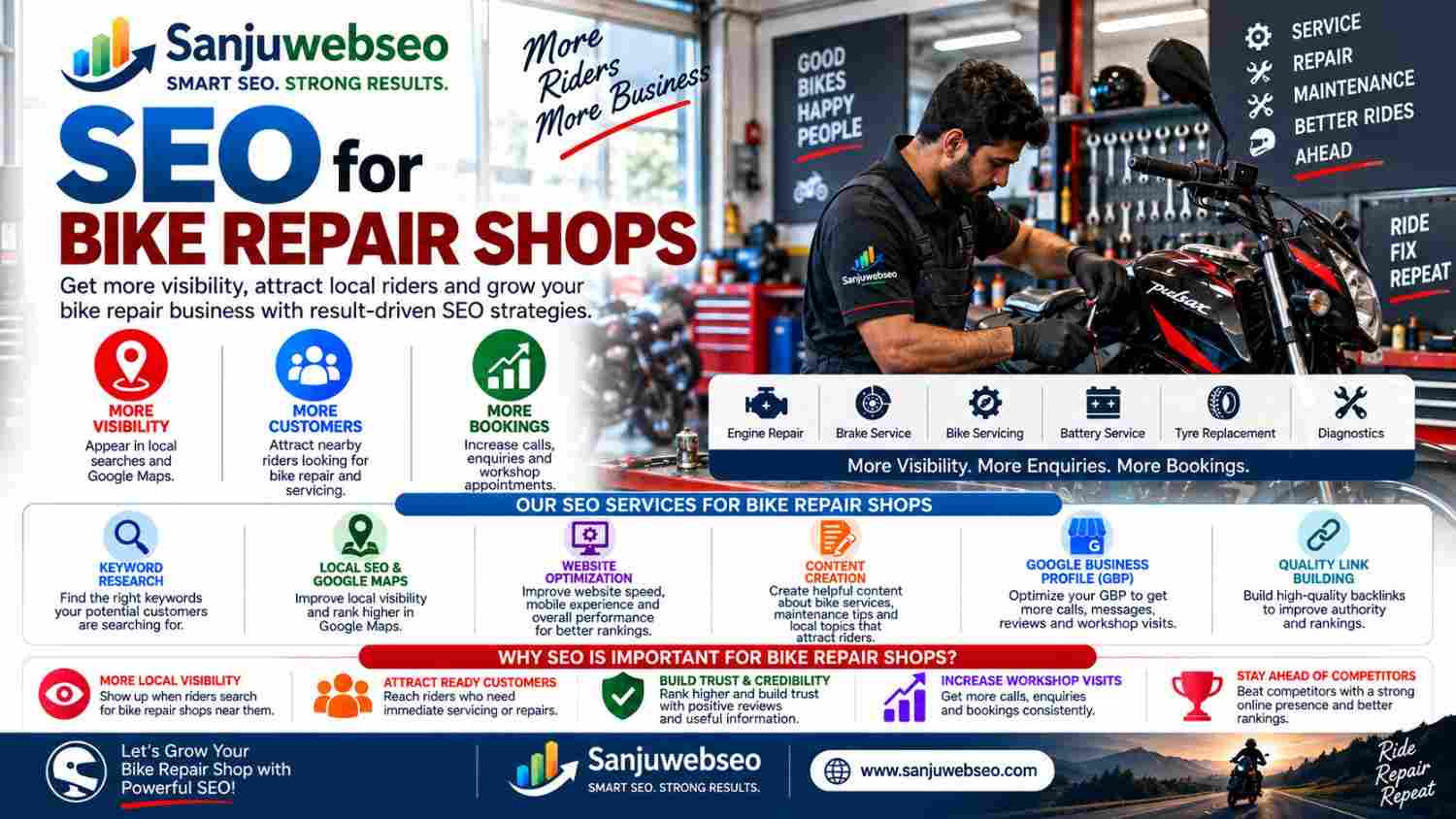
SEO for Bike Repair Shops helps repair businesses become visible when riders need professional help quickly. A bike may suddenly refuse to start, develop a strange engine sound, lose braking performance, require a tyre change, or need regular servicing. In these situations, riders often turn to Google with a specific problem rather than searching for a workshop by brand name alone.
This makes search intent particularly important for bike repair businesses. A rider may want the nearest mechanic, a workshop that handles a particular bike brand, an open repair shop, or a specialist for a specific problem. Your website should make those answers easy to find. Clear service information, location details, opening hours, genuine reviews, and simple contact options can help turn a local search into a workshop visit.
Build Content Around Problems Riders Actually Search
Many riders do not know the technical name of a mechanical problem. Instead, they describe what they can see, hear, or feel. Searches such as “bike not starting,” “bike engine making noise,” “bike brakes not working properly,” or “bike battery problem” can indicate an immediate service requirement.
Useful content can address these symptoms without pretending to diagnose a vehicle remotely. Explain possible causes, warning signs, and when professional inspection becomes necessary. This approach helps riders understand their situation while creating relevant entry points for organic search. More importantly, the content should guide the visitor toward an appropriate service rather than encouraging risky DIY repairs.
Make Every Major Bike Service Easy to Discover
A bike repair shop may handle engine servicing, oil changes, brake repairs, clutch work, chain and sprocket replacement, battery issues, tyre services, suspension work, electrical repairs, diagnostics, and periodic maintenance. If all these services are hidden under one generic page, customers may struggle to find what they need.
Create clear service sections for the work your shop actually provides. Each important service can explain common symptoms, what the inspection involves, and what customers should expect when they bring their bike in. This structure also helps search engines understand the relationship between your workshop and individual repair services.
Local Search Matters When Riders Need a Nearby Mechanic
A bike owner with a mechanical problem usually values convenience. They may search while standing beside the vehicle, after work, on the way home, or before starting a journey. Distance and accessibility can therefore influence the decision strongly.
Your website should clearly communicate the workshop location, service area, opening hours, phone number, and directions. Local SEO can help connect the business with riders searching for bike repair shops, mechanics, servicing centres, or specific motorcycle repairs nearby. Accurate local information also reduces the chance of customers reaching an outdated location or calling outside business hours.
Capture Urgent Bike Repair Searches
Some bike-related searches have immediate intent. A rider may have a dead battery, puncture, starting issue, overheating problem, or brake concern and want help as soon as possible. These customers do not want to read a long company introduction before finding a phone number or location.
Your website should make urgent actions obvious. If the workshop offers roadside assistance, pickup, towing coordination, emergency repair, or extended hours, explain those services clearly. Only mention services the business genuinely provides. Accurate information is especially important during urgent situations because customers need confidence that the workshop can actually help.
Show Expertise for Different Bike Types
Riders may search for workshops based on their motorcycle type, brand, engine category, or specific service requirement. A commuter-bike owner may have different expectations from someone maintaining a premium motorcycle. Similarly, customers looking for scooter servicing may search differently from riders looking for motorcycle repairs.
If your workshop genuinely specializes in particular bike categories or brands, explain that experience clearly. Mention the types of vehicles serviced, relevant equipment, diagnostic capabilities, or common services handled. Avoid creating separate pages for every possible bike model unless each page contains meaningful information. Quality and actual expertise should determine the website structure.
Make Routine Bike Servicing Part of Your SEO Strategy
Not every customer arrives because something has already broken. Riders also search for periodic servicing, oil changes, brake checks, chain maintenance, battery inspection, tyre replacement, and other preventive services.
This creates an opportunity to attract customers before a repair becomes urgent. Helpful maintenance content can explain what regular servicing involves, which components deserve attention, and what warning signs riders should not ignore. When this information connects naturally with your service pages, the website can support both immediate repair searches and long-term maintenance demand.
Explain Repair Costs Without Making False Promises
Price is an important consideration for riders, especially when several local workshops offer similar services. However, the final repair cost may depend on the bike model, damaged components, replacement parts, labour, and the actual condition discovered during inspection.
Rather than publishing unrealistic fixed prices for every repair, explain the factors that influence cost. Where appropriate, provide genuine starting prices or service ranges with clear conditions. Customers are more likely to trust a workshop that explains why an inspection may be required before providing a final estimate. Transparent pricing information can also reduce misunderstandings during the repair process.
Build Trust Around Genuine Workshop Experience
A rider may hesitate to leave a valuable motorcycle or scooter with an unfamiliar mechanic. They may want to know whether the technicians have relevant experience, whether the workshop uses appropriate tools, and whether the business has handled similar repairs before.
Your website can demonstrate this experience through genuine workshop photographs, technician information, service explanations, equipment details, and real project examples. Do not exaggerate qualifications or make unsupported claims. Practical evidence is more convincing than generic statements about being the “best” workshop in the area.
Reviews Can Influence Which Workshop a Rider Chooses
When several mechanics appear in local search results, reviews can become an important comparison factor. Riders may look for comments about repair quality, pricing transparency, turnaround time, staff behaviour, communication, and whether the reported problem was handled properly.
Encourage genuine customers to share their experiences and respond professionally to feedback. Avoid fake reviews and repetitive responses. A strong reputation should come from consistent service rather than artificial signals. Genuine customer experiences can then support the decision-making process when a rider compares several nearby workshops.
Make the Mobile Experience Fast and Practical
Bike repair searches are often mobile searches. A rider may be standing near the bike, travelling through an unfamiliar area, or checking a workshop while planning a service visit. A website that loads slowly or hides the phone number behind multiple menus can lose a customer at the exact moment they need assistance.
Important information should be easy to access on smaller screens. Phone numbers, workshop location, opening hours, major services, directions, and enquiry options should remain visible and simple to use. Technical optimization should support this practical experience. A fast mobile website gives riders less reason to return to Google and choose another workshop.
Use Real Bike Repair Content Instead of Generic Pages
Generic automotive content often fails to answer the questions that actual riders have. Your workshop has direct access to real customer problems, service requests, common maintenance issues, and repair experiences. These can become valuable content ideas.
For example, if technicians regularly answer questions about chain noise, battery discharge, brake wear, engine overheating, or starting problems, those topics can become useful guides. Explain the issue in simple language and clarify when professional inspection may be appropriate. This creates content based on real experience instead of publishing articles simply to target keywords.
Keep Your Bike Repair Website Technically Healthy
A repair website may contain service pages, location information, photographs, FAQs, blog posts, contact forms, and Google Business Profile references. As the website grows, technical problems can make important pages harder to discover.
Technical SEO can help address issues involving mobile performance, indexing, crawlability, page speed, broken links, website structure, and other technical factors. Sanju Web SEO’s wider digital marketing approach also covers website audits, keyword research, technical SEO, content optimization, local SEO, and Google Search Console-related work.
Connect Local Visibility With Google Business Profile
For a bike repair shop, Google Business Profile can become one of the first places a rider sees before visiting. Searchers may immediately check the workshop’s distance, opening hours, phone number, photographs, services, reviews, and directions.
Keep these details accurate and consistent with the website. Genuine workshop photographs can show the actual service environment, while authentic reviews can provide additional reassurance. Businesses that want to strengthen this local discovery process can explore Google Business Profile expertise from Sanju Web SEO.
Create a Clear Path From Search to Service Booking
A rider who discovers your workshop through Google should know what to do next. Depending on the business model, that action could be calling the workshop, requesting an estimate, asking about service availability, getting directions, or booking a maintenance appointment.
Keep forms short and avoid asking for information that is not necessary at the first stage. A service page should connect naturally with the relevant contact option. For urgent repairs, a visible phone number can be more useful than a long enquiry form. The objective is to remove unnecessary steps between search visibility and actual workshop contact.
Why SEO for Bike Repair Shops Should Focus on Real Riders
A successful bike repair strategy is not simply about ranking for “bike repair shop.” Riders search according to problems, services, brands, locations, urgency, maintenance needs, and personal experience. A workshop that understands these different search behaviours can create a more useful website and attract more relevant visitors.
SEO for Bike Repair Shops should therefore combine service-focused content, local optimization, Google Business Profile management, technical improvements, genuine reputation signals, and a simple enquiry journey. The goal is to become visible when riders actually need help and then provide enough useful information to make contacting the workshop an easy decision.
Turn Bike Maintenance Searches Into Future Workshop Visits
Not every rider searches for a mechanic because the bike has already stopped working. Many people search before a problem becomes serious. Queries about engine servicing, brake inspection, chain adjustment, oil changes, battery checks, tyre replacement, and periodic maintenance can introduce your workshop to riders earlier in their decision journey. Content around these services can answer practical questions while creating opportunities for future bookings.
Maintenance-focused pages should explain when a service is needed, what the technician checks, common warning signs, and what riders can expect during the visit. Avoid making every service page sound like an advertisement. Useful information builds confidence. It also gives search engines more context about the actual services your workshop provides.
SEO for Bike Repair Shops Should Cover Different Bike Problems
A rider searching for “bike engine repair” has a different need from someone looking for brake service or a simple oil change. Your website should reflect those differences. Separate pages or well-structured sections can address engine problems, clutch issues, brake repairs, electrical faults, battery problems, tyre services, chain and sprocket replacement, suspension work, and regular servicing.
Each page should answer the questions that matter before a rider contacts the workshop. Explain symptoms, possible causes, inspection steps, and service expectations without pretending that every problem has the same solution. This creates stronger topical relevance and gives visitors a clearer reason to choose your workshop when their specific problem matches your expertise.
Build Location Pages Around Genuine Service Coverage
If your workshop serves several nearby areas, local landing pages can help riders discover you through searches connected with those locations. However, simply changing the city or neighbourhood name on identical pages creates little value. A useful location page should explain the areas you actually serve, common customer needs, access information, and the types of bike services available.
Local relevance becomes stronger when location pages connect naturally with useful service information. A rider searching for a bike mechanic nearby should not have to move through several pages before finding opening hours, directions, services, and contact options. Clear location signals combined with helpful content can make the website more useful for both search engines and local customers.
Improve SEO for Bike Repair Shops With Service-Specific Content
A workshop may offer dozens of repairs, but visitors usually arrive with one particular concern. Service-specific content allows your website to address that concern directly. Instead of one broad “Bike Repair” page, consider explaining important services separately. This can include engine diagnostics, brake repair, clutch inspection, puncture repair, electrical troubleshooting, chain maintenance, battery replacement, and periodic servicing.
The content should also explain when professional inspection becomes important. For example, unusual engine sounds, weak braking, repeated battery failure, excessive vibration, or difficulty changing gears can have different causes. Helpful service pages should guide the reader without encouraging unsafe DIY repairs. That balance makes the content practical while demonstrating genuine workshop knowledge.
Make Repair Pricing Easier to Understand
Price is often one of the biggest concerns when someone searches for a bike repair workshop. Yet repair costs can vary depending on the bike model, damaged components, labour requirements, replacement parts, and the actual condition discovered during inspection. A website should communicate this clearly instead of publishing unrealistic fixed prices for every repair.
You can explain what normally affects an estimate and which services may require physical inspection before a final price is confirmed. A transparent approach reduces uncertainty. It also gives customers a better understanding of why two seemingly similar repairs may have different costs. This type of content can support both organic visibility and better-quality enquiries.
Use Bike Model and Service Combinations Carefully
Riders frequently search using both their bike model and the problem they are experiencing. A website can address these searches when the workshop genuinely has experience servicing those models. Pages can discuss relevant maintenance requirements, common service considerations, compatible workshop services, and inspection needs without making unsupported claims.
However, creating dozens of nearly identical pages for every bike model is rarely a good strategy. Each page should exist because it provides useful information that a rider could not easily find elsewhere on your website. Stronger pages are usually built around real workshop experience, genuine service capability, and meaningful differences between customer needs.
Strengthen SEO for Bike Repair Shops With Helpful FAQs
Questions from customers are valuable content opportunities because they reveal exactly what riders want to know before booking a repair. Questions such as “Why is my bike making a clicking noise?” “How often should I service my bike?” “Why does the battery keep dying?” and “When should brake pads be replaced?” can become useful FAQ or educational content.
The answers should remain practical and responsible. Avoid diagnosing a mechanical issue with certainty when an inspection is required. Instead, explain possible causes and tell readers when professional evaluation is appropriate. This approach can make the website more useful for conversational searches while reducing the risk of misleading customers.
Connect Repair Content With Maintenance Guides
A rider visiting a brake repair page may also need information about brake maintenance. Someone reading about battery replacement may want to understand why batteries fail repeatedly. Internal links can connect these related topics and help visitors continue their research without returning to Google.
For example, a maintenance guide can link to relevant repair services, while a service page can direct readers toward an appropriate maintenance article. This structure creates a logical content network. It also helps search engines understand how individual pages relate to one another. The goal is not to add links everywhere. Every link should help the rider take the next useful step.
Use Google Business Profile to Capture Nearby Riders
For a local bike repair workshop, Google Business Profile can be one of the most important discovery points. Riders often search on Google Maps when they need a mechanic, puncture repair, battery service, or emergency assistance nearby. Accurate business information can therefore support visibility when the customer has immediate local intent.
Keep the profile information consistent with the website. Services, business hours, photos, location details, updates, and customer reviews should reflect the actual workshop. A properly maintained profile can complement website SEO and create a stronger local presence. If you need professional help with this area, you can explore Google Business Profile optimization support.
Earn Trust Through Real Workshop Evidence
Bike repair is a trust-based service. Customers are allowing someone to work on an important and sometimes safety-critical machine. Website content should therefore show more than generic statements about being the “best” workshop. Real workshop photographs, technician experience, service processes, equipment, customer feedback, and genuine repair examples can provide stronger evidence.
Before-and-after photographs can also become useful when presented honestly. Explain what problem was identified and what service was performed. Do not use exaggerated claims or misleading images. Authentic evidence is more convincing than polished promotional language because customers want to know whether the workshop understands their actual problem.
Prepare SEO for Bike Repair Shops for Conversational Search
Search behaviour is becoming more conversational. Instead of typing only “bike repair shop near me,” a rider may ask a longer question such as “Where can I get my bike battery checked today?” or “Why is my bike losing power while accelerating?” Your content should therefore address complete questions and real situations.
Clear answers work better than awkward keyword repetition. Use natural language, short explanations, descriptive headings, and supporting details. A strong page should make sense when read by a person first. This also gives search systems more meaningful context when they evaluate whether the page can answer a specific question.
Measure SEO for Bike Repair Shops Through Real Customer Actions
Traffic alone does not tell you whether SEO is producing useful business results. A bike repair website may receive visitors who never contact the workshop. Stronger measurement looks at actions such as calls, enquiry forms, direction requests, WhatsApp conversations, service bookings, and visits from local search.
Compare performance across service pages and search intent. If brake repair content brings highly relevant enquiries while a general bike repair page receives traffic without conversions, that difference matters. SEO decisions should then follow customer behaviour rather than rankings alone. This approach helps focus future content and optimisation on opportunities that can contribute to actual workshop growth.
Why Choose Sanju Web SEO for Bike Repair Workshop SEO?
A successful bike repair SEO strategy should connect technical website health with local visibility, useful service content, internal linking, Google Business Profile optimisation, and conversion-focused improvements. Sanju Web SEO can build the strategy around the workshop’s actual services, customer problems, target locations, and competitive landscape rather than relying on generic industry templates.
The work can include keyword research, content planning, technical improvements, local optimisation, service-page development, internal linking, and ongoing performance analysis. You can also follow Sanju Web SEO on LinkedIn for practical insights around SEO, AI search, and digital marketing. The objective is simple: attract relevant riders, generate genuine enquiries, and build sustainable organic visibility.
FAQ’s:-
Q1. What does SEO for Bike Repair Shops involve?
SEO for Bike Repair Shops involves improving a workshop website so riders can discover relevant repair and maintenance services through search engines. It can include service-page optimisation, local SEO, technical improvements, useful content, internal linking, Google Business Profile optimisation, and conversion improvements. The strategy should reflect real customer behaviour. Someone searching for brake repair has a different need from someone looking for routine servicing. Addressing those specific needs helps the website attract more relevant visitors and gives potential customers clearer information before they contact the workshop.
Q2. How can SEO for Bike Repair Shops help attract local customers?
SEO for Bike Repair Shops can improve visibility when riders search for mechanics, repair services, or maintenance providers in their area. Local optimisation connects the workshop with location-based searches and Google Maps discovery. Website pages should clearly communicate the workshop’s service area, available repairs, contact information, and accessibility. Google Business Profile also plays an important role in local discovery. When these elements work together, the workshop has more opportunities to appear when nearby riders are actively looking for a service provider.
Q3. Which services should SEO for Bike Repair Shops target?
A strong SEO strategy for bike repair shops can target important services based on what the workshop genuinely provides. Examples include bike servicing, engine repair, brake repair, clutch work, battery replacement, electrical troubleshooting, tyre services, chain and sprocket replacement, puncture repair, and general maintenance. The exact priorities should come from customer demand, competition, service capability, and search intent. Creating useful pages for important services allows the website to address specific problems instead of depending only on a broad “bike repair” keyword.
Q4. Can SEO for Bike Repair Shops generate emergency repair enquiries?
SEO for Bike Repair Shops can help capture urgent searches when the website provides clear information around services that riders commonly need quickly. Examples may include puncture repair, battery problems, starting issues, brake concerns, or roadside-related searches where applicable. However, SEO cannot guarantee immediate enquiries or emergency jobs. The website should clearly state actual availability, service coverage, opening hours, and contact methods. Accurate information is especially important when customers are dealing with a problem that requires fast attention.
Q5. How important is Google Business Profile for SEO for Bike Repair Shops?
Google Business Profile is highly relevant to SEO for Bike Repair Shops because many riders use Google Search and Maps to find nearby mechanics. A complete and accurate profile can provide essential information such as location, hours, services, photographs, reviews, and contact options. Website SEO and profile optimisation should support each other rather than operate separately. Consistent business information and genuine customer reviews can strengthen local trust. Regular profile maintenance also helps ensure that potential customers receive accurate information when they are ready to visit.
Q6. Should a bike repair workshop create separate pages for every bike model?
Creating separate pages for every model is not automatically a good SEO strategy for bike repair shops. Pages should be created when there is genuine expertise, meaningful search demand, and useful information to provide. A page that simply replaces one bike model name with another offers little additional value. Better content can explain actual servicing experience, relevant maintenance considerations, common customer questions, and available workshop services. Quality and usefulness should determine the page structure rather than the desire to create as many keyword-targeted pages as possible.
Q7. How can SEO for Bike Repair Shops improve trust before a customer visits?
SEO for Bike Repair Shops can support trust by presenting genuine evidence of workshop capability. Helpful service explanations, real photographs, technician information, repair examples, customer reviews, clear contact details, and transparent information about estimates can reduce uncertainty. Customers want to know whether a workshop understands their problem and can handle their bike properly. Content should avoid exaggerated claims such as guaranteed results when the outcome depends on inspection. Honest information creates a more credible experience and can make visitors more comfortable contacting the workshop.
Q8. Can maintenance blogs support SEO for Bike Repair Shops?
Yes. Maintenance blogs can support SEO for Bike Repair Shops by answering questions riders search for before they need a repair. Topics can include service intervals, brake warning signs, battery problems, chain maintenance, unusual engine sounds, tyre care, and common servicing questions. These articles can then connect naturally to relevant service pages. This creates a useful relationship between informational and commercial content. The blog should not exist only to insert keywords. Each article should answer a genuine rider question and provide a logical next step when professional service is required.
Q9. How long does SEO for Bike Repair Shops take to show results?
SEO for Bike Repair Shops does not have a fixed timeline because results depend on website condition, competition, location, content quality, authority, technical health, and the strength of the existing online presence. Some improvements can produce early changes, while competitive local searches may require sustained optimisation. It is better to evaluate progress through several signals, including rankings, impressions, relevant organic traffic, calls, enquiries, direction requests, and bookings. Consistent optimisation generally provides a stronger foundation than relying on short-term ranking changes alone.
Q10. Why should I choose Sanju Web SEO for SEO for Bike Repair Shops?
Sanju Web SEO can build SEO for Bike Repair Shops around real rider behaviour rather than using a generic template. The strategy can combine keyword research, service-page optimisation, local search, technical SEO, Google Business Profile work, content development, internal linking, and conversion-focused improvements. The aim is to attract people who actually need bike repair or maintenance services. Sanju Web SEO can also help create a long-term content and optimisation plan that supports stronger local visibility and more relevant service enquiries.