
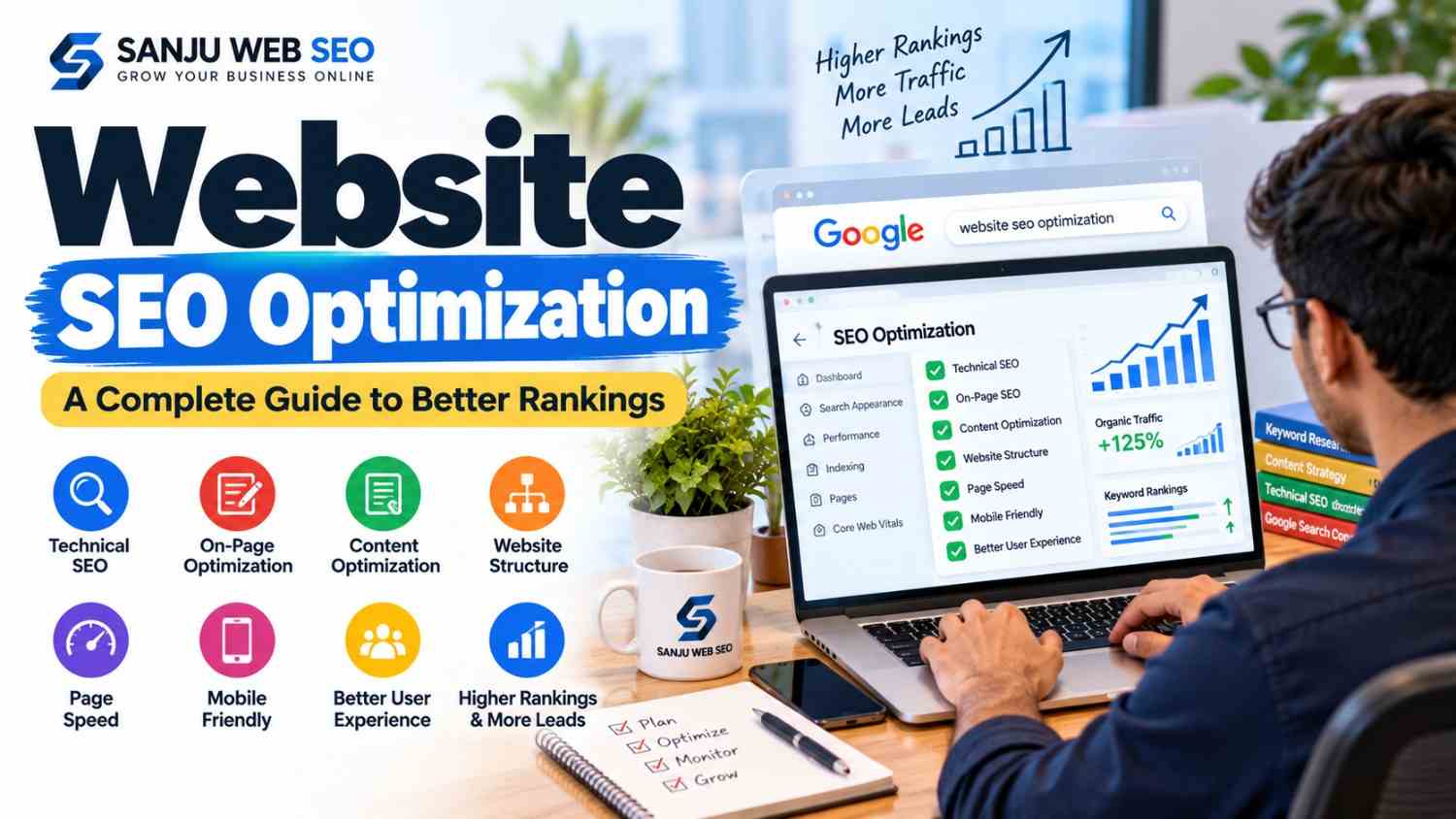
How Website SEO Optimization Improves Search Visibility, User Experience, and Conversions
Website SEO Optimization is the process of improving a website so search engines can understand its pages and visitors can find useful information easily. It includes technical improvements, content optimization, website structure, page speed, internal linking, and conversion-focused design. When these elements work together, a website can become easier to discover, navigate, and use.
However, optimization is not simply about adding keywords to every page. A website may contain useful content but still struggle if search engines cannot access important pages, visitors cannot find relevant information, or the site performs poorly on mobile devices. Therefore, an effective strategy begins by identifying the problems that matter most and fixing them in the right order.
For businesses that depend on online enquiries, a well-optimized website can support the entire customer journey, from the first Google search to the final phone call or contact form submission.
What Does Website SEO Optimization Include?
Website SEO Optimization covers several connected activities. On-page SEO improves individual pages, technical SEO helps search engines crawl and index content, and content optimization makes information more useful for the intended audience. In addition, website structure and internal links help visitors discover related information.
These activities should support a common goal rather than operate as separate tasks. For example, publishing a detailed service page will have limited value if the page contains confusing information or is difficult to access. Similarly, improving page speed alone will not make an irrelevant page useful to customers.
A practical optimization strategy considers the website as a whole, identifies its most important pages, and prioritizes improvements according to their potential impact.
Start With a Website SEO Audit
Before making changes, examine the website’s current condition. An audit helps identify technical errors, weak page content, indexing problems, broken links, duplicate pages, and opportunities to improve the user experience.
Begin by reviewing the pages that matter most to your business, such as service pages, product pages, location pages, and high-performing blog posts. Then, check whether search engines can access those pages and whether the information matches the needs of your target audience.
A useful website SEO audit can help organize these findings into actionable priorities. Rather than attempting every possible improvement at once, separate urgent technical issues from content improvements and longer-term opportunities.
Use Google Search Console to Find Optimization Opportunities
Google Search Console provides information about how your website appears in Google Search. It can show search queries, impressions, clicks, indexing information, and certain technical issues. These insights help you understand which pages attract attention and where further investigation may be useful.
For example, a page may receive impressions but relatively few clicks. In that situation, review whether the title and description clearly communicate the page’s value. If a valuable page is not indexed, investigate the relevant indexing reports and technical setup before publishing more content.
Remember that a report does not always explain the entire problem by itself. Review the affected page, its content, and its technical configuration before deciding which change to make.
Improve On-Page SEO With Clear, Relevant Content
On-page SEO helps search engines and readers understand the purpose of each page. Start with a clear page title, a useful main heading, descriptive subheadings, and content that directly addresses the visitor’s needs. Include the primary keyphrase naturally where relevant, especially in prominent elements, without forcing it into every paragraph.
Each important page should have a distinct purpose. A service page should explain the service, its benefits, the process, and relevant next steps. Meanwhile, an educational article should answer a specific question or help readers solve a problem.
For example, a business offering website optimization should explain what it reviews, which problems it can address, and what customers can expect from the process. If you want to understand how AI-related search optimization fits into modern SEO, read what AI SEO means and consider how it relates to your website’s wider content strategy.
Write SEO Titles and Meta Descriptions for Real Users
An SEO title should describe the page accurately and make its purpose clear. Keep it concise, place the main topic naturally, and avoid repeating similar phrases unnecessarily. A meta description should summarize the page’s value and encourage a relevant click without making promises the page cannot support.
Search engines may generate a different snippet depending on the query, so writing a description does not guarantee that Google will display it exactly as submitted. Nevertheless, a clear description helps you communicate what visitors can expect from the page.
Also, review title and description duplication across important URLs. Similar pages should have distinct metadata that reflects their actual content rather than relying on one generic template.
Strengthen Website Structure and Internal Linking
A clear website structure helps users navigate between related topics and helps search engines discover important pages. Organize content around meaningful categories, services, and supporting resources. Visitors should be able to understand where they are and how to reach the next relevant page without unnecessary effort.
Internal links connect related pages within the same website. For instance, a service page can link to a detailed guide explaining the service, while the guide can link back to the relevant service page when readers need professional assistance. Use descriptive anchor text that explains what the destination contains.
However, avoid adding links simply to increase their number. Each link should help readers discover relevant information or complete a task. Check for broken links and important pages that receive no useful internal links from other parts of the website.
Improve Technical SEO for Better Crawling and Indexing
Technical SEO focuses on whether search engines can access, interpret, and index the pages you want to appear in search results. Review your XML sitemap, robots directives, canonical tags, redirects, status codes, and internal links. These elements should work together to communicate which URLs matter and how they relate to one another.
For example, a page blocked from crawling may not be accessible to search engines in the intended way. A redirect chain can create unnecessary steps, while incorrect canonical tags can signal a preferred URL that does not match your intentions.
Use the appropriate reports and inspect important URLs when investigating these issues. Do not automatically remove every page that receives little traffic; some pages may serve customers or support other content. Instead, decide whether to improve, consolidate, redirect, or remove a page based on its purpose and value.
Check Mobile Usability and Core Web Vitals
Your website should work smoothly across desktop and mobile devices. Make sure text is readable, navigation is understandable, forms are manageable, and important buttons are easy to use. In addition, review image sizes, scripts, hosting performance, and unnecessary page elements that may slow down loading.
Google’s Core Web Vitals measure aspects of loading performance, responsiveness, and visual stability. The current metrics include Largest Contentful Paint (LCP), Interaction to Next Paint (INP), and Cumulative Layout Shift (CLS). These measurements can help you identify areas where visitors may experience delays or unexpected layout movement.
| Metric | What it measures | Practical improvement |
|---|---|---|
| LCP | Loading performance of the main visible content | Optimize large images and improve server response |
| INP | Responsiveness to user interactions | Reduce unnecessary JavaScript and long-running tasks |
| CLS | Unexpected layout shifts | Reserve space for images, embeds, and other page elements |
Passing Core Web Vitals does not guarantee high rankings. Nevertheless, improving these areas can support a smoother experience, particularly for visitors using slower connections or mobile devices.
Optimize Images and Other Media
Images can make a page easier to understand, but oversized media can also affect loading performance. Use relevant, high-quality images and resize them according to their actual display requirements. Choose efficient image formats when appropriate, compress files, and avoid uploading unnecessarily large assets.
Write descriptive alt text for meaningful images so their purpose is understandable to people using assistive technology and to systems interpreting image content. Decorative images may need empty alt attributes instead of keyword-filled descriptions.
Also, give image files meaningful names before uploading them. For example, a filename describing a website audit illustration is more useful than a generic sequence of numbers. However, filenames and alt text should describe the image accurately rather than repeat the focus keyphrase without purpose.
Create Helpful Content That Matches Search Intent
Content optimization begins with understanding what visitors want from a page. Some searches call for a quick explanation, while others require a detailed guide, comparison, product page, or service description. Therefore, review the search query and provide the type of information that best meets the visitor’s need.
Create content that demonstrates practical understanding of the topic. Use clear explanations, relevant examples, accurate information, and original insights. Where appropriate, explain the limitations of a method instead of presenting every technique as universally effective.
A structured AI SEO services approach may be relevant when evaluating how content planning and search optimization can work together. However, no tool or technique should replace editorial review, factual accuracy, and usefulness to readers.
Review Existing Content Before Publishing More
Publishing additional articles is not always the best next step. Sometimes an existing page needs clearer explanations, updated information, improved internal links, or a more direct answer to the query it targets.
Review older pages for outdated claims, broken links, overlapping topics, and information that no longer reflects your services. If two pages serve essentially the same purpose, consider whether they should be differentiated or consolidated. Make these decisions carefully because removing or changing URLs can affect existing traffic and links.
The objective is to build a useful collection of resources, not simply to increase the number of published pages.
Add Structured Data Where It Is Appropriate
Structured data provides search engines with additional information about the content of a page. Depending on the website, relevant types may include Organization, LocalBusiness, Product, Article, or BreadcrumbList. Use only schema types that accurately describe the visible content and the actual entity or page.
For example, an eligible local business may use appropriate LocalBusiness structured data to describe details such as its business name and contact information. An article may use Article markup to help identify its headline, author, and publication details.
Structured data does not guarantee a rich result or higher rankings. Validate the implementation, follow Google’s eligibility requirements, and correct errors before considering the task complete. Avoid adding unsupported claims, misleading ratings, or properties that do not match the page.
Improve Conversion Paths Alongside SEO
Organic traffic is useful when visitors can find the information they need and take a meaningful next step. Review the path from a search result to the landing page, then from that page to a call, enquiry, booking, or purchase.
Make contact details easy to find, explain the next step clearly, and keep forms as simple as the situation allows. Service pages should answer common questions before asking visitors to contact you. Similarly, product pages should explain relevant features, pricing information, and purchasing details accurately.
A business focused on local customers may also need consistent business information and a well-maintained Google Business Profile. Eligible businesses can review their Google Business Profile information so customers can access accurate details through Google.
When you evaluate results, measure qualified enquiries and completed actions alongside organic clicks. More visits do not automatically mean more business if the page attracts the wrong audience or does not explain the offering clearly.
Track Website SEO Optimization Results
A measurement plan helps you understand whether your optimization work is producing useful changes. Use Google Search Console to monitor organic impressions, clicks, search queries, and indexing information. Use an analytics tool to understand landing-page engagement and important conversions, where tracking is configured correctly.
Record a baseline before making major changes. Then, compare results over meaningful periods and consider seasonality, changes in demand, and other factors that may affect performance.
| What to track | Why it matters | Tool or source |
|---|---|---|
| Organic impressions and clicks | Shows search visibility and traffic trends | Google Search Console |
| Important page indexing | Helps identify pages that may not appear in search | Google Search Console |
| Organic landing-page visits | Shows which pages attract visitors | Website analytics |
| Calls and form submissions | Connects website activity with enquiries | Analytics and business records |
| Page performance | Helps identify speed and responsiveness issues | PageSpeed Insights and field data |
Use the findings to prioritize the next improvements. For example, if an important page attracts relevant visitors but produces few enquiries, review its clarity, trust signals, and contact process before assuming that more traffic is the solution.
A Practical 30-Day Website SEO Optimization Plan
You do not need to change every part of a website at once. A focused 30-day plan can help you address important issues and establish a clear measurement process.
Week 1: Audit and prioritize. Review key pages, indexing, page titles, broken links, mobile usability, and technical issues. Identify the changes that could affect important pages or customer journeys.
Week 2: Improve on-page SEO. Update priority titles, headings, descriptions, and page content. Make sure each page serves a distinct purpose and answers the questions visitors are likely to have.
Week 3: Strengthen structure and performance. Improve relevant internal links, optimize oversized images, review Core Web Vitals, and address important crawl or indexing problems.
Week 4: Measure and refine. Check Search Console data, inspect important URLs, review conversion tracking, and document what changed. Use the findings to decide which improvements to continue.
This plan is a starting point, not a guarantee of ranking changes within 30 days. Some technical fixes can be implemented quickly, while search visibility and business outcomes may take longer to change.
Common Website SEO Optimization Mistakes to Avoid
One mistake is treating SEO as a collection of isolated tricks. Adding keywords, installing a plugin, or publishing new articles will not automatically make a website useful or competitive. Instead, prioritize the issues that affect search access, content quality, and visitor experience.
Another mistake is making major URL changes without planning redirects and monitoring their effects. Similarly, adding structured data that does not match visible content can create eligibility problems. Review the purpose and likely consequences of each change before implementing it.
Avoid copying competitor content, creating repetitive pages solely to target keyword variations, buying manipulative links, and stuffing headings with exact-match phrases. These tactics can weaken content quality and may conflict with search spam policies.
Finally, do not judge success through a single ranking or plugin score. SEO performance depends on multiple factors, and results can fluctuate. Use technical evidence, search data, visitor behavior, and actual enquiries to make informed decisions.
Improve Your Website With a Clear SEO Strategy
Website SEO Optimization works best when technical accessibility, helpful content, relevant internal links, and a clear user journey support one another. Start with an audit, prioritize important pages, and use real performance data to guide improvements. Over time, this process can help you maintain a more useful and search-friendly website.
Sanju Web SEO helps businesses identify website optimization opportunities and plan practical improvements around their goals. If you want to discuss your website’s current condition, visit Sanju Web SEO or call +91 9302110432. You can also connect with Sanju Web SEO on LinkedIn for relevant updates and insights.
FAQ’s:-
Q1. What Is Website SEO Optimization?
Website SEO Optimization is the process of improving a website’s content, structure, technical setup, and usability so search engines can understand its pages and visitors can find useful information. It includes keyword research, on-page improvements, internal linking, technical checks, and performance monitoring. When these activities address real website problems, they can support better search visibility and a more helpful experience for potential customers.
Q2. Why Is Website SEO Optimization Important for Businesses?
Website SEO Optimization helps businesses make important pages easier to discover and understand through organic search. In addition, a well-organized website can help visitors find services, compare options, and contact the business more easily. Although SEO does not guarantee rankings or leads, it can support long-term discoverability when the website provides relevant content and a reliable user experience.
Q3. How Long Does Website SEO Optimization Take to Show Results?
The timeline depends on the website’s current condition, competition, the changes implemented, and how quickly search engines recrawl and reassess pages. Some technical improvements may be completed quickly, but measurable search changes can take longer. Therefore, monitor indexing, impressions, clicks, and conversions over time instead of expecting every optimization to produce immediate results.
Q4. What Are the Most Important Website SEO Optimization Factors?
Important factors include useful content, clear page titles, relevant headings, accessible pages, logical internal links, mobile usability, and sound technical configuration. Moreover, websites should avoid misleading information and unnecessary repetition. The right priorities depend on the site’s condition and audience, so an initial audit is often a sensible way to identify which issues deserve attention first.
Q5. How Can I Check My Website SEO Performance?
You can use Google Search Console to review organic search queries, clicks, impressions, and indexing information. Website analytics can help you understand landing-page visits and conversions when tracking is configured correctly. In addition, tools such as PageSpeed Insights can help assess page performance. Review these sources together to understand both search visibility and the actions visitors take on your website.
Q6. Does Website SEO Optimization Improve Page Speed?
Website SEO Optimization can include performance improvements such as compressing images, reducing unnecessary scripts, improving server response, and preventing layout shifts. These changes may make pages more responsive and easier to use. However, page speed alone does not guarantee higher rankings, so assess performance alongside content relevance, technical accessibility, and the overall user experience.
Q7. How Often Should I Update My Website for SEO?
Review your website regularly, but update pages when there is a genuine reason to do so. For example, you may need to correct outdated information, improve unclear explanations, repair broken links, or address new customer questions. However, changing dates or rewriting content without adding value is not a reliable SEO strategy. Focus on accuracy, usefulness, and measurable opportunities for improvement.
Q8. Is Website SEO Optimization Possible Without Hiring an Agency?
Yes, website owners can handle many basic tasks, including keyword research, title improvements, content editing, internal linking, and monitoring Search Console. However, complex technical problems or large websites may require additional expertise. Start with manageable tasks and document your changes. If you encounter persistent problems, consider professional assistance based on your website’s needs and available resources.
Q9. Does Website SEO Optimization Guarantee First-Page Google Rankings?
No, Website SEO Optimization cannot guarantee first-page rankings. Search results depend on competition, relevance, location, search intent, and other factors that can change over time. Therefore, avoid providers who promise guaranteed positions. Instead, choose a strategy that focuses on sound technical practices, useful content, transparent reporting, and measurable improvements in qualified traffic and business outcomes.
Q10. How Can Sanju Web SEO Help With Website SEO Optimization?
Sanju Web SEO can help businesses identify website improvement opportunities through audits, keyword research, content optimization, technical reviews, and internal linking. Additionally, a structured plan can help prioritize the pages and issues that matter most to the business. To get started, discuss your website’s goals and current challenges so the recommended work can reflect your audience, competition, and available resources.