
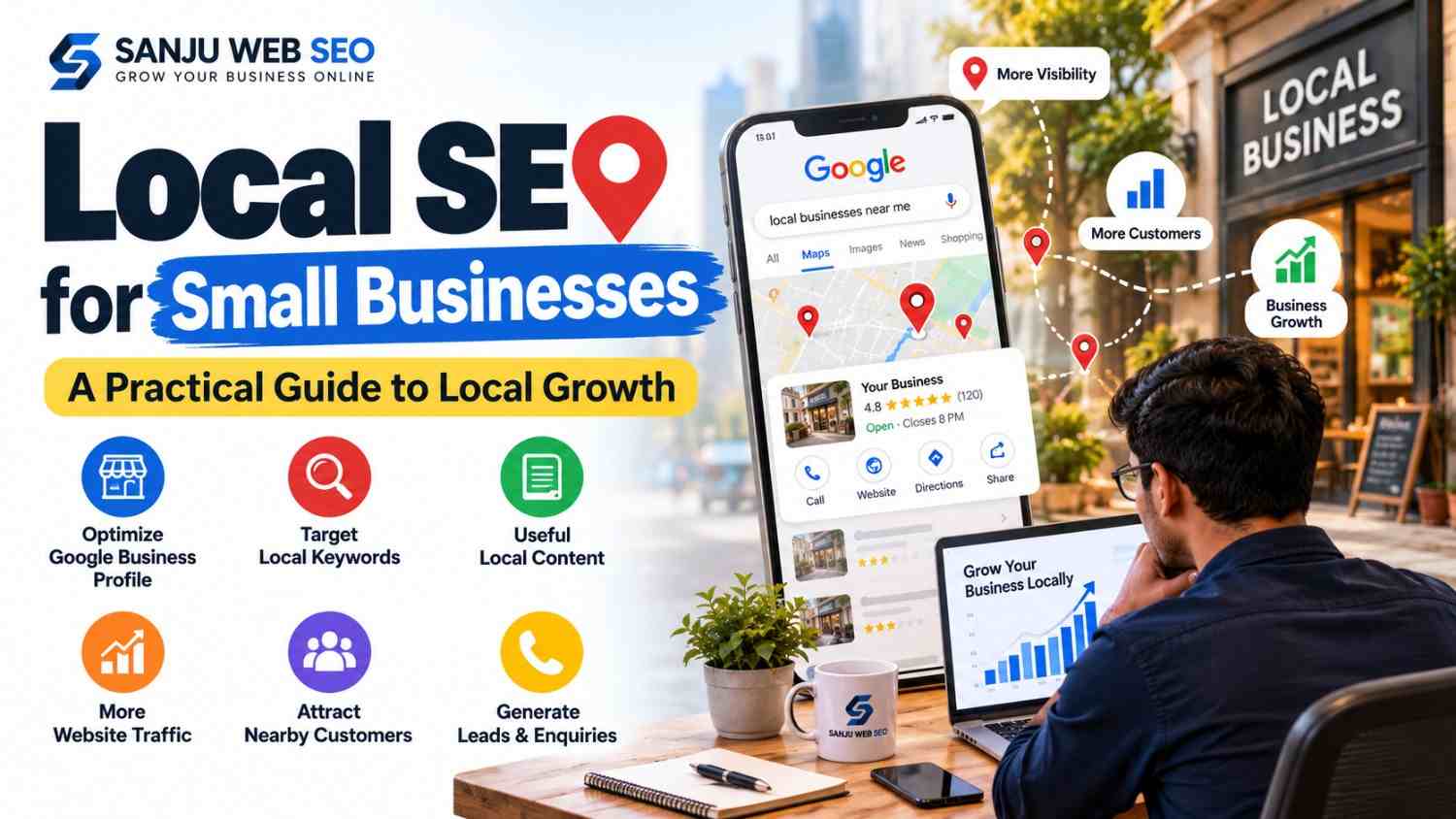
How Local SEO Helps Small Businesses Reach Nearby Customers and Generate Leads
Local SEO for Small Businesses helps companies improve their visibility when people search for products or services in a particular area. Whether you operate a salon, repair shop, clinic, consultancy, or home service business, local search can connect your services with people who are actively looking for them. The goal is not simply to appear on Google; it is to help relevant customers find accurate information and take the next step.
For example, someone searching for a service near their home may compare business listings, read reviews, visit websites, and check contact details before making a decision. Therefore, your business needs consistent information, useful website content, and a well-maintained Google Business Profile where eligible. When these elements work together, they can support stronger local visibility and more relevant enquiries.
Why Local SEO Matters for Small Business Growth
Small businesses often serve a defined area and rely on customers who can visit their premises or receive services nearby. Local SEO helps search engines understand what your business offers and where it operates. As a result, your business may become more discoverable for relevant location-based searches.
However, local visibility does not depend on adding a city name to every page. Google considers several factors when presenting local results, including relevance, distance, and prominence. You cannot control every factor, particularly a searcher’s distance from your business. Instead, focus on accurate business information, useful pages, genuine reviews, and a positive customer experience.
Local SEO can also help you understand customer needs. Search queries, website visits, calls, and enquiries may reveal which services people want most. Consequently, you can use these insights to improve your service pages, answer common questions, and make your business easier to evaluate.
Optimize Your Google Business Profile for Local Searches
A complete and accurate Google Business Profile can help eligible businesses appear in Google Search and Maps. Start by using your real business name, selecting the most appropriate primary category, and providing correct contact information. Add relevant secondary categories only when they accurately describe your business.
Next, review your address or service area, opening hours, website link, services, and business description. Upload genuine photographs that help customers understand your premises, team, products, or work. In addition, update special hours when necessary and respond professionally to customer questions and reviews.
Avoid adding promotional keywords to your business name when they are not part of your actual name. Similarly, do not create multiple profiles for the same business at one location simply to target extra keywords. These shortcuts can create policy risks and confuse customers. If you need support with profile improvements, review the Google Business Profile optimization services offered by Sanju Web SEO.
Choose Local Keywords That Match Customer Intent
Keyword research helps you understand how nearby customers search for your products and services. Start with your core services, the locations you genuinely serve, and the questions customers ask before contacting a business. Then, group keywords according to their meaning and purpose instead of creating a separate page for every minor variation.
For example, a local repair business may attract different searches for a specific repair, an emergency service, or a provider in a nearby area. Each query can reflect a different need. Therefore, choose keywords that describe the service accurately and match the information available on your website.
| Keyword type | Example | Recommended content |
|---|---|---|
| Service-based | laptop repair service | Dedicated repair service page |
| Location-based | laptop repair in Indore | Relevant local service page |
| Near-me search | laptop repair near me | Accurate business details and local relevance |
| Informational | how to maintain a laptop battery | Helpful educational article |
| High-intent search | laptop screen replacement cost | Service details and clear pricing guidance |
These examples illustrate keyword types; they are not verified search-volume figures. Use keyword research tools and actual Search Console data to assess demand and performance. Moreover, avoid targeting locations where you do not genuinely provide services.
Create Useful Local Landing Pages Without Duplicating Content
A local landing page should explain what you offer, who you serve, and what customers need to know before contacting you. Include relevant service details, genuine location information, contact options, and answers to questions specific to that audience. When appropriate, add original photographs, customer examples, directions, or practical information about service availability.
However, creating dozens of pages by changing only the city name can produce thin, repetitive content. Instead, publish a separate location page when it serves a distinct audience and provides meaningful local information. If two locations have substantially the same offering and no useful differences to explain, a single well-developed page may be more appropriate.
Internal links can also guide visitors from educational articles to the relevant service page. For instance, businesses can learn from the industry-specific approach used in SEO for dentists in Indore. The key lesson is to match the content to the actual service and customer needs rather than repeating the same generic description across every page.
Improve Your Website for Local SEO and Conversions
Your website should make it easy for visitors to understand your services and contact your business. Display your business name, phone number, address where appropriate, opening hours, and service information consistently. Add a clear call to action, such as requesting a quote, booking an appointment, or calling for details.
Mobile usability deserves particular attention because many local searches happen on mobile devices. Make sure important text is readable, buttons are easy to tap, forms are simple, and contact information is easy to find. In addition, compress oversized images and review page speed so unnecessary technical problems do not interfere with the experience.
Technical SEO also helps search engines discover and understand important pages. Check indexability, internal links, XML sitemaps, redirects, canonical tags, and broken links. If you are unsure where to begin, use a website SEO audit to identify issues that deserve attention. Fixing technical problems does not guarantee rankings, but it can help search engines access your intended content more reliably.
Build Trust Through Genuine Reviews and Accurate Information
Reviews can help potential customers compare local businesses and understand other customers’ experiences. Encourage customers to leave honest feedback after genuine interactions, and make the process convenient without pressuring them. Respond politely to both positive and negative reviews, while protecting private customer information.
Do not buy reviews, create fake testimonials, or offer incentives in exchange for positive ratings. Such practices can mislead customers and violate platform policies. Instead, use recurring feedback to identify service improvements and answer common concerns.
Consistency matters beyond reviews as well. Keep your business details accurate across your website, relevant directories, and public profiles. Where appropriate, explain your experience, qualifications, process, and service limitations. For example, a photography business can show genuine work samples and explain its packages, while a local salon can provide accurate service information and booking details. The SEO approach for salons illustrates why industry-specific information is more useful than generic claims.
Create Local Content That Answers Real Customer Questions
Local content should do more than repeat a location name. It should help people make decisions, solve problems, or understand the services available in their area. Useful topics might include preparation guides, service comparisons, maintenance advice, local customer questions, or explanations of how your process works.
For instance, a home service provider could explain what customers should check before booking a repair. A clinic could describe its appointment process, while a local retailer could answer questions about product availability. However, publish these details only when they are accurate and relevant to the business.
You can also connect related articles to service pages through contextual internal links. This helps readers discover the next useful resource without forcing them through unrelated pages. As your content library grows, review older articles for outdated details, broken links, and opportunities to provide better answers.
Measure Local SEO Performance Beyond Rankings
Rankings are useful, but they do not tell the whole story. Track Google Business Profile interactions where available, website clicks, calls, direction requests, organic search traffic, and qualified enquiries. Google Search Console can show which queries generate impressions and clicks, while website analytics can help you understand how visitors interact with important pages.
Compare results over meaningful periods and account for seasonality, service demand, and changes in competition. For example, more website traffic may not lead to more enquiries if the page does not explain the service clearly or make contact easy. Therefore, evaluate both visibility and conversion performance.
Use the findings to decide what to improve next. A page receiving impressions but few clicks may need a clearer title and description. A page attracting visits but few enquiries may need better service details or a simpler contact process. These changes should respond to observed user needs rather than rely on assumptions about what will improve rankings.
Follow a Practical 90-Day Local SEO Plan
A structured plan helps small businesses make progress without trying to change everything at once. During the first month, verify business information, review your website, identify priority keywords, and correct critical technical issues. Focus on the services and locations that matter most to your actual customers.
During the second month, improve key service pages, update relevant business profile information, and publish helpful content based on customer questions. Meanwhile, make sure internal links connect related pages naturally. In the third month, review search performance, customer interactions, and enquiries to identify which activities deserve further investment.
| Period | Main priority | Suggested actions |
|---|---|---|
| Days 1–30 | Foundation | Check business details, audit the website, research local keywords |
| Days 31–60 | Optimization | Improve service pages, profile information, and useful content |
| Days 61–90 | Measurement | Review search data, enquiries, and opportunities for improvement |
This plan provides a practical starting point, not a guaranteed ranking timeline. Results depend on competition, business location, website condition, and the quality of implementation.
Common Local SEO Mistakes Small Businesses Should Avoid
One common mistake is treating local SEO as a one-time task. Business details, customer expectations, competitors, and website content can change, so regular reviews remain useful. Another mistake is focusing on keyword density rather than answering customer questions clearly.
Businesses should also avoid fake reviews, misleading location claims, unnatural backlinks, copied location pages, and unnecessary keyword repetition. In addition, do not assume that adding a map or publishing frequent profile updates will automatically improve rankings. Each activity should serve a genuine customer or business purpose.
Finally, avoid measuring success through rankings alone. Local search results can vary according to location and query context. Combine available search data with actual calls, bookings, visits, and qualified leads to understand whether your efforts are helping the business.
Get Started With Local SEO for Small Businesses
Local SEO works best when accurate business information, relevant website content, technical accessibility, and genuine customer trust support one another. Start with the most important services and locations, then use real performance data to guide your next improvements. Consistency matters, but publishing more pages or adding more keywords is not automatically better.
Sanju Web SEO helps businesses plan website optimization and local visibility improvements around their services and goals. To discuss your requirements, visit Sanju Web SEO or call +91 9302110432. You can also connect with Sanju Web SEO on LinkedIn to follow relevant updates and insights.
FAQ’s:-
Q1. What Is Local SEO for Small Businesses?
Local SEO for Small Businesses is the process of improving a business’s visibility in location-related searches on Google and other search platforms. It includes accurate business information, relevant website pages, local keyword research, and genuine customer reviews. As a result, potential customers can find useful details about nearby services and decide whether to contact the business.
Q2. Why Is Local SEO Important for Small Businesses?
Local SEO helps small businesses reach people searching for products or services in the areas they serve. Moreover, it can make important details such as opening hours, directions, contact information, and service descriptions easier to discover. Although rankings are not guaranteed, a clear local presence can help customers evaluate a business and take the next step.
Q3. How Long Does Local SEO Take to Show Results?
The time required depends on competition, business location, website quality, profile accuracy, and the work completed. Some improvements may become visible within a few months, while competitive markets can take longer. Therefore, track search visibility, website visits, calls, and enquiries over time instead of expecting immediate results from every optimization.
Q4. How Much Does Local SEO Cost for a Small Business?
Local SEO costs vary according to the business’s goals, website condition, number of services, competition, and required support. For example, one business may need basic profile and website improvements, while another may require ongoing content, technical SEO, and location-page optimization. Consequently, review the scope of work and deliverables before selecting a plan that fits your budget.
Q5. Does a Small Business Need a Google Business Profile?
A Google Business Profile can be valuable for eligible businesses that interact with customers in person or visit customers at their locations. It helps people find relevant business information through Google Search and Maps. However, eligibility depends on Google’s guidelines, so online-only businesses without eligible in-person contact should not create a profile simply to gain visibility.
Q6. How Can Small Businesses Choose Local SEO Keywords?
Small businesses should choose keywords that describe their actual services and the locations they genuinely serve. For instance, service-specific searches and location-related phrases can help identify what potential customers need. In addition, consider search intent and competition before deciding which pages should target each keyword group. This keeps the website useful and avoids unnecessary keyword repetition.
Q7. Can Local SEO Help Small Businesses Get More Customers?
Local SEO can help customers discover a business when they search for relevant services in nearby areas. Accurate profiles, useful service pages, genuine reviews, and clear contact options can support that discovery process. However, customer growth also depends on service quality, demand, competition, pricing, and the customer experience. Therefore, measure actual enquiries and conversions alongside search visibility.
Q8. How Can Reviews Improve Local SEO for Small Businesses?
Genuine reviews help potential customers understand other people’s experiences and evaluate a business’s reputation. Responding professionally can also show that the business values customer feedback. However, businesses should never buy reviews, create fake testimonials, or pressure customers to leave only positive ratings. Instead, encourage honest feedback and use recurring concerns to improve service quality.
Q9. How Can Small Businesses Measure Local SEO Results?
Businesses can track local SEO through available profile interactions, website traffic, Search Console impressions and clicks, phone calls, direction requests, and qualified enquiries. For example, search data can show which pages attract attention, while enquiry records help measure business outcomes. More importantly, compare these signals over time to identify useful improvements rather than judging success by rankings alone.
Q10. How Can Sanju Web SEO Help With Local SEO for Small Businesses?
Sanju Web SEO can help businesses identify local search opportunities through keyword research, website audits, page optimization, and Google Business Profile support where appropriate. Additionally, a focused plan can prioritize accurate information, useful content, and technical improvements. To get started, discuss your business goals and current website performance so the next steps can reflect your services, target locations, and available resources.