How SEO Helps SaaS Companies Attract the Right Users and Generate More Sign-Ups
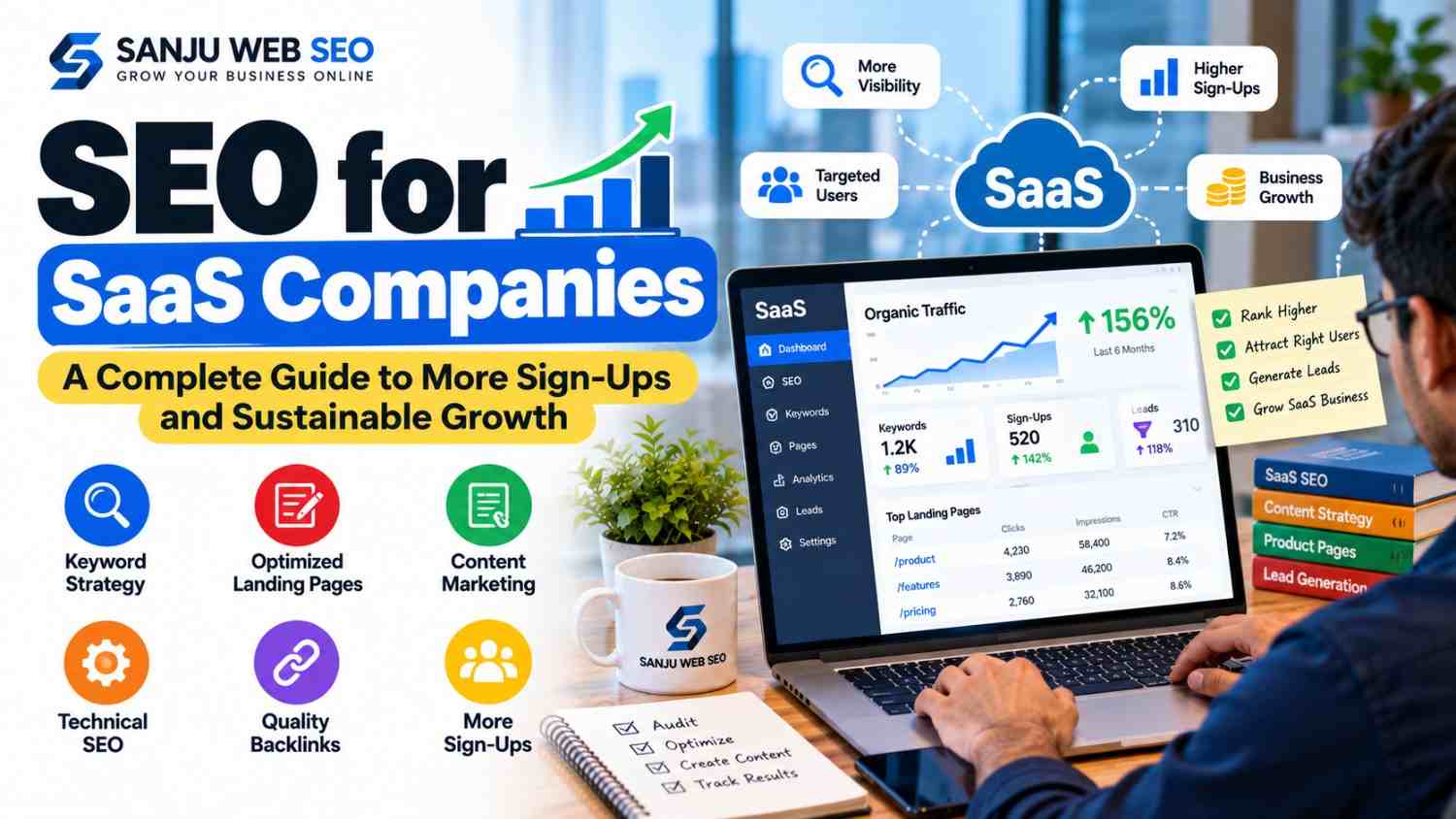
SEO for SaaS Companies helps software businesses reach people who are actively searching for solutions to their problems. Instead of relying only on paid advertisements, a SaaS company can use search engine optimization to attract relevant visitors, explain its product, build trust, and generate qualified sign-ups.
However, SaaS SEO requires a different approach from SEO for a local shop or a service-based business. Potential customers may compare several software platforms, explore feature pages, read integration guides, review pricing, and evaluate alternatives before making a decision. Therefore, a successful strategy must support the entire customer journey, from the first search to the final purchase.
This guide explains how software-as-a-service businesses can build a practical SEO strategy, improve important website pages, and measure results that matter to business growth.
What Makes SaaS SEO Different from Traditional Website SEO?
Software companies usually serve customers who need more than a quick introduction before they purchase. A visitor may want to understand how a platform works, whether it fits an existing workflow, and how much time or money it could save.
For this reason, SEO for SaaS Companies should connect search intent with the right page and the right next step.
Consider these examples:
| Search intent | Example search | Suitable page |
|---|---|---|
| Learning | What is inventory management software? | Educational blog |
| Finding a solution | Best inventory management software for small businesses | Comparison or solution page |
| Evaluating features | Inventory software with barcode scanning | Feature landing page |
| Comparing products | Software A alternatives | Comparison page |
| Ready to act | Inventory management software pricing | Pricing page |
Each search represents a different stage of the buying journey. Sending every visitor to the homepage can create unnecessary friction. Instead, build relevant pages that answer the visitor’s specific question.
Focus on Qualified Traffic, Not Just More Visitors
A large increase in website traffic does not automatically translate into more customers. A software company needs visitors whose problems match its product.
For example, a project management platform designed for agencies may attract irrelevant traffic if its content mainly targets broad searches about productivity. More relevant pages about agency workflows, client approvals, reporting, and project profitability may attract a better-fit audience.
Consequently, keyword selection should consider the product’s target audience, buying intent, and ability to solve the problem.
1. Build a SaaS Keyword Strategy Around Customer Problems
Keyword research is the foundation of SEO for SaaS Companies. However, collecting high-volume keywords is not enough. You also need to understand why people search for those terms and whether your software can genuinely solve their problems.
To begin, identify the main challenges your product addresses. Then, connect those challenges with relevant search terms. This approach helps SEO for SaaS Companies attract visitors who are more likely to benefit from the software.
For example, an accounting software company might research searches related to invoice automation, expense tracking, financial reporting, recurring billing, and tax preparation workflows.
Next, organize these keywords into meaningful groups instead of targeting unrelated phrases on a single page. As a result, every page can serve a clear search intent.
Create Keyword Clusters for Different Needs
A practical keyword strategy can include these categories:
- Problem-based keywords: Searches describing a challenge that customers want to solve.
- Solution-based keywords: Searches for a particular type of software.
- Feature-based keywords: Searches involving a specific capability or integration.
- Industry-specific keywords: Searches for software designed for a particular business sector.
- Comparison keywords: Searches involving alternatives, competitors, or product differences.
- Commercial keywords: Searches related to pricing, plans, trials, and purchasing decisions.
After grouping the keywords, map each group to an appropriate page. This prevents multiple pages from competing for the same search intent and makes the overall SEO strategy more organized.
Finally, review your website structure to identify missing content opportunities through an SEO audit.
2. Optimize Product and Feature Landing Pages
Product pages play an important role in SEO for SaaS Companies because they explain what the platform does and why potential customers should consider it. Therefore, these pages should communicate the product’s value clearly while addressing the search intent behind each target keyword.
However, some software websites provide only a short description, a few screenshots, and a sign-up button. Consequently, visitors may leave without finding the information they need to make a decision.
To improve these pages, explain the problem your software solves, demonstrate the relevant features, and describe the benefits users can realistically expect. In addition, include helpful screenshots, integration details, and clear calls to action wherever appropriate.
A well-optimized landing page can support both search visibility and the user experience. For this reason, SEO for SaaS Companies should focus on useful product information rather than simply repeating the focus keyphrase.
What Should a Strong SaaS Landing Page Include?
A clear page title and heading
Explain the software category or feature without vague marketing language. Visitors should immediately understand what the page offers.
Specific product benefits
Describe how the feature helps users complete tasks, reduce manual work, or manage a workflow more effectively. Avoid promises you cannot substantiate.
Relevant product evidence
Use genuine screenshots, demonstrations, product documentation, or customer examples where available.
Answers to buying questions
Explain compatibility, integrations, supported use cases, limitations, and pricing details when relevant.
A relevant call to action
Offer an appropriate next step, such as viewing a demo, starting a trial, exploring features, or contacting the sales team.
For additional guidance on page-level optimization, review these AI SEO services and identify the practices that are relevant to your website.
3. Create Useful Content for Every Stage of the Buying Journey
Content marketing helps SaaS companies answer questions that product pages alone cannot cover. However, publishing large numbers of similar articles is not a sustainable strategy.
Instead, develop a content plan based on genuine customer questions, product capabilities, and the decisions users need to make.
A balanced content strategy may include:
- Educational articles that explain industry concepts.
- Practical tutorials that demonstrate how to complete a task.
- Use-case pages for specific industries or business functions.
- Product comparisons that explain meaningful differences.
- Integration guides that show how tools work together.
- Troubleshooting articles that help existing users solve problems.
For example, a customer relationship management platform could publish a guide on organizing sales pipelines, a tutorial on automating follow-up reminders, and a feature page explaining its reporting capabilities.
These pages serve different purposes, even though they relate to the same product.
Demonstrate First-Hand Product Knowledge
Generic articles that repeat common advice may struggle to distinguish a SaaS brand from competing websites. Add useful details from the product itself wherever possible.
Show actual workflows, explain setup decisions, discuss limitations, and include examples that readers can apply. If you publish a case study, use genuine customer information and obtain the necessary permission.
Similarly, avoid creating separate articles for minor keyword variations when they answer essentially the same question. A stronger, more comprehensive page may serve users better than several repetitive pages.
For more information about Google’s people-first content principles, consult the official helpful content guidance.
4. Strengthen Technical SEO Across the SaaS Website
Even high-quality content can struggle to perform when search engines cannot efficiently access or understand important pages. Technical SEO helps keep the website accessible, crawlable, and usable.
SaaS websites may have additional technical challenges because they often contain documentation portals, application subdomains, filter-based navigation, customer dashboards, and pages generated dynamically.
Review the following areas regularly.
| Technical area | What to check |
|---|---|
| Crawlability | Important public pages should be accessible to search engines. |
| Indexing | Check whether valuable pages are indexed and unwanted pages are excluded appropriately. |
| XML sitemap | Include canonical URLs that you want search engines to discover. |
| Canonical tags | Use consistent canonical URLs to manage duplicate or similar pages. |
| Redirects | Update outdated URLs carefully and avoid unnecessary redirect chains. |
| Mobile usability | Make navigation, content, forms, and calls to action usable on smaller screens. |
| Page performance | Investigate slow loading, layout shifts, and delayed interactions. |
| Structured data | Use eligible schema types accurately and follow search engine guidelines. |
Pay Attention to JavaScript and Application Pages
Some SaaS marketing websites rely heavily on JavaScript. This can create problems if important page content, links, or metadata are not rendered correctly for search engines.
Check that search engines can access essential public-facing content. Also, distinguish between marketing pages that should appear in search and private application screens that should not be publicly indexed.
Do not automatically block every URL containing a parameter or exclude an entire subdomain without understanding its purpose. Review how the website works before changing crawling or indexing rules.
5. Improve Internal Linking Between Related Pages
Internal links help users discover related information and help search engines understand the relationships between pages.
For a SaaS website, the links should connect educational content with relevant product features, use cases, integrations, and supporting resources.
For instance, an article about reducing manual invoicing could link to the relevant automation feature page. That feature page might then link to an integration guide or pricing information.
Use descriptive anchor text so visitors know what to expect when they click. Avoid relying on vague phrases such as “click here” throughout the website.
A simple linking structure could look like this:
Educational blog
Answers an initial customer question
Relevant feature or solution page
Explains how the product addresses the need
Demo, trial, or pricing page
Helps the visitor evaluate the next step
This is a useful planning model, not a requirement that every visitor must follow the same path. Users should be able to navigate naturally according to their needs.
6. Earn Relevant Backlinks Without Risky Shortcuts
Backlinks can help search engines discover pages and assess how websites relate to one another. However, link building should focus on genuine relevance and editorial value rather than collecting as many links as possible.
For SaaS businesses, useful link opportunities may come from:
- Original research supported by reliable data.
- Practical industry reports and benchmark studies.
- Genuine partnerships and integration directories.
- Expert commentary that contributes meaningful insights.
- Useful tools, templates, or resources that others may reference.
- Relevant industry publications and professional communities.
For example, a SaaS company that publishes an original report about workflow inefficiencies may earn references from industry blogs if the findings are useful and properly explained.
Avoid buying links intended to manipulate rankings, participating in excessive link exchanges, or generating large numbers of low-quality directory submissions. These shortcuts may introduce risk without creating lasting value.
A sustainable approach prioritizes relevant websites, authentic relationships, and resources that deserve to be referenced.
7. Make SaaS SEO Support Conversions
Search visibility is only one part of the process. Visitors also need a clear reason to trust the product and take the next step.
Start by matching the call to action with the visitor’s intent. Someone reading an introductory guide may prefer a detailed tutorial, while a visitor comparing pricing plans may be ready to request a demonstration.
Review the following conversion elements:
- Clear messaging: Explain who the software serves and what it helps them accomplish.
- Relevant proof: Present genuine testimonials, customer stories, or case studies when available.
- Transparent information: Make important pricing, product requirements, and limitations easy to find.
- Simple navigation: Help visitors reach features, documentation, pricing, and contact options without confusion.
- Accessible forms: Request only the information needed for the next step.
- Consistent experience: Ensure the landing page matches the promise made in the search result or referring content.
A high-ranking article does not necessarily need to push a trial immediately. Sometimes, a related guide or feature explanation is the more useful next step.
Measure the Full Journey
Where possible, track meaningful actions such as trial registrations, demo requests, qualified leads, and paid conversions. Compare these results with organic landing-page performance.
If a page attracts relevant traffic but produces few sign-ups, investigate the offer, page clarity, product fit, and user experience before simply publishing more content.
8. Measure SEO Performance With the Right Metrics
SaaS companies should measure organic search performance at both the page level and the business level. No single metric tells the whole story.
| Metric | Why it matters |
|---|---|
| Organic clicks | Shows how much search traffic reaches the website. |
| Search impressions | Indicates how often pages appear in search results. |
| Query relevance | Helps assess whether the website attracts the intended audience. |
| Landing-page engagement | Helps identify whether visitors find the content useful. |
| Demo and trial conversions | Connects SEO landing pages with product evaluation. |
| Qualified leads | Shows whether traffic contributes to the sales pipeline. |
| Paid customer conversions | Helps evaluate the business impact of organic acquisition. |
Use Google Search Console to review search queries, impressions, clicks, and page-level visibility. Use suitable analytics and CRM reporting to understand what happens after visitors arrive.
Compare performance over meaningful periods and account for changes in demand, product launches, seasonality, and website updates. Rankings can fluctuate, so avoid judging an SEO campaign from a few days of data.
If a page receives impressions but few clicks, review its search intent, title, and snippet. If it attracts visitors but few conversions, examine whether the content and landing page meet their expectations.
For businesses exploring AI-driven search visibility alongside traditional SEO, first understand what AI SEO is and how it relates to the wider search strategy. AI-focused optimization should complement useful, accessible content rather than replace sound SEO fundamentals.
9. Build a Practical 90-Day SaaS SEO Roadmap
A clear roadmap helps a software company prioritize work instead of attempting every SEO task at once. The following schedule is a starting framework; the actual timeline depends on the website’s condition, resources, and competitive environment.
Days 1–30
Audit and prioritize
Review technical SEO, indexation, existing rankings, product pages, internal links, and analytics. Identify the pages most important to the product and its target customers.
Days 31–60
Improve key pages
Update priority landing pages, resolve significant technical issues, strengthen internal links, and publish content addressing validated customer needs.
Days 61–90
Evaluate and refine
Review indexing, search performance, conversion data, and content quality. Improve pages based on evidence and plan the next group of priorities.
The roadmap should remain flexible. A critical indexing problem may require immediate attention, while a new website with limited authority may need sustained content development and relationship building.
SEO does not guarantee rankings within 90 days. The purpose of this roadmap is to create a structured process, establish a reliable baseline, and identify which activities deserve continued investment.
Common SaaS SEO Mistakes to Avoid
Even a well-funded software company can waste resources when its SEO strategy focuses on the wrong activities.
Targeting only broad keywords: Broad terms may attract visitors who are not suitable customers. Include specific product, feature, industry, and problem-based searches.
Publishing repetitive articles: Pages that cover nearly identical questions can dilute editorial quality. Consolidate overlapping content when appropriate.
Ignoring product pages: Blogs can attract early-stage visitors, but important product and feature pages also need useful, search-friendly content.
Overlooking technical issues: Duplicate URLs, broken links, incorrect canonical tags, and inaccessible content can undermine otherwise useful pages.
Chasing backlinks without relevance: A link’s context and quality matter more than simply increasing a backlink count.
Reporting rankings without business outcomes: Position tracking is useful, but it should be considered alongside qualified leads, trials, and customer acquisition.
Expecting immediate results: Organic search takes time, and progress depends on competition, website quality, demand, and implementation. Set realistic expectations and make decisions from evidence.
Conclusion: Turn SaaS Search Visibility Into Sustainable Growth
SEO for SaaS Companies works best when keyword research, product pages, useful content, technical performance, internal links, and conversion tracking support the same business goals.
Start with the pages that best explain your software and solve your customers’ problems. Then improve the technical foundation, publish content that demonstrates real expertise, and measure whether organic visitors become qualified leads or customers.
Consistency matters, but so does prioritization. Focus on work that improves the experience for your intended audience instead of chasing traffic or rankings without a clear purpose.
If you want to strengthen your website’s organic search strategy, explore Sanju Web SEO for SEO guidance and services. You can also review the company’s digital marketing services in Indore to understand its broader digital marketing approach.
For enquiries, call +91 9302110432. You can also connect through the Google Business Profile or follow Sanju Web SEO on LinkedIn.
FAQ’s:-
Q1. What is SEO for SaaS Companies?
SEO for SaaS Companies is the process of improving a software business’s search visibility through relevant keywords, optimized landing pages, useful content, and technical improvements. In addition, it involves building trustworthy references that help search engines understand the website. As a result, businesses can attract relevant users and support product discovery, trials, demos, and customer acquisition.
Q2. Why is SEO important for SaaS businesses?
SEO helps SaaS businesses reach people who are actively researching software solutions. Moreover, it can increase brand awareness, educate potential customers, and bring relevant visitors to product pages. However, results depend on competition, content quality, website performance, and how well the product matches search intent.
Q3. How is SaaS SEO different from traditional SEO?
SaaS SEO often requires greater emphasis on product features, integrations, use cases, pricing, comparisons, and the customer journey. For example, a software buyer may compare several platforms before making a decision. Therefore, the website needs relevant content that supports different stages of product research and helps potential customers evaluate their options.
Q4. Which keywords should SaaS companies target?
SaaS companies should research problem-based, solution-based, feature-specific, industry-specific, comparison, and commercial keywords. However, the best targets are those that match the software’s capabilities and audience. In addition, search intent and business relevance should guide keyword selection rather than search volume alone.
Q5. How long does SaaS SEO take to show results?
There is no guaranteed timeline for SaaS SEO results. For instance, some technical improvements may produce observable changes sooner, while competitive keywords and new content may require sustained effort. Ultimately, website history, competition, implementation quality, and search demand all influence the results.
Q6. Do SaaS companies need separate pages for every feature?
Not necessarily. Instead, SaaS companies should create individual feature pages when those features address distinct user needs and provide enough unique information. On the other hand, minor variations that satisfy the same search intent may work better within one comprehensive page. This approach also helps avoid repetitive content.
Q7. Can SaaS SEO generate qualified leads?
Yes, SaaS SEO can contribute to qualified leads when the website attracts the right audience and provides relevant information, product evidence, and clear next steps. For example, useful feature pages and comparison content can help potential customers evaluate a solution. Therefore, companies should measure lead quality and conversions alongside organic traffic to assess business impact.
Q8. What technical SEO issues commonly affect SaaS websites?
Common technical SEO issues include indexing problems, duplicate URLs, incorrect canonical tags, broken internal links, and slow page performance. Additionally, search engines may struggle to access or render important content on some JavaScript-heavy websites. Consequently, SaaS businesses should review their public marketing pages and private application pages separately when making indexing decisions.
Q9. Are backlinks necessary for SaaS SEO?
Backlinks can support discovery and authority when they come from relevant, trustworthy sources. For example, SaaS companies may earn useful references through original research, genuine partnerships, and valuable industry resources. However, they should avoid manipulative link schemes and indiscriminate link acquisition because these practices can create unnecessary SEO risks.
Q10. How can a SaaS company measure SEO success?
A SaaS company can monitor organic clicks, impressions, relevant search queries, landing-page performance, demo requests, trial registrations, qualified leads, and paid customer conversions. Furthermore, combining search data with analytics and CRM information helps connect website performance with business outcomes. As a result, companies can identify which pages attract relevant visitors and contribute to customer acquisition.