
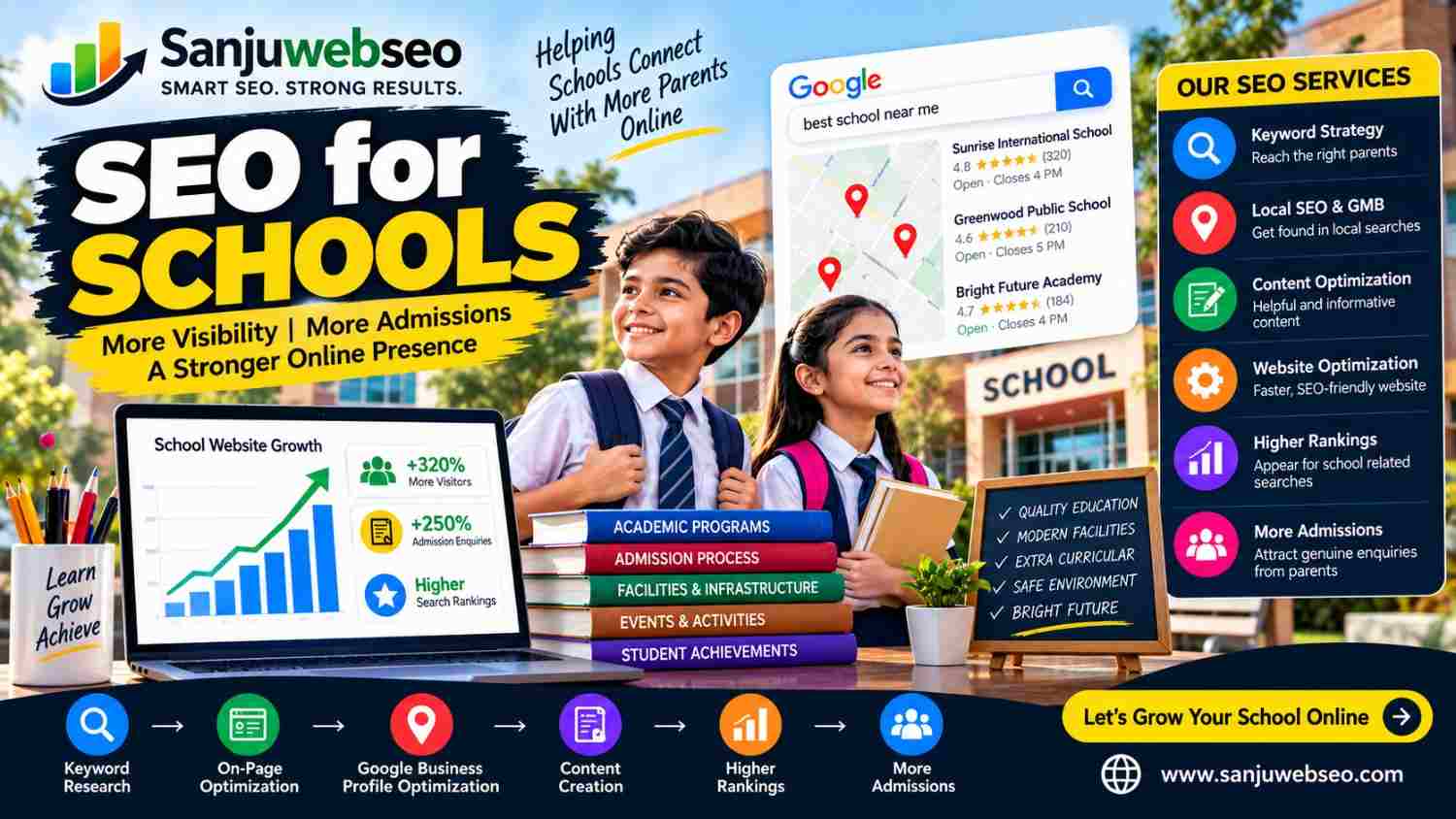
SEO for Schools Starts Before a Parent Searches for Admission
SEO for Schools begins long before a parent fills out an admission form. Families may first search for schools in a particular area, then compare curriculum, teaching approach, facilities, fees, activities, transport, and admission requirements. Students may also explore the website independently when they are older. Because these searches happen at different stages, a school website needs more than a homepage with an admission button. It should answer important questions clearly and help families understand whether the school fits their needs.
School selection is also a considered decision. Parents may visit several websites before contacting a school. They often look for evidence rather than promotional statements. Information about academics, faculty, campus facilities, student activities, policies, and communication can influence their research. A strong SEO strategy should therefore make useful school information easier to discover while keeping the website accurate, accessible, and aligned with the institution’s actual offerings.
Make the School Website Useful During the First Search
A parent searching for a school may not know which institution to choose. The first search could be as broad as schools near a particular neighbourhood. Later searches may become much more specific.
This means the website should provide clear entry points for different questions. The homepage can introduce the institution. Academic pages can explain the curriculum. Admission pages can explain the process. Individual facility pages can answer questions about the campus. This structure allows visitors to move naturally from initial discovery to detailed research instead of forcing every visitor through the same page.
Build Academic Pages Around Real Curriculum Choices
Curriculum is one of the first areas parents may investigate. They may want to understand the educational board, subjects, teaching approach, grade levels, and academic support available at the school.
The website should explain these details in plain language. Avoid filling the page with broad claims such as “world-class education” unless the statement has meaningful supporting evidence. Instead, describe what students actually learn and how the school organises academic programmes. Detailed academic information can also create relevant search opportunities for parents looking for a particular type of education.
Give Each Important Grade or Programme Enough Context
Parents often search differently depending on their child’s age. A family looking for an early-years programme may have very different concerns from a parent researching senior secondary education.
Where the school has substantially different programmes, separate sections or pages can make the information easier to understand. Explain the age group, subjects, learning environment, activities, and progression relevant to that stage. Avoid creating separate pages that only change the grade number while repeating the same content. Each page should provide information that is genuinely useful for that particular stage of education.
Let Faculty Information Demonstrate Academic Strength
Faculty pages can answer an important question: who will actually teach the students? A school website can provide relevant professional information about teachers and academic leaders without turning the page into a collection of exaggerated claims.
Where appropriate, include qualifications, subject responsibilities, leadership roles, and relevant teaching experience. Information should remain accurate and current. If the school publishes educational articles, student resources, or faculty-led learning material, these resources can further demonstrate the academic environment. Specific information creates a stronger impression than simply describing teachers as highly experienced.
Show Parents What Daily School Life Looks Like
Parents are not only evaluating classroom teaching. They may also want to understand what a normal school day looks like. The website can provide useful information about schedules, activities, clubs, sports, laboratories, libraries, transport, and other facilities that genuinely exist.
Visual content can support these pages when it represents the real campus and student experience. Photographs should be current and appropriately used. Descriptions should match what the school actually provides. This gives prospective families a more realistic understanding of the environment before they arrange a visit.
Turn Campus Facilities Into Helpful Search Resources
A school may have a science laboratory, library, sports ground, auditorium, computer lab, art room, or other specialised facility. Listing these items on one page may not answer the questions parents have.
Instead, explain how important facilities are used. A science laboratory page can discuss practical learning. A library page can explain its resources and student use. A sports section can describe the activities actually offered. These pages can support both search visibility and informed decision-making because they explain the educational purpose behind the facility.
SEO for Schools and the Admission Journey
Once a family becomes interested in a school, admission information becomes important. Parents may want to know eligibility, required documents, important stages, assessment procedures, and how to contact the admissions team.
The process should be presented in a logical order. If requirements differ by grade, explain those differences clearly. Avoid making parents search through unrelated pages to find basic admission information. A clear website structure can reduce confusion and make the next step easier for families who are already considering an enquiry.
Answer the Questions Parents Ask Before a School Visit
Many families have questions that are not fully answered by standard admission pages. They may ask about transport routes, school timings, activities, assessment methods, communication with parents, or support available for students.
These questions can become useful website resources. The school can create an admissions FAQ, parent guide, or individual information pages based on genuine enquiries received by its staff. This approach produces content from real school operations rather than from keyword lists alone.
Build Trust Through Policies and Clear Information
Trust is important when families are evaluating an educational institution. Parents may want to understand how the school approaches student safety, communication, attendance, discipline, academic support, and other important areas.
The website should publish relevant policies when appropriate and permitted. Information should be written clearly rather than hidden behind vague statements. Policies should also be reviewed when the school’s procedures change. Transparent information helps visitors understand the institution’s expectations before they begin the admission process.
Use Student Achievements With Context
Schools often publish achievements related to academics, sports, arts, competitions, and extracurricular activities. These can provide useful evidence of student participation and the opportunities available at the institution.
However, achievements should be presented with context. Mention the activity, event, year, and relevant outcome where those details are available. Avoid turning every achievement into a broad claim about overall school quality. Accurate examples are more informative because parents can understand what the students actually accomplished.
Create a Search Path for Parents Comparing Schools
Parents may compare several schools before arranging a visit. Their questions can change as they narrow down their choices.
| Research Stage | Parent’s Likely Question | Useful Website Information |
|---|---|---|
| Initial discovery | Which schools are available nearby? | School location and introduction |
| Academic comparison | What curriculum does the school follow? | Curriculum and academic pages |
| Daily experience | What is student life like? | Activities, facilities, and campus information |
| Practical evaluation | How will my child travel and study? | Transport, timings, and support details |
| Admission research | What do we need to apply? | Eligibility, documents, and process |
| Final consideration | How can we learn more? | Visit, enquiry, and admissions contact details |
This journey matters because a parent may return to the same website several times before making contact. A useful site supports each stage without repeating the same promotional message. That makes SEO for Schools more closely connected to the actual admission journey.
Local SEO for Schools Should Reflect the Real Campus
Location can have a major influence on school searches. Families may consider travel distance, nearby neighbourhoods, transport availability, and daily convenience before contacting an institution.
A school should clearly communicate its actual address and service area. Location-focused content should provide useful information rather than creating pages for every nearby locality without meaningful differences. Accurate contact details across the website are also important. When families search for a school nearby, they should be able to verify where the campus is and how to reach it.
Connect SEO for Schools With Google Business Profile
Google Business Profile can help families discover a school during local searches. Parents may use the profile to check the campus location, website, contact details, photographs, and other publicly available information before visiting.
The website should provide deeper academic and admission information. The profile can support local discovery while the school website answers more detailed questions. Proper Google Business Profile optimization can therefore form one part of the school’s wider search presence without replacing its main website.
Make Mobile Research Easy for Busy Parents
Parents may research schools from a phone while travelling, during work breaks, or after school hours. Important information should therefore remain easy to access on smaller screens.
Admission forms, contact details, location information, course or grade pages, and enquiry options should not require excessive scrolling or difficult navigation. Buttons should be easy to tap. Text should remain readable. A mobile-friendly experience also helps visitors who discover the school through local search and immediately move to the website.
Create Educational Content Without Turning Every Article Into an Advertisement
A school can publish useful educational resources without making every article a promotional piece. Parents may search for information about study habits, school transitions, subject preparation, learning activities, or age-appropriate academic support.
Teachers and academic staff can contribute where appropriate. Their practical knowledge can make these resources more useful and distinctive. The content should remain relevant to the school’s educational scope. It should not make unsupported claims or present general educational information as a substitute for professional advice when a specialist assessment is required.
Prepare School Content for Conversational Search
Parents increasingly search using complete questions. They may ask which curriculum is suitable for a particular age group or what they should consider before selecting a school. These searches can be longer than traditional keyword phrases.
SEO for Schools should account for this behaviour by answering genuine questions directly. Important information should appear near the beginning of the relevant section, followed by supporting details. AI SEO can assist with identifying conversational topics, but teachers and school administrators should review published information for accuracy.
Keep School Information Current Throughout the Admission Cycle
School websites can become outdated quickly. Admission dates change. Application procedures may be revised. Faculty responsibilities can change. Facilities may be added or updated.
Important pages should therefore be reviewed regularly. Old admission notices should not remain prominent after the relevant cycle has ended. Contact information should also be checked. Content maintenance is not only an SEO task. It protects the quality of information that families rely on when making decisions about their child’s education.
Measure Search Performance Against Meaningful Enquiries
A school website can receive substantial traffic without generating useful admission enquiries. Search visibility should therefore be considered alongside actions that matter to the institution.
Track visits to admission pages, enquiry submissions, calls, location-page engagement, and other relevant actions. Search Console can reveal which educational and admission-related searches create impressions and clicks. These insights can help the school understand what prospective families are actually looking for and where additional information may be needed.
Let the School’s Real Strengths Shape Its Online Presence
The strongest school content should come from the institution itself. Academic practices, teaching resources, faculty knowledge, student activities, campus facilities, and genuine achievements can all provide original material.
This approach is more useful than publishing generic articles simply to increase the number of pages on the website. Content should answer real questions and reflect the school’s current operations. A consistent review process can also help maintain accuracy as programmes and policies evolve. For more information about the SEO approach behind this work, you can explore Sanju Web SEO on LinkedIn.
FAQ’s:-
1. How Does SEO for Schools Help Parents Find the Right Information?
SEO for Schools can help parents discover a school when they search for academic programmes, admission information, facilities, or schools in a particular area. A useful website should answer these questions clearly instead of relying only on promotional language. Curriculum pages can support academic research, while admission pages can explain the application process. Local SEO can also help families find the campus when location is an important consideration. The objective is to make relevant school information easier to discover and understand.
2. What Pages Should a School Have for Its Academic Programmes?
A school should provide clear information about the academic programmes it actually offers. Depending on the institution, this may include curriculum details, grade-level information, subjects, academic support, and progression between stages. Separate pages can be useful when programmes have substantially different audiences or requirements. However, schools should avoid creating many pages with nearly identical content. Each academic page should provide information that helps parents understand the relevant stage of education.
3. Why Is Local SEO for Schools Important?
Local SEO can be valuable because families often consider distance and daily travel when choosing a school. Parents may search for schools near their home, workplace, or a particular neighbourhood. Accurate address information and useful location details can support this research. A Google Business Profile can provide another local discovery point. However, location pages should contain meaningful information about the actual campus and service area instead of simply repeating the same school description for multiple nearby locations.
4. How Can Schools Use Content to Demonstrate Educational Expertise?
Schools can demonstrate educational expertise through accurate and useful information about their curriculum, teaching practices, faculty, learning resources, and student activities. Teachers can contribute subject-based resources where appropriate. The content should explain what the school actually does rather than relying on broad claims about educational excellence. Current examples can make the information more meaningful. Any academic achievements or programme descriptions should also be presented with enough context for parents to understand what they represent.
5. What Information Should Parents Check Before Contacting a School?
Parents may want to review the curriculum, grade levels, admission requirements, school timings, location, transport options, facilities, activities, and available academic support. They may also want information about the teaching environment and communication with families. The exact priorities can differ depending on the child’s age and educational needs. A well-organized school website should make important information easy to locate. This allows parents to ask more specific questions when they contact the admissions team.
6. How Does Google Business Profile Support SEO for Schools?
Google Business Profile can help a school appear in local searches and provide families with essential information such as location, contact details, photographs, and website access. Parents may use this information before deciding whether to visit the campus. The school website should still contain detailed academic and admission information. Keeping both sources accurate and consistent can create a clearer experience for prospective families researching the institution online.
7. Which Keywords Should Schools Target?
Keyword selection should reflect the school’s actual programmes, location, curriculum, and audience. Relevant topics may include school searches in a specific city, curriculum-related searches, grade-level information, admission terms, and questions parents commonly ask. Schools should avoid creating pages for programmes or services they do not provide. Keyword research can help identify demand, but the resulting content should remain useful for families rather than becoming a collection of phrases inserted into existing pages.
8. How Long Does SEO for Schools Take to Show Results?
No fixed timeframe applies to every school website. Competition, website history, content quality, technical health, location, and the number of schools competing for similar searches can affect progress. A new school website may need time to establish search visibility. Existing websites may begin from a different position. Schools should monitor relevant search impressions, website engagement, admission-page visits, and enquiries over time rather than relying on one guaranteed timeline.
9. Can AI SEO Help Schools Reach More Parent Searches?
AI SEO can help identify conversational questions that parents may use when researching schools and educational programmes. These questions can become useful topics for FAQs, admission guides, curriculum explanations, and educational resources. However, school information should always be reviewed by appropriate staff before publication. AI can support research and content organization, but it should not replace the school’s own academic knowledge or introduce unsupported claims about programmes, results, or student outcomes.
10. Why Choose Sanju Web SEO for SEO for Schools?
Sanju Web SEO can develop an SEO strategy around a school’s academic programmes, admission journey, location, facilities, and information needs of parents. The work can include website structure, content planning, local search optimization, Google Business Profile optimization, technical improvements, and performance tracking. The approach can focus on making genuine school information easier to discover rather than filling the website with repetitive promotional content. To discuss SEO for your school, contact Sanju Web SEO at +91 9302110432.