
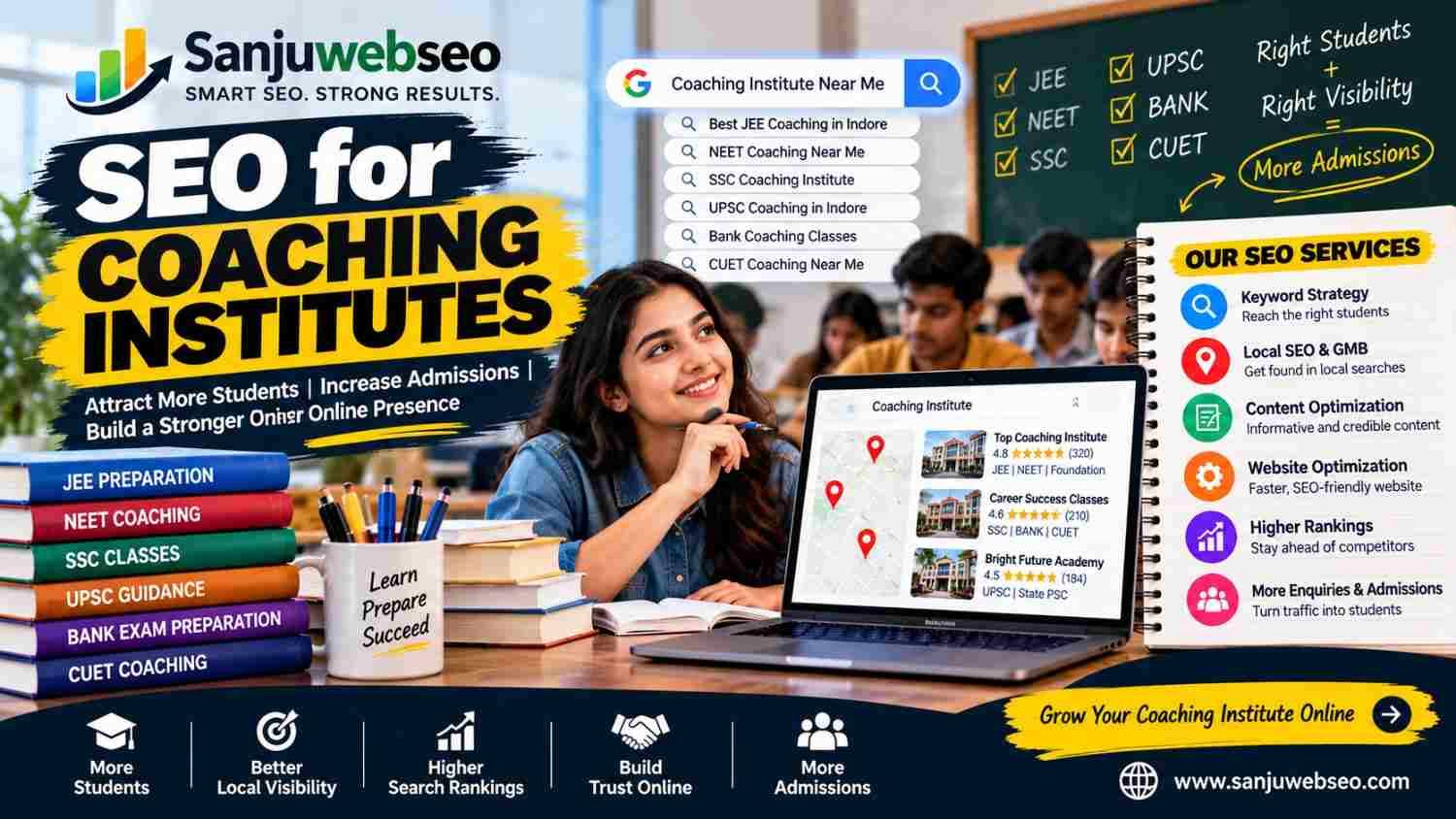
SEO for Coaching Institutes Should Begin With What Students Actually Want to Learn
SEO for Coaching Institutes begins with a student’s search for the right learning option. A student may already know the subject they want to study. Another may be comparing courses before choosing a centre. Parents may also search for coaching options when they are helping a child prepare for an exam. These searches carry different intentions. A coaching website should therefore answer the student’s real questions instead of presenting every course through the same generic sales message.
The decision rarely ends with finding a coaching institute on Google. Students often check the course structure, faculty, batch timings, study material, learning format, and location. They may also look for reviews or previous student experiences. Parents can have additional concerns about teaching quality and communication. A well-planned SEO strategy should support this entire research process and help visitors find useful information at every important stage.
Build Course Pages Around What Students Need to Know
A coaching institute may offer several courses. Each one can attract a different type of student. A page for competitive exam preparation should not communicate in the same way as a page for school tuition or professional certification training.
Every important course should have enough information to answer practical questions. Explain the intended learner, subjects covered, course duration, class format, and important preparation areas. Keep the information aligned with the actual programme. A website SEO strategy can then connect course pages with supporting resources without turning the site into a collection of nearly identical landing pages.
Give Students a Reason to Explore Beyond the Course Name
Course names alone do not tell students whether an institute is suitable. They may want to understand the teaching approach. They may also want to know how classes are organised and what support is available outside regular sessions.
This information can become part of the course experience on the website. Explain how doubt sessions work if the institute provides them. Mention mock tests when they are genuinely offered. Describe study material only when it is part of the programme. Specific information is more useful than broad statements such as “complete guidance” or “best education.”
Make Faculty Information More Useful
Faculty pages can play an important role when students compare coaching institutes. A simple name and photograph may not answer the questions visitors have. They may want to know what the teacher teaches and what type of experience is relevant to the course.
The information should remain factual. Mention qualifications and teaching experience where they can be verified. Explain the subjects handled by each faculty member. If the institute publishes lectures or educational resources created by its teachers, those resources can provide additional context. This turns a faculty page into a useful part of the decision process rather than a decorative profile.
Use Student Questions as the Foundation for Content
Students and parents ask many questions before joining a coaching programme. They may ask how to choose a batch. They may want to understand whether online classes are suitable. Some may need help deciding between foundation and advanced preparation.
These questions can become strong content topics. A coaching institute can publish guides that answer them in straightforward language. The content should solve a real information gap instead of repeating the same admission pitch. A focused content strategy can organise these questions around different stages of the student’s research.
Show the Learning Process Instead of Only Promising Results
Students want to know what happens after they enrol. A website can make this clear by explaining the learning process. The institute may use regular assessments, revision sessions, practice assignments, or doubt-solving classes.
Only include methods that the institute actually uses. Avoid promising a particular exam result unless you have reliable evidence and present the statement with proper context. A clear description of the learning process can be more convincing than a collection of exaggerated success claims.
Build Trust Around Results With Proper Context
Results can influence a student’s decision. However, a number without context can be misleading. If an institute publishes successful student outcomes, it should explain what the result represents and when it was achieved.
Student testimonials should also be genuine. Where appropriate, the institute can identify the course or preparation programme involved. Obtain permission before publishing personal information or photographs. This creates stronger evidence because visitors can understand what the achievement actually relates to rather than seeing an unexplained percentage or ranking.
SEO for Coaching Institutes Should Cover Exam-Specific Searches
Students often search for a particular exam rather than for “coaching institute” in general. They may search for preparation classes, subject-specific coaching or a particular type of study programme.
This creates an opportunity for exam-focused content when the institute genuinely provides that preparation. Each page should explain the exam context and the institute’s actual offering. Avoid creating dozens of thin pages by changing only the exam name. A useful SEO audit can identify whether existing exam pages provide enough original information.
Make Comparison Searches Easier to Understand
Students often compare more than two institutes before making a decision. They may compare teaching formats, class schedules, faculty support or course duration. A coaching website cannot control what competitors offer. It can control how clearly it explains its own programme.
Comparison-focused content can help students understand the factors they should consider. For example, an institute can explain how to evaluate batch size or what questions to ask before joining an online course. The purpose should be education rather than unsupported claims about competitors.
Create Separate Paths for Students and Parents
Students and parents may arrive at the same website with different concerns. A student may focus on subjects, teachers, and class schedules. A parent may be more interested in discipline, communication, and the overall learning environment.
The website can acknowledge both audiences without creating duplicate content. Course pages can answer academic questions. A separate parent information section can address practical concerns about the learning process. This makes the website easier to navigate and reflects the reality of the admission decision.
Local SEO Matters When Students Attend Physical Classes
A physical coaching centre depends heavily on location. Students may search for classes near their home, school, college or workplace. Distance can influence whether they can attend regularly.
The website should clearly communicate the institute’s actual location and service area. Useful location content can mention nearby areas only when they are genuinely relevant to the centre. An accurate Google Business Profile can also help students discover the institute during local searches.
Connect SEO for Coaching Institutes With Google Business Profile
Google Business Profile can become an important discovery point for a coaching centre. Students may check the location before visiting. Parents may also review the available business information and feedback before contacting the institute.
The profile should remain consistent with the website. Course information can live on dedicated website pages while the Business Profile provides local discovery and essential business details. GMB optimization can therefore support the local part of the student’s search journey without replacing the institute’s website.
Make Admission Information Easy to Find
A student who has already decided to enquire should not have to search through several pages for the next step. Admission information should be straightforward.
The website can explain how to enquire, what information the institute needs, and how a counselling conversation works. If the institute conducts entrance tests or assessments, explain that process clearly. Contact options should remain easy to find on mobile devices. Removing unnecessary friction can make the difference between an interested visitor and an actual enquiry.
Create Content for Different Stages of Preparation
Not every student begins at the same level. Some may be exploring a subject for the first time. Others may already be preparing and need targeted support. Advanced learners may be looking for mock tests or specialised revision.
The content should reflect these differences. Beginner guides can explain foundational concepts. Intermediate resources can address common preparation problems. Advanced content can focus on practice and revision where appropriate. This gives the website a broader educational purpose and helps students find material that matches their current stage.
Use Educational Resources to Demonstrate Teaching Quality
A coaching institute can demonstrate its teaching approach through useful educational resources. Sample explanations, study guides, and subject-based articles can show how difficult topics are presented.
The material should provide real value even when the reader is not yet a student. Avoid turning every educational article into an admission advertisement. A well-written explanation can demonstrate the institute’s teaching style naturally. This also gives search engines useful subject information to understand the website’s topical focus.
Prepare Coaching Content for Conversational Search
Students increasingly use complete questions when searching for learning resources. They may ask which coaching format suits a particular learner or how to prepare for an exam while attending regular school or college.
SEO for Coaching Institutes should address these questions in natural language. Start with a direct answer. Add supporting details when the subject needs more explanation. AI SEO can help identify question-based topics, but the institute’s teachers should review educational content before publication.
Keep Course Information Current
Coaching programmes can change. Batch timings may be updated. Courses may be added or discontinued. Faculty assignments can change. Old information can therefore create confusion for prospective students.
Important course pages should be reviewed regularly. Admission information should also be checked before a new academic or preparation cycle begins. Outdated schedules should not remain visible after the relevant batch has ended. Regular SEO analysis can include these content checks along with technical and search-performance reviews.
Measure SEO Through Enquiries and Course Interest
A coaching institute should not judge SEO only by the number of visitors. A large audience is useful only when some of those visitors are relevant to the courses being offered.
Track enquiries by course where possible. Monitor calls, counselling requests, admission-form visits, and engagement with important programme pages. Search Console can show which course-related searches bring impressions and clicks. These signals can reveal whether SEO is attracting students who actually match the institute’s programmes.
Turn the Website Into a Long-Term Learning Resource
A strong coaching website can become useful even before a student decides to enrol. Course pages explain programmes. Educational resources answer subject questions. Preparation guides address common difficulties. Admission pages explain the next step.
This creates a more complete digital experience than a website filled only with promotional banners. Content should continue to grow around genuine student questions. Old resources should be reviewed when necessary. New articles should fill information gaps rather than repeat existing pages. You can also explore Sanju Web SEO on LinkedIn to learn more about the SEO work behind this approach.
FAQ’s:-
1. How Does SEO for Coaching Institutes Help Attract Students?
SEO for Coaching Institutes can help students discover a coaching centre when they search for courses, exam preparation, or subject-specific support. Course pages can address commercial searches, while educational resources can reach students earlier in their research. Local SEO can help people find physical coaching centres nearby. The quality of the website also matters because students and parents usually research several details before making contact. The objective should be relevant enquiries rather than traffic alone.
2. What Pages Should a Coaching Institute Create for Its Courses?
A coaching institute should create dedicated pages for important courses that have different audiences or learning objectives. Each page can explain the intended learner, subjects covered, class format, duration, and other genuine programme details. Exam-specific pages can also be useful when the institute actually provides that preparation. The content should be substantial enough to help students understand the programme. Creating multiple pages with nearly identical text can make the website harder to navigate.
3. How Can Coaching Institutes Use SEO to Reach Students Searching for Specific Exams?
Institutes can create useful exam-focused pages when those exams are part of their actual teaching programmes. The content should explain the preparation context and the type of support available. It can also answer common questions about classes, subjects, and preparation. Thin pages that only replace one exam name with another should be avoided. Each page should provide original information that helps a student decide whether the institute’s programme matches their preparation needs.
4. What Information Should a Coaching Institute Publish About Its Faculty?
Faculty information should help students understand who teaches the course. Where appropriate, the institute can provide qualifications, subjects taught, and relevant teaching experience. The information should remain factual and verifiable. If teachers have created educational resources, those materials can provide additional evidence of their teaching approach. The purpose of a faculty page is not simply to display photographs. It should help students and parents understand the academic support available through the programme.
5. How Can Student Results Improve Trust on a Coaching Website?
Student results can provide useful evidence when they are presented with proper context. The institute should explain what the result represents and when it was achieved. Genuine testimonials can add another perspective when students have given permission for their experiences to be published. Avoid presenting unexplained numbers or implying that every student will achieve the same outcome. Accurate context makes results more informative and helps visitors evaluate the information responsibly.
6. Why Is Local SEO for Coaching Institutes Important?
Local SEO can be important for coaching centres that depend on students attending physical classes. Students and parents may search for coaching options near their home, school, or workplace. Clear location information can help them determine whether the centre is practical to reach. A well-maintained Google Business Profile can support local discovery. The website should also provide useful information about the centre rather than creating location pages that simply repeat the same content.
7. How Should Coaching Institutes Choose SEO Keywords?
Keyword selection should follow the courses and preparation programmes the institute actually provides. Useful topics may include course names, exam preparation terms, subject-specific searches, and location-based phrases. Question-based searches can reveal additional content opportunities. Keyword research should guide the content plan without forcing the institute to create pages for unrelated subjects. Relevance matters because students who arrive through an unrelated keyword are less likely to become suitable enquiries.
8. How Long Does SEO for Coaching Institutes Take to Show Results?
There is no fixed timeline for every coaching website. Competition can vary significantly between courses and locations. Website history, content quality, technical health, and the strength of existing search visibility can also affect progress. A new website may need time to establish visibility. An established site may start from a different position. Institutes should monitor relevant search impressions, course-page visits, enquiries, and counselling requests instead of relying on one predetermined deadline.
9. Can AI SEO Help Coaching Institutes Reach More Student Questions?
AI SEO can help identify conversational questions that students and parents may use when researching courses. These questions can become useful topics for FAQs, preparation guides, and educational resources. However, AI-generated information should not replace teacher review. Educational content must be accurate and appropriate for the subject. The institute should add genuine teaching knowledge instead of publishing generic material that could appear on any coaching website. Human review remains important before educational content goes live.
10. Why Choose Sanju Web SEO for SEO for Coaching Institutes?
Sanju Web SEO can build an SEO strategy around a coaching institute’s courses, target students, locations, and admission journey. The work can include course-page planning, educational content, local SEO, Google Business Profile optimization, technical improvements, and performance analysis. The strategy can also use genuine academic information to create useful pages for students and parents. To discuss SEO for your coaching institute, contact Sanju Web SEO at +91 9302110432.