
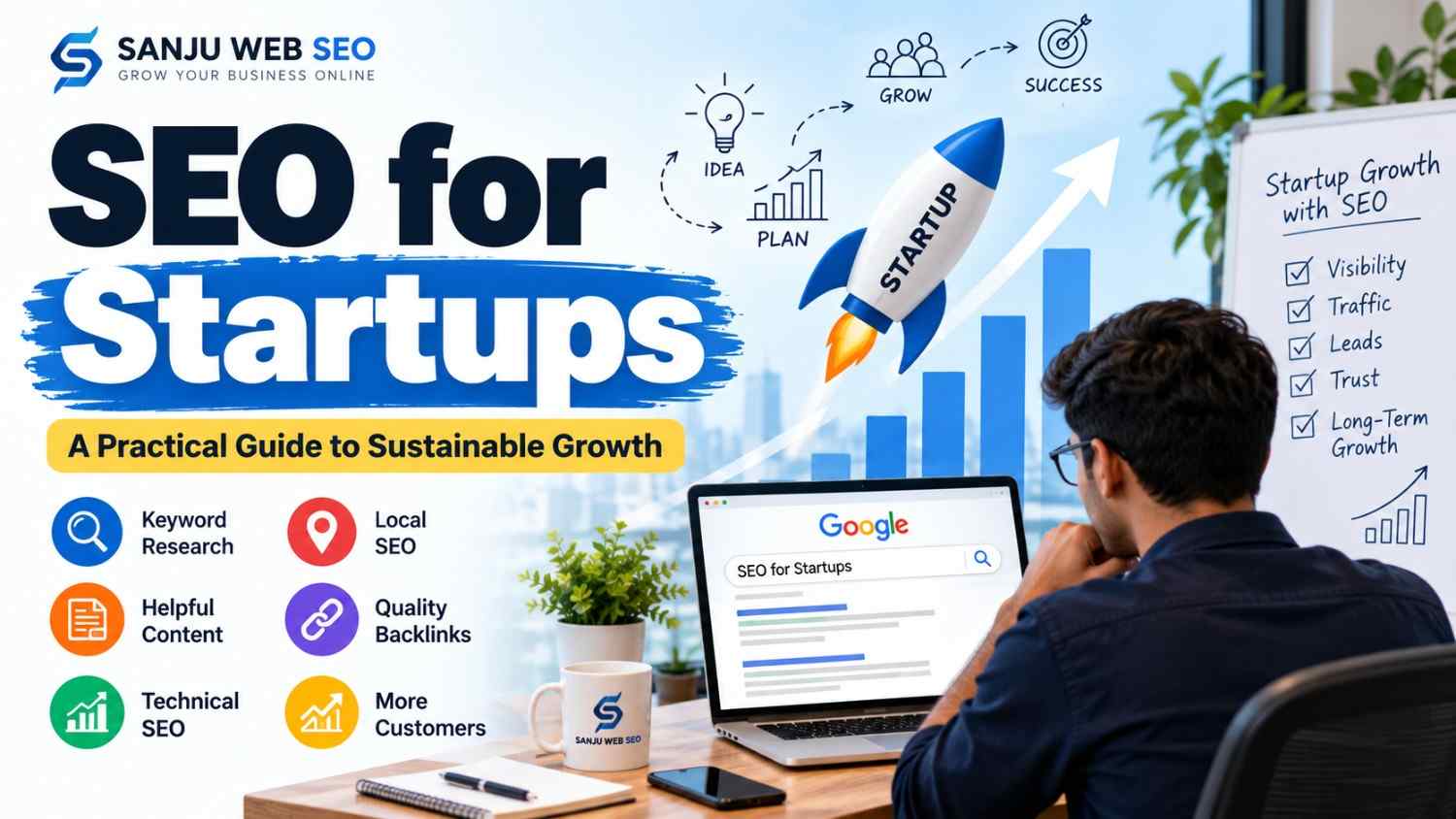
How SEO for Startups Helps New Businesses Build Visibility, Trust, and Leads
SEO for Startups helps new businesses improve their visibility on Google, attract relevant visitors, and build a reliable source of organic traffic. Instead of depending entirely on paid advertising, startups can use search engine optimization to reach potential customers who are actively looking for their products or services. With the right strategy, SEO can support brand awareness, customer acquisition, and long-term business growth.
Why SEO for Startups Matters in the Early Stages
Launching a startup requires careful decisions about marketing, budgets, and customer acquisition. Although paid campaigns can generate immediate exposure, their traffic often decreases when spending stops. SEO offers another way to reach people by improving your website’s relevance, usability, and visibility in organic search results.
Moreover, startups can compete for specific search terms even when established companies dominate broader keywords. By targeting a focused audience and answering real customer questions, a new business can gradually establish its online presence. Therefore, a well-planned SEO strategy should become part of your growth plan rather than an activity you consider only after your website launches.
Start With SEO Keyword Research That Matches Startup Goals
Keyword research helps startups understand what potential customers search for before choosing a product or service. Start by identifying your main offerings, customer problems, industry terminology, and common buying questions. Then, group relevant keywords according to search intent so that each important page serves a clear purpose.
For example, an early-stage software company might target product-specific searches, comparison queries, and questions about solving a particular business problem. In addition, reviewing search demand and competition can help you prioritize realistic opportunities. Rather than targeting every popular phrase, choose keywords that connect your offering with the needs of your ideal customers.
Choose Keywords Based on Search Intent
Search intent explains what a person hopes to accomplish with a search. Informational keywords indicate a need for guidance, commercial keywords suggest that someone is comparing options, and transactional keywords often show stronger purchase intent. Understanding these differences helps startups create pages that answer the right questions.
For instance, someone searching for “how project management software works” may need an educational article, whereas someone searching for “project management software pricing” may be closer to making a decision. Consequently, map each keyword group to an appropriate page, such as a blog post, feature page, comparison page, or pricing page.
Build a Website That Supports Startup SEO
Your website should make it easy for both search engines and visitors to understand what your startup offers. Create clear service or product pages, use descriptive headings, write unique page titles, and provide helpful information about your business. In addition, make navigation simple so visitors can find important details without unnecessary clicks.
A logical website structure also helps search engines discover and understand your pages. Organize related topics into useful categories and connect relevant pages through internal links. Before publishing more content, review your website for technical issues, confusing navigation, duplicate pages, and missing metadata. A professional SEO audit can help identify issues that may prevent your website from performing effectively.
Improve Website Speed and Mobile Usability
Startup customers may discover your website through mobile searches, social media, referrals, or desktop browsing. Therefore, your pages should load efficiently and remain easy to use across different screen sizes. Compress oversized images, avoid unnecessary scripts, and choose a reliable hosting setup to support a smooth browsing experience.
However, speed is only one part of usability. Make text readable, buttons easy to tap, forms straightforward, and important information easy to locate. Google also evaluates page experience signals, including Core Web Vitals, as part of its broader ranking systems. Regular testing can help you identify performance problems before they affect more visitors.
Create Helpful SEO Content That Demonstrates Startup Expertise
Useful content allows startups to explain their expertise, address customer concerns, and attract relevant search traffic. Instead of publishing articles only to include keywords, focus on questions your audience genuinely needs answered. Product guides, practical tutorials, industry explanations, and comparison articles can all support different stages of the customer journey.
Furthermore, content should reflect your experience and understanding of the market. Include clear explanations, realistic examples, useful evidence, and original insights wherever possible. Avoid making unsupported promises about results. If you want to understand how AI-related search optimization fits into a broader strategy, explore what AI SEO means and consider how useful, people-first content can support discoverability.
Match Content to the Customer Journey
Potential customers rarely make every decision after reading one page. Some are learning about a problem, others are comparing solutions, and some are ready to contact a provider or purchase a product. Consequently, your content plan should address these different stages instead of focusing only on sales-oriented keywords.
For example, an educational guide can introduce a problem, a comparison article can explain available approaches, and a product page can demonstrate features and pricing. Link these resources where relevant so readers can continue exploring. As a result, your website can provide a more helpful experience while guiding interested visitors toward meaningful next steps.
Use Local SEO for Startups Serving Specific Locations
If your startup serves customers in a particular city or region, local SEO can help people discover your business through location-related searches. Start by maintaining accurate business details, publishing useful location-specific information, and creating pages that explain which areas you serve. However, avoid creating multiple near-identical location pages that provide little additional value.
Eligible businesses that interact with customers in person can also manage a Google Business Profile. Keep its information accurate, choose appropriate categories, add genuine business photos, and respond professionally to customer reviews. For businesses targeting local customers, Google Business Profile optimization can form part of a broader local visibility strategy.
Build Trust With Accurate Business Information
New businesses need to give potential customers clear reasons to trust them. Publish accurate contact details, explain your services transparently, and provide a clear description of your team or business wherever appropriate. In addition, display genuine testimonials or case studies only when you have permission and can support the claims being made.
Consistency also matters across your website and business listings. Keep your business name, address, phone number, and other public information accurate wherever they appear. Although these steps do not guarantee higher rankings, they help customers verify your business and make informed decisions before contacting you.
Strengthen Technical SEO Before Expanding Your Startup Website
Technical SEO helps search engines access, crawl, and understand your website. Start by checking indexability, XML sitemaps, robots directives, canonical tags, redirects, and broken links. You should also verify that important pages return the correct status codes and that search engines can access the content you want indexed.
Next, use Google Search Console to monitor indexing, search queries, clicks, impressions, and potential technical issues. Remember that submitting a sitemap does not guarantee indexing, and newly published pages may take time to appear in search results. Therefore, monitor important pages regularly and investigate problems before expanding your website with large amounts of additional content.
Earn Relevant Backlinks and Build Startup Authority
Backlinks are links from other websites to your pages. Relevant, editorially earned links can help search engines discover content and understand its place within the wider web. However, startups should focus on quality and relevance rather than buying large quantities of links or using manipulative link schemes.
You can build legitimate visibility by publishing original research, contributing useful industry insights, participating in relevant professional communities, and developing partnerships that genuinely benefit both sides. In addition, create resources that other websites have a reason to reference. Although link building takes time, a sustainable approach helps protect your website from the risks associated with artificial link acquisition.
Measure SEO Performance and Improve Your Startup Strategy
SEO should support measurable business goals rather than rankings alone. Track organic clicks, impressions, relevant landing pages, conversions, enquiries, and customer acquisition trends. Google Search Console can help you understand how people discover your website, while analytics tools can show what visitors do after arriving.
Moreover, compare performance over meaningful periods instead of reacting to every daily fluctuation. A page may receive more impressions before its clicks increase, while another page may attract fewer visitors but generate stronger leads. For this reason, connect SEO reporting with business outcomes and use the findings to improve content, landing pages, and conversion paths.
A Practical 90-Day SEO Plan for Startups
A phased plan helps startups prioritize essential tasks without spreading limited resources too thinly. During the first month, research target keywords, review competitors, fix critical technical issues, and optimize the most important website pages. During the second month, publish useful content and improve internal linking between relevant resources.
In the third month, review Search Console data, update pages based on search performance, and identify new opportunities. Meanwhile, track enquiries and conversions to understand whether the traffic is relevant. SEO results vary by industry, competition, and website condition, so use the first 90 days to establish a strong foundation rather than expecting guaranteed rankings.
| Timeline | Priority | Key activities |
|---|---|---|
| Days 1–30 | Research and setup | Keyword research, technical checks, website structure, priority pages |
| Days 31–60 | Content and optimization | Publish helpful content, improve titles, refine internal links |
| Days 61–90 | Measurement and improvement | Review search data, update content, assess leads and conversions |
Common SEO Mistakes Startups Should Avoid
One common mistake is targeting highly competitive keywords without considering the resources required to rank. Another is publishing many shallow articles that offer little value to readers. Instead, prioritize a focused set of topics and create content that answers customer questions more effectively than generic alternatives.
Startups should also avoid buying backlinks, copying competitor content, stuffing keywords into headings, and making unsupported claims. Furthermore, do not assume that installing an SEO plugin automatically makes a website optimized. Plugins can assist with specific tasks, but strategy, content quality, technical implementation, and ongoing measurement remain essential to sustainable search visibility.
Choose the Right SEO Strategy for Your Startup
Every startup has different goals, budgets, products, and customer acquisition challenges. A business launching a local service may need a different strategy from a software startup targeting customers across several countries. Therefore, identify your audience, prioritize the most valuable search opportunities, and build a realistic plan around the resources you have available.
Professional support may be useful when you need help with technical issues, keyword prioritization, content planning, or performance analysis. If you are evaluating broader online growth options, explore the services offered by a digital marketing company in Indore and assess whether its approach matches your startup’s objectives, target market, and budget.
Get Started With SEO for Startups
SEO can help startups build discoverability, answer customer questions, and develop a more sustainable source of organic traffic. However, progress requires consistent effort, useful content, technical maintenance, and realistic expectations. Start with the most important pages, measure meaningful outcomes, and improve your strategy as you learn more about your audience.
Sanju Web SEO helps businesses approach SEO through practical optimization, content planning, and search visibility improvements. To discuss your startup’s goals and website requirements, visit Sanju Web SEO or call +91 9302110432. A clear starting point can help you prioritize the work that matters most to your business.
FAQ’s:-
Q1. What Is SEO for Startups and How Does It Work?
SEO for Startups is the process of improving a new business website so that potential customers can find it through relevant Google searches. It includes keyword research, helpful content, technical optimization, and link building. As a result, startups can build search visibility and attract relevant visitors without relying entirely on paid advertising. The right strategy depends on the business model, competition, target audience, and available resources.
Q2. Why Is SEO Important for Startup Growth?
SEO helps startups connect with people who are actively searching for relevant products, services, or solutions. Unlike advertising campaigns that depend on ongoing spending, organic search visibility can continue generating visits after pages begin ranking. Moreover, useful content can build credibility and answer customer questions before a sales conversation. Although SEO requires time and consistent effort, it can become a valuable part of a startup’s long-term customer acquisition strategy.
Q3. How Long Does SEO Take to Show Results for Startups?
SEO timelines vary according to competition, website quality, content relevance, technical condition, and the resources invested. Some improvements may become visible within a few months, while competitive searches can take longer. Therefore, startups should monitor impressions, clicks, rankings, and qualified enquiries over time. Rather than expecting immediate results, focus on consistent improvements and use performance data to decide which pages and keywords deserve more attention.
Q4. How Much Does SEO Cost for Startups?
SEO costs depend on the startup’s goals, website size, competition, and the amount of work required. For example, a small business may initially focus on essential technical fixes and a few important pages, whereas a growing company may need ongoing content development and broader optimization. Consequently, startups should define priorities before choosing a service plan. Compare the proposed activities, reporting process, and expected deliverables rather than making a decision based on price alone.
Q5. Can Startups Do SEO Without Hiring an Agency?
Yes, startups can manage basic SEO by researching keywords, improving page titles, publishing useful content, and monitoring their website through Google Search Console. However, technical problems, complex websites, and highly competitive keywords may require specialist knowledge. For this reason, begin with manageable tasks and document your progress. If results remain limited or the workload becomes difficult to handle, professional support may help you identify technical issues and prioritize the next steps.
Q6. Which Keywords Should Startups Target for SEO?
Startups should target keywords that match their products, services, audience, and customer intent. For instance, specific problem-related searches and detailed product queries may provide more relevant opportunities than broad industry terms. In addition, evaluate search demand, competition, and the purpose behind each query. Map informational keywords to helpful articles and commercial keywords to relevant product or service pages. This approach keeps your content focused on the questions potential customers actually need answered.
Q7. Does Local SEO Help Startups Attract Nearby Customers?
Local SEO can help startups that serve customers in specific cities, regions, or service areas. It involves accurate business information, relevant location pages, genuine customer reviews, and a properly maintained Google Business Profile when the business is eligible. As a result, nearby customers may find the business more easily through local searches. However, location optimization should reflect genuine service coverage, and businesses should avoid publishing repetitive pages for locations they do not meaningfully serve.
Q8. What Type of Content Should Startups Publish for SEO?
Startups should publish content that addresses genuine customer problems, explains their products, and helps people make informed decisions. Useful formats include practical guides, product comparisons, frequently asked questions, tutorials, and industry explainers. Furthermore, content should reflect accurate information and the startup’s actual expertise rather than repeating generic material. By connecting relevant articles to useful product or service pages, businesses can create a clearer customer journey and improve the usefulness of their website.
Q9. How Can Startups Measure SEO Performance?
Startups can measure SEO through Google Search Console, website analytics, keyword monitoring, and enquiry records. Search Console provides information about impressions, clicks, and search queries, while analytics tools help explain how visitors interact with website pages. More importantly, track meaningful outcomes such as qualified leads, calls, sign-ups, and purchases. This broader view helps startups distinguish between traffic that looks impressive and traffic that actually supports their business goals.
Q10. How Can Sanju Web SEO Help Startups Improve Google Visibility?
Sanju Web SEO can help startups identify optimization opportunities through keyword research, website audits, content improvements, and technical SEO. Additionally, a focused strategy can help prioritize important pages and address issues that affect search visibility. The most suitable approach depends on the startup’s website, target market, competition, and business objectives. To get started, discuss your requirements, review your current website performance, and establish realistic priorities for improving organic traffic and enquiries.