
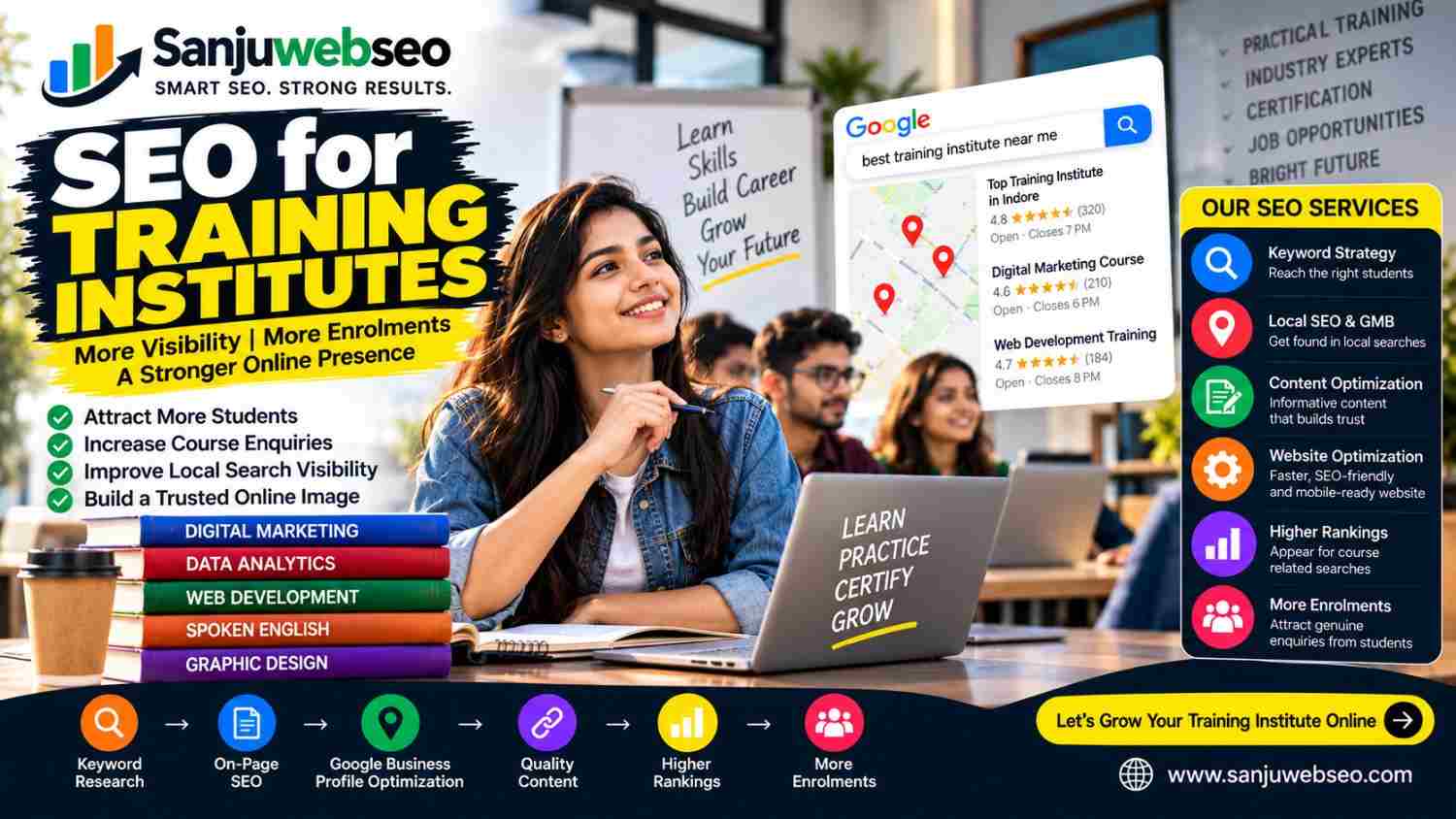
SEO for Training Institutes Should Start With the Skill Students Want to Learn
SEO for Training Institutes should begin with the way learners search for a new skill, certification, or career opportunity. Someone looking for a digital marketing course may not know the institute name. They may search for a course, compare learning formats, check duration, or look for classes near them. Your website should therefore connect course pages with the problems learners are trying to solve. This approach gives search engines clearer context and gives prospective students useful information before they contact your institute.
A strong training institute website should answer practical questions early. What will students learn? Who is the course suitable for? How long does it take? Is the programme online, offline, or hybrid? Does it include projects or practical assignments? Clear answers reduce uncertainty and create a more useful research experience. They also give SEO content a genuine purpose instead of turning every page into a collection of repeated keywords.
Build Individual Course Pages Around Learning Outcomes
A training institute may offer several programmes, but each course deserves its own search-focused page. A page for a Python course should explain the skills covered in that programme rather than placing every technical course on one general services page. The same principle applies to graphic design, spoken English, accounting, coding, digital marketing, data analytics, and vocational training. Each page can target a distinct search intent while giving learners a clear reason to explore further.
Course pages should describe outcomes without making unsupported promises. Explain the modules, practical work, tools, assessments, certification details, class format, expected learning level, and recommended prerequisites. If a programme has beginner and advanced tracks, make the difference clear. This helps students select the right course while allowing search engines to understand the page’s specific subject.
Use SEO for Training Institutes to Explain Who Each Course Is For
Learners often hesitate because they do not know whether a course matches their current knowledge or career stage. SEO for Training Institutes can address this concern by creating useful sections such as “Who Should Take This Course?” or “Prerequisites.” A beginner may need a different programme from a working professional seeking an advanced certification. Students changing careers may also have different questions from those seeking a short-term skill upgrade.
This information makes course pages more helpful and reduces unnecessary enquiries. Instead of saying that a programme is suitable for everyone, explain the expected starting level and what learners should already know. You can also create supporting articles around common learner profiles, such as courses for graduates, working professionals, school leavers, or people moving into a new field.
Make the Curriculum Easy to Understand Before Students Enquire
A curriculum should not read like a collection of technical terms. Prospective students need to understand what those modules mean in practical terms. For example, a web development course can explain how learners move from basic HTML and CSS to JavaScript, responsive design, projects, deployment, and maintenance. A data analytics course can show how concepts connect to spreadsheets, databases, visualization, and reporting.
Organize modules in a logical learning sequence. Where appropriate, explain the approximate time spent on major topics and identify practical components. This helps visitors judge whether the programme matches their expectations. It also creates valuable text that search engines can associate with specific course-related searches.
Show the Faculty Behind the Training
Students do not choose a training institute only because of a course title. They also want to know who will teach them. Create individual faculty or trainer profiles where useful, especially for programmes that depend heavily on practical instruction. Include relevant qualifications, professional experience, areas of specialization, teaching responsibilities, and the subjects they handle.
Avoid turning faculty profiles into exaggerated promotional copy. Specific information is more useful than broad claims. If a trainer has worked with particular technologies, industries, tools, or professional processes, explain that connection accurately. A detailed trainer page can also support searches around a subject while helping prospective students understand the people behind the classroom experience.
Let Students Experience the Teaching Before They Commit
A training programme can be difficult to evaluate from written content alone. This is where demo classes, sample lessons, workshops, webinars, and short educational videos can become valuable parts of an SEO strategy. Create dedicated pages or supporting content around these resources instead of hiding them inside a generic gallery.
For example, an institute offering programming courses could publish a short lesson demonstrating how a basic coding problem is solved. A spoken English institute could provide a sample lesson showing how a communication exercise works. These resources demonstrate teaching style through actual material. They can also attract learners who are still researching before they are ready to enquire.
SEO for Training Institutes Should Clarify Certification and Assessment
Certification is an important search and decision factor for many learners, but course pages should explain exactly what the certificate represents. State whether students receive an institute-issued certificate, a certification connected to an external organization, or a certificate based on completing the institute’s assessment process. Avoid vague language that could make a credential sound more widely recognized than it actually is.
Explain how students are assessed as well. Practical assignments, tests, projects, attendance requirements, presentations, or final assessments may all form part of a programme. Clear information helps prospective students understand what completion involves. It also creates an opportunity to publish useful educational content around certification, assessment methods, and course requirements.
Answer Questions About Class Format, Schedule, and Duration
Training decisions often depend on practical constraints. A learner may want weekend classes because of work commitments. Another may need weekday sessions or an online option. Parents may want to understand the timetable before enrolling a student. These details should be easy to find rather than buried in a contact conversation.
Create clear sections for duration, class frequency, teaching format, batch timings, online availability, offline location, and expected weekly commitment. If schedules change regularly, show the current information and provide a clear process for confirming upcoming batches. Keeping these details accurate is especially important for SEO because outdated course information can create a poor user experience.
Make Fees Useful Without Creating Confusion
Course fees are among the most practical questions learners ask. If the institute publicly displays pricing, make it easy to understand what the fee includes. Mention whether study material, assessments, certification, projects, lab access, or other components are included when applicable.
If pricing depends on batch format, course level, duration, or other factors, explain the structure instead of presenting an unclear starting price. Training institutes can also create useful content around payment options, course duration, and what students should consider when comparing programmes. The goal is not simply to publish a number. It is to help learners understand the value and scope of what they are considering.
Build Career-Focused Content Without Making Guaranteed Claims
Career outcomes matter, especially for professional training. However, course pages should distinguish between what the institute provides and what individual students may achieve. You can discuss practical projects, portfolio development, interview preparation, career guidance, internships, placement assistance, or industry-oriented assignments when those services genuinely exist.
Avoid statements that guarantee a particular salary, job, promotion, or career result unless there is a specific basis and the wording is legally and factually appropriate. Instead, explain the support available to learners. Detailed career resources can also attract searches from people researching what skills are required for a particular role.
Use Local SEO When Students Prefer Classroom Training
Location can strongly influence training decisions. Learners may search for phrases such as “coding classes near me,” “computer training institute in Indore,” or “spoken English classes near me.” A local SEO strategy should therefore connect course information with the actual location of the institute.
Create useful location information on the website, including the complete address, nearby landmarks where appropriate, classroom photographs, directions, parking information, and public transport details if relevant. Individual course pages can mention the location naturally when the course is actually delivered there. This helps visitors determine whether attending classes is practical.
Connect SEO for Training Institutes With Google Business Profile
Google Business Profile can support the local discovery stage for classroom-based training institutes. Keep the profile information accurate, including the institute name, address, phone number, website, operating hours, categories, services, photographs, and relevant updates. Course-related information should also remain consistent between the website and the profile.
Google Business Profile optimization can complement the website strategy by improving the way local learners discover and evaluate the institute. Reviews should reflect genuine student experiences, while photographs can show classrooms, workshops, learning environments, and real institute activities.
Create Content Around the Problems Students Search Before Choosing a Course
Not every prospective student begins with a course name. Some begin with a problem. They may search for how to learn a particular software tool, what skills are needed for a job, whether a certification is useful, or how long it takes to become comfortable with a particular subject. These searches create opportunities for educational content.
Build articles and resources around genuine questions connected to the institute’s programmes. For example, a data analytics institute could publish content about the skills required for entry-level analytics roles. A language institute could explain how learners can improve speaking confidence. These resources should provide real educational value and then guide interested readers toward relevant courses.
Use Student Reviews as Evidence, Not Just Promotional Copy
Reviews can help prospective learners understand what studying at the institute is actually like. Rather than displaying only short testimonials, organize genuine feedback around useful themes such as teaching quality, practical assignments, classroom environment, trainer support, course structure, or learning resources.
Do not manufacture reviews or alter student experiences to make them sound stronger. If students provide specific feedback, preserve the substance accurately. Where permission is available, testimonials can include the student’s course and relevant context. This gives future learners more information than generic statements such as “excellent institute” or “best training center.”
SEO for Training Institutes Needs Fresh Course and Batch Information
Training websites can become outdated quickly. A course may change its curriculum, a batch may close, a trainer may change, or a programme may move from classroom to online delivery. Old information can create confusion for both search visitors and current students.
Create a maintenance process for course pages. Review dates, fees, trainers, schedules, modules, certification information, and admission instructions regularly. Remove outdated batch announcements or clearly archive them when they still have historical value. A current website communicates that the institute actively maintains its academic information.
Create a Student Decision Path From Search to Enrolment
SEO works better when the website supports the complete decision journey. A learner might first discover an educational article, visit a course page, check the curriculum, review the trainer, watch a demo, compare schedules, read reviews, and finally request counselling. Each step should have a logical next action.
Use relevant internal links to connect these stages without overwhelming the reader. A course page might lead to a related career guide, while a career article can introduce the relevant training programme. The structure should feel like a useful learning path rather than a network of promotional links.
Use LinkedIn and Professional Content to Strengthen the Institute’s Digital Presence
Professional visibility can support credibility when it reflects genuine work. Trainers can share educational insights, workshops, student projects, course updates, or industry observations through professional channels. The institute can also publish meaningful updates about seminars, certifications, collaborations, or learning activities.
For an SEO agency supporting training businesses, maintaining a professional presence also demonstrates the people behind the work. You can explore the professional profile of Sanju Web SEO on LinkedIn to understand how professional activity can complement a broader digital presence.
Measure SEO for Training Institutes Through Enquiries and Course Intent
Traffic alone does not show whether an SEO strategy is helping an institute. Track which course pages attract qualified visitors, which search queries lead people to the website, which forms generate enquiries, and which pages contribute to counselling requests. Where possible, separate general information traffic from high-intent course traffic.
For example, a visitor reading an introductory article about programming may still be researching. Someone viewing the curriculum, batch schedule, fee information, and enquiry form has demonstrated a different level of intent. Measuring these stages gives the institute a clearer picture of which content supports actual admissions activity.
Build a Content System That Supports Multiple Training Categories
Training institutes often expand their programmes over time. A strong SEO structure should make that expansion manageable. Each major course can have its own landing page, while supporting articles answer related questions about skills, careers, tools, certifications, learning methods, and industry requirements.
This creates a connected knowledge base instead of dozens of unrelated blog posts. It also allows the institute to develop topical depth around the subjects it genuinely teaches. Over time, the website can become a useful resource for learners who are researching both the skill and the institute.
FAQ’s:-
Q1. How does SEO for Training Institutes help attract course enquiries?
SEO for Training Institutes helps prospective learners discover relevant course pages when they search for training programmes, skills, certifications, or institutes in their area. A useful strategy connects search intent with detailed course information, trainer profiles, curriculum pages, practical resources, and clear enquiry options. The objective is not simply to bring more visitors. It is to attract people whose search matches the programmes the institute actually provides. Well-structured pages can also answer common questions before the learner contacts the institute.
Q2. What should a training institute include on a course page?
A course page should explain the programme’s learning objectives, modules, duration, format, schedule, prerequisites, practical components, assessment method, certification details, and available support. If fees are published, explain what the fee includes. The page should also identify who the course is designed for and what learners should know before starting. Adding trainer information, sample lessons, projects, or genuine student feedback can make the page more useful. Most importantly, the information should remain accurate when batches, curriculum, or pricing changes.
Q3. Can local SEO help an offline training institute?
Yes. Local SEO can help classroom-based institutes appear when learners search for training options in a particular city or nearby area. The website should clearly communicate the institute’s location and the programmes available there. Google Business Profile information should also remain accurate and consistent with the website. Local content can include directions, classroom photographs, nearby landmarks, schedules, and location-specific course information where appropriate. These elements help prospective students determine whether attending the institute is convenient before they submit an enquiry.
Q4. Should every course have a separate page?
A separate page is useful when a course has its own audience, curriculum, learning outcomes, or search intent. For example, a digital marketing course and a data analytics course should generally not compete for space on one generic training page. Dedicated pages allow the institute to explain each programme properly. However, very small variations of the same course may not need separate pages. The website structure should follow meaningful differences between programmes rather than creating pages solely to target slightly different keyword variations.
Q5. How can training institutes use content marketing for SEO?
Training institutes can publish useful educational content based on questions their learners genuinely ask. Topics may include career skills, software tutorials, certification guidance, learning roadmaps, industry requirements, interview preparation, or comparisons between related learning paths. The content should provide useful information rather than repeatedly promoting the institute. Relevant articles can then guide readers toward suitable course pages. This creates a natural relationship between informational searches and commercial course searches while giving the website more topical depth.
Q6. Should SEO content mention job placements?
It can, provided the claims accurately describe the institute’s actual placement or career support. Training institutes can explain services such as interview preparation, portfolio development, placement assistance, internships, employer interactions, or career counselling when those services exist. However, content should avoid presenting employment or salary outcomes as guaranteed unless there is a legitimate and clearly documented basis. Specific descriptions of available support are more informative than broad promises. This also helps prospective students understand what the institute actually provides after or during training.
Q7. How important are trainer profiles for a training institute website?
Trainer profiles can be valuable because prospective students often want to know who will teach them. A useful profile can describe relevant qualifications, professional experience, subject specialization, teaching responsibilities, and the programmes handled by the trainer. Where appropriate, institutes can also include professional achievements, workshops, certifications, or industry experience. The information should remain factual and current. A detailed trainer profile gives learners more context than a generic statement claiming that an institute has experienced faculty.
Q8. What should a training institute include in Google Business Profile?
The profile should accurately represent the institute and include the correct business name, address, phone number, website, hours, category, photographs, and relevant services. Genuine updates and photographs can help prospective learners understand the classroom environment and current activities. Reviews should come from real students or customers and should not be manufactured. The website and Google Business Profile should provide consistent information. If course-related information changes frequently, the institute should make sure outdated details do not remain visible.
Q9. How should a training institute handle course fees online?
If fees are publicly displayed, explain the price clearly and state what is included. If the cost varies by course level, batch type, duration, or delivery format, explain those differences rather than showing a misleading single figure. Institutes that do not publish complete pricing can still explain what factors affect the fee and provide a clear enquiry process. Transparent information helps prospective students compare programmes more effectively and reduces confusion during the counselling stage.
Q10. How can Sanju Web SEO help with SEO for Training Institutes?
Sanju Web SEO can help training institutes develop a search strategy around their courses, locations, learner questions, website structure, content, and Google Business Profile presence. The approach can include keyword research, on-page optimization, technical improvements, content planning, local SEO, and performance tracking. The exact strategy should depend on the institute’s programmes, target audience, competition, locations, and existing website rather than applying the same template to every training business.