
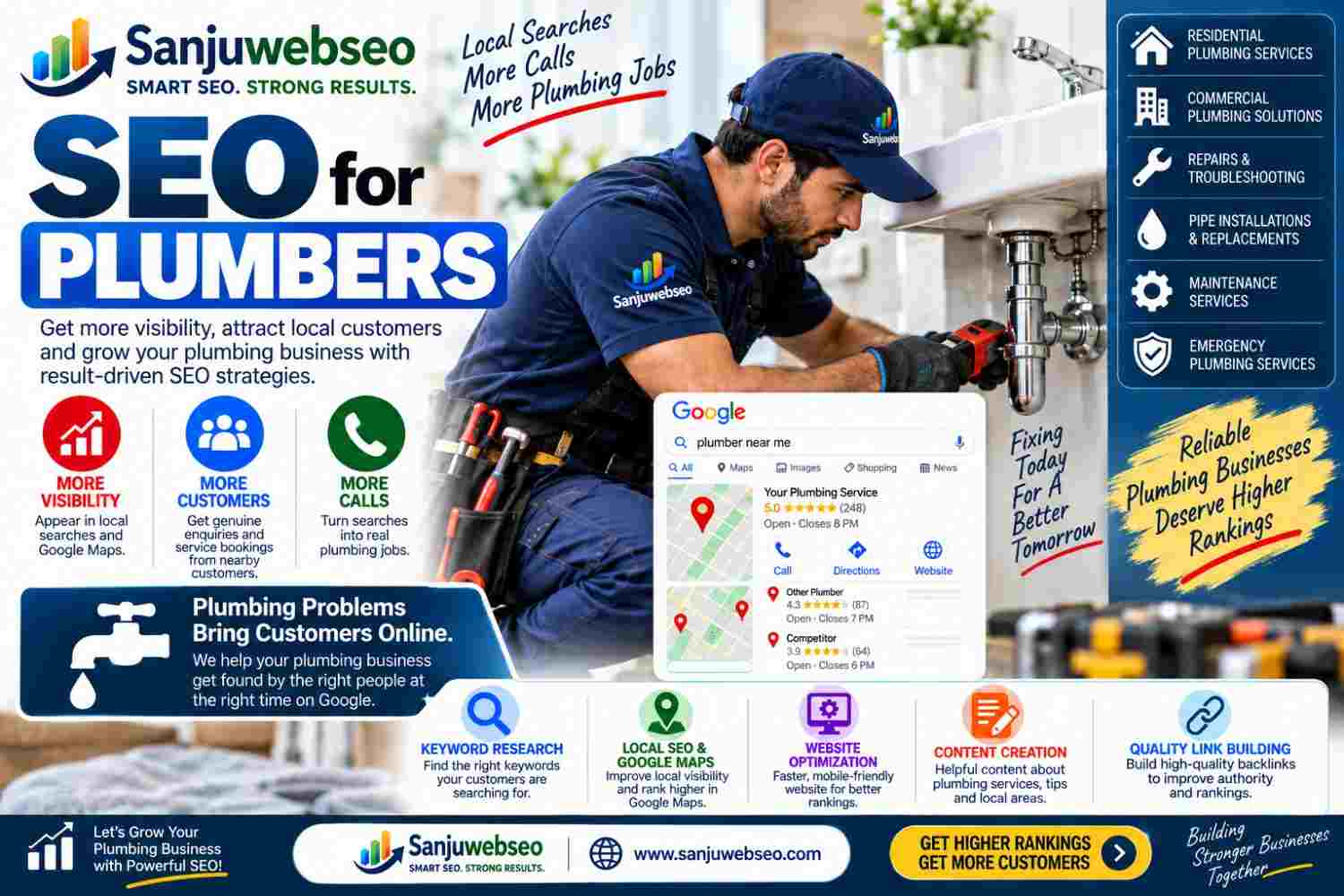
Why SEO for Plumbers Starts With the Customer’s Plumbing Problem
SEO for Plumbers helps plumbing businesses become visible when people urgently need a plumber. A blocked drain, leaking pipe, broken tap, overflowing tank, or water-pressure issue can quickly turn into a Google search. In that moment, customers usually want a nearby professional who can respond quickly and explain the problem clearly. Therefore, plumber SEO should focus on real service situations instead of publishing generic information that does not help someone choose a plumbing professional.
A successful plumbing website should guide visitors from their immediate problem toward the right service and an easy contact option. Someone searching for emergency plumbing may need a different page from a homeowner planning bathroom plumbing installation. Similarly, a commercial property manager may look for maintenance support rather than a one-time repair. A structured SEO strategy for local businesses can help organize these different search journeys around useful pages and clear customer actions.
Turn Plumbing Problems Into Search Opportunities
Customers rarely begin with the phrase “I need SEO for plumbers.” They search for the problem they are experiencing. Queries such as “water leaking from pipe,” “blocked bathroom drain,” “plumber near me,” or “emergency plumber” reflect immediate needs. Your website should therefore address these situations directly. Service content can explain what the problem may involve, when professional assistance is required, and which plumbing service can address it without encouraging unsafe repairs.
Problem-focused content also gives search engines stronger context about your business. Instead of one large plumbing services page, you can create useful sections around drain cleaning, pipe leakage, water heater issues, bathroom plumbing, kitchen plumbing, installation, maintenance, and emergency repairs. A detailed website SEO audit can help identify whether your existing pages clearly match these different search intents.
Build Separate Pages for Different Plumbing Services
A customer searching for drain cleaning has a different requirement from someone looking for complete plumbing installation. Combining every service into one page can make it harder for visitors to find the exact information they need. A plumber website can instead create dedicated pages for emergency plumbing, leak repair, drain cleaning, pipe replacement, bathroom plumbing, water tank services, fixture installation, and preventive maintenance.
Each service page should explain the problem, service process, suitable situations, expected customer experience, and contact method. This approach also creates more opportunities to target specific search phrases naturally. For example, a drain-cleaning page can focus on blocked drains while an emergency plumbing page can address urgent response needs. A broader SEO and digital marketing strategy can connect these pages into one organized search structure.
Make Emergency Plumbing Searches Easy to Act On
Plumbing problems often create urgency. A leaking pipe can damage walls or flooring, while a blocked drain can affect an entire household. When someone searches for an emergency plumber, they usually do not want to read a long company history before finding a phone number. The website should make important information immediately visible. Service availability, service area, contact options, and emergency response information should be easy to locate.
Mobile usability becomes particularly important in emergencies. A visitor may search while dealing with an active leak or water problem. Therefore, buttons for calling or sending an enquiry should be easy to use on a phone. Clear service information also reduces unnecessary hesitation. A professional website performance and SEO audit can identify mobile, speed, navigation, and conversion issues that may interfere with urgent enquiries.
Target “Plumber Near Me” and Local Search Intent
Local visibility is central to plumbing SEO because customers generally want someone who can actually reach their property. Searches such as “plumber near me,” “plumber in [city],” and “emergency plumber near me” show strong local intent. Your website should clearly communicate the areas you serve rather than simply repeating a city name throughout every paragraph. Genuine service-area information gives visitors useful context.
Location pages can also help when a plumbing company genuinely serves multiple areas. Each page should contain useful local information, relevant services, service limitations where applicable, and clear contact options. Avoid creating dozens of nearly identical location pages with only the city name changed. A stronger local SEO approach focuses on genuine geographic relevance and useful information for customers.
Connect Plumbing SEO With Google Business Profile
For many plumbers, Google Business Profile can become an important part of local discovery. Customers can see business information, service details, reviews, photos, directions, and contact options directly within Google’s local results. Therefore, the website and Business Profile should communicate consistent business information. Service categories, operating hours, service areas, website content, and customer-facing details should remain accurate.
Regular profile activity can also support a stronger local presence. Genuine photographs of completed plumbing work, tools, team members, installations, and service situations can help customers understand what the business does. Reviews can provide additional evidence of customer experience. Businesses looking to strengthen this area can explore Google Business Profile optimization as part of their broader local search strategy.
Show Plumbing Expertise Through Useful Service Content
Plumbing customers often have practical questions before they contact a professional. They may want to understand why a pipe keeps leaking, what causes low water pressure, why a drain blocks repeatedly, or when a water heater needs professional attention. Helpful content can answer these questions while making it clear when professional inspection is appropriate. This creates useful information without turning the website into a collection of generic SEO articles.
Expertise becomes stronger when content reflects real plumbing situations. For example, a guide about recurring drain blockage can discuss possible causes, warning signs, professional inspection, and preventive maintenance. Similarly, content about pipe leakage can explain visible symptoms and the importance of timely professional assessment. Modern AI SEO principles can support content planning, but the final information should remain accurate, useful, and relevant to real customers.
Build Trust Before Asking for the Booking
A plumbing customer is allowing someone into their home, office, shop, or commercial property. Trust therefore matters before the booking happens. Your website should make it easy to understand who provides the service, what types of plumbing work are handled, which areas are covered, and how customers can get in touch. Clear information reduces uncertainty and gives visitors more confidence.
Trust can also come from genuine evidence. Photos of actual projects, professional team information, service explanations, customer reviews, business details, and transparent communication all contribute to a stronger online presence. The goal is not to make unrealistic claims. Instead, the website should help customers understand what they can reasonably expect. A structured digital marketing strategy can bring these trust signals together across search and customer touchpoints.
Explain Plumbing Estimates Clearly
Pricing is one of the biggest questions customers have before booking a plumber. However, many plumbing jobs cannot be priced accurately without understanding the problem. A leaking tap may require a simple repair, while hidden pipe damage may require inspection and replacement. Instead of displaying misleading fixed prices, plumbing websites can explain what factors influence the final estimate.
Useful pricing content can discuss service complexity, parts or fixtures, accessibility, emergency requirements, replacement work, and inspection needs. This approach helps customers understand why quotes may differ between jobs. It also prevents the website from creating expectations that the plumber cannot meet. A professional SEO audit can help identify whether pricing information, service descriptions, and enquiry pathways are clear enough for potential customers.
Create Content for Residential Plumbing Needs
Residential plumbing searches cover many situations. Homeowners may need bathroom plumbing, kitchen plumbing, pipe repair, drain cleaning, water tank work, fixture installation, or emergency assistance. Each situation has different concerns. Someone dealing with a leaking kitchen pipe may want quick repair information, while a homeowner renovating a bathroom may need installation and planning guidance.
Residential content should therefore reflect how homeowners actually make decisions. Explain common problems, relevant services, important considerations, and when professional assistance is appropriate. Images and project examples can make the information easier to understand. Content should also avoid presenting risky plumbing work as a simple DIY task. A well-planned content and SEO strategy can organize these residential topics into useful search-focused pages.
Build Commercial Plumbing Search Visibility
Commercial plumbing customers have different requirements from homeowners. Offices, restaurants, hotels, schools, warehouses, hospitals, and commercial buildings may need planned maintenance, larger installations, recurring inspections, drainage solutions, or rapid repair support. Decision-makers may also need information about service response, documentation, project scope, and ongoing maintenance.
A commercial plumbing section can address these requirements directly. Instead of simply saying “we provide commercial plumbing,” explain the types of properties served and the kinds of plumbing requirements handled. This makes the website more relevant to business searches. Creating separate commercial content also prevents residential pages from becoming overloaded with unrelated information. A broader business-focused SEO approach can help structure this information around specific audiences and search intent.
Capture Plumbing Installation Searches
Not every plumbing customer has an emergency. Some visitors are planning a new bathroom, kitchen renovation, property construction, fixture replacement, water system installation, or other improvement project. These customers may search weeks or months before contacting a plumber. Their journey involves research, planning, comparison, and eventually an enquiry.
Installation-focused pages should therefore explain the scope of work and what customers should consider before starting. Content can cover fixture selection, pipe planning, water supply requirements, drainage considerations, and coordination with other construction work. The objective is to answer useful planning questions and create a natural path toward consultation. An AI-powered SEO approach can help identify related search questions without replacing professional plumbing knowledge.
Strengthen Location Pages Without Creating Duplicate Content
A plumber serving several cities or neighbourhoods may want to create location-specific pages. However, simply changing the location name while keeping the rest of the page identical can create weak content. Each location page should explain genuine service coverage and include information that is relevant to customers in that area.
Local pages can mention the plumbing services actually available, the type of properties commonly served, nearby service areas where appropriate, and clear contact information. Local references should feel natural rather than inserted only for rankings. This approach gives each page a real purpose. Businesses can also study broader local search optimization practices when developing a scalable location strategy.
Use Reviews to Answer Real Plumbing Concerns
Reviews can help potential customers understand what previous customers experienced. For plumbing businesses, useful reviews may mention response time, communication, workmanship, cleanliness, problem resolution, installation quality, or professionalism. These details are often more meaningful than a generic statement saying that the service was “good.”
Businesses should encourage genuine customers to share their own experiences without scripting or fabricating feedback. Reviews should also be monitored so legitimate questions or concerns receive appropriate responses. The website can display selected genuine testimonials where appropriate, while the Google Business Profile remains another important place for customer feedback. Strong Google Business Profile support can help maintain accurate local information around these customer interactions.
Make Internal Linking Useful for Plumbing Customers
Internal links should help visitors move naturally from one question to another. For example, a visitor reading about water leakage could move to a pipe repair service page. Someone reading about bathroom plumbing could explore installation services. A customer reading a maintenance guide could reach a booking page. This creates a logical journey rather than placing random links throughout the article.
The same principle applies to SEO content. Service pages, location pages, guides, contact pages, and business information should support one another. Search engines can also better understand relationships between related topics when the site structure is organized logically. A broader SEO website strategy can help create this connected structure without turning internal linking into keyword stuffing.
Prepare Plumbing Content for Conversational Search
People increasingly ask complete questions rather than typing only short keywords. A customer might ask, “Who can fix a leaking water pipe near me?” or “How do I find an emergency plumber for a blocked drain?” Plumbing websites should answer these questions clearly and directly. Short explanations, useful headings, structured information, and detailed service pages can make content easier to understand.
Conversational search also rewards clarity. Avoid writing complicated paragraphs simply to include more keywords. Instead, answer the question first and then provide supporting information. This approach can make content useful across traditional search and newer AI-assisted discovery experiences. Understanding AI SEO and modern search can help businesses prepare their content for these changing search behaviours.
Improve Technical SEO for Plumber Websites
A plumbing website can have excellent content and still struggle if important technical problems make it difficult to crawl, understand, or use. Technical SEO includes areas such as page speed, mobile usability, indexing, site structure, broken links, metadata, image optimization, redirects, and other website performance factors.
Technical improvements should support customers as well as search engines. A fast mobile page is useful when someone urgently needs a plumber. Clear navigation helps visitors reach service information quickly. Proper indexing ensures important pages can be discovered. A detailed SEO and performance audit can help identify technical issues that may otherwise remain hidden.
Track Plumbing SEO Through Real Customer Actions
Rankings alone do not explain whether SEO is producing useful business activity. A plumbing business should also monitor calls, contact-form submissions, booking enquiries, direction requests, service-page engagement, and local search interactions. These metrics provide a more practical view of whether website traffic is turning into potential business.
Different pages may generate different types of enquiries. Emergency plumbing pages may encourage calls, while installation guides may produce longer consultation enquiries. Therefore, measurement should consider the customer journey rather than one single ranking position. A broader digital marketing and SEO process can connect search performance with meaningful business actions.
Keep Plumbing Information Accurate and Current
Plumbing websites should regularly review their service information. Business hours, service areas, contact details, emergency availability, offered services, team information, and pricing explanations can change over time. Outdated information can create confusion and may cause customers to contact a business for a service it no longer provides.
Content should also be updated when customer questions change. New fixtures, water-saving technologies, plumbing systems, regulations, or service practices may create new information needs. Regular review helps maintain useful content rather than allowing old articles to remain untouched for years. A professional SEO review and audit can identify pages that need technical, content, or structural improvement.
Why Choose Sanju Web SEO for Plumber SEO?
SEO for Plumbers
Sanju Web SEO approaches plumber SEO around the actual customer journey instead of treating every service business the same way. Plumbing customers may arrive through emergency searches, local queries, service-specific pages, installation research, or maintenance information. Therefore, the strategy should connect search intent, helpful content, local visibility, website usability, Google Business Profile optimization, and conversion opportunities. This helps create a connected search presence around the services customers actually need.
The process can begin with website analysis, keyword research, technical improvements, service-page optimization, local SEO, content development, and ongoing performance monitoring. AI-assisted SEO can also support search-intent research and content planning while keeping human review important for accuracy and usefulness. Businesses can also explore Sanju Web SEO on LinkedIn to learn more about the company’s SEO approach, industry insights, and digital marketing work.
FAQ’s: SEO for Plumbers
Q1. How does SEO for Plumbers help a plumbing business?
SEO for Plumbers helps a plumbing business reach people who are actively searching for plumbing services online. Customers may search for an emergency plumber, leaking pipe repair, blocked drain cleaning, bathroom plumbing, or a plumber near their location. A well-planned SEO strategy helps the right service pages appear for these searches. It also improves website structure, local visibility, content quality, and conversion paths so visitors can quickly understand the service and contact the business when they need professional assistance.
Q2. Why is SEO for Plumbers important for local plumbing businesses?
SEO for Plumbers is particularly important for local plumbing businesses because most customers need a professional who can serve their specific area. Searches such as “plumber near me,” “emergency plumber in [city],” and “pipe repair near me” show strong local intent. A local SEO strategy can improve visibility through service-area pages, location-focused content, Google Business Profile optimization, genuine reviews, and consistent business information. However, location content should represent areas the plumber genuinely serves rather than creating multiple pages with almost identical information.
Q3. What keywords should a plumber target with SEO?
A plumber should target keywords that reflect actual customer problems, services, urgency, and locations. These can include terms such as emergency plumber, plumber near me, leaking pipe repair, drain cleaning service, blocked drain plumber, bathroom plumbing service, kitchen plumbing, water tank repair, plumbing installation, and plumber in [city]. SEO for Plumbers should not depend only on high-volume keywords. Search intent is equally important because someone looking for emergency repair has a different requirement from someone researching plumbing installation for a new property.
Q4. Can SEO for Plumbers help emergency plumbing services?
Yes, SEO for Plumbers can help emergency plumbing businesses reach customers searching during urgent situations. When a pipe bursts, drain overflows, or serious leakage occurs, people often want quick assistance rather than lengthy information. An emergency plumbing page should clearly explain the types of problems handled, service areas, availability, and contact options. The page should also work well on mobile devices because many urgent searches happen from smartphones. Clear information and an easy call or enquiry option can help turn relevant search traffic into genuine service requests.
Q5. Should plumbers create separate SEO pages for different services?
Yes, separate service pages can be useful when a plumbing business provides several distinct services. Drain cleaning, pipe leakage repair, bathroom plumbing, kitchen plumbing, water heater services, plumbing installation, and emergency repairs can have different customer requirements and search intent. Dedicated pages allow each service to explain its process, common problems, suitable situations, and contact options clearly. However, SEO for Plumbers should avoid creating thin pages that only change the service name. Every page should provide genuinely useful information and have a clear purpose for the customer.
Q6. How can Google Business Profile support SEO for Plumbers?
Google Business Profile can play an important role in local SEO for plumbers because customers can discover business information directly through Google Search and Maps. A well-maintained profile can provide the business name, phone number, operating hours, website, photos, reviews, and other relevant information. For SEO for Plumbers, this local presence should match the information available on the website. Genuine customer reviews and regularly updated business details can also help potential customers understand the business before they decide to call or request a service.
Q7. Does a plumbing website need a blog for SEO?
A plumbing website does not need a blog simply to publish articles regularly. The content should answer questions that potential customers actually have and support important plumbing services. Useful topics can include reasons for recurring drain blockages, warning signs of pipe leakage, plumbing maintenance, water-pressure problems, bathroom renovation plumbing, fixture installation, and emergency plumbing situations. SEO for Plumbers becomes more useful when informational content connects naturally with relevant service pages. This allows someone researching a plumbing problem to move from helpful information toward an appropriate professional service.
Q8. How long does SEO for Plumbers take to show results?
The time required for SEO for Plumbers can vary depending on the website’s existing condition, competition, location, content quality, technical setup, local visibility, and website authority. A newly launched plumbing website may require more time to establish search visibility than an established business with existing online signals. Results should therefore be evaluated through several measurements, including search impressions, relevant organic traffic, local visibility, calls, enquiries, and conversions. SEO is an ongoing process, so consistent optimization and useful content are generally more meaningful than expecting immediate results from a few changes.
Q9. Can AI SEO help a plumbing business?
AI SEO can support a plumbing business with tasks such as keyword research, search-intent analysis, topic discovery, content planning, competitor research, and identifying questions customers may ask. However, AI should support the SEO process rather than replace professional plumbing knowledge. Service information must remain accurate, practical, and safe for customers. An effective SEO for Plumbers strategy can combine AI-assisted research with human-reviewed content, technical SEO, local optimization, service pages, Google Business Profile management, and conversion-focused website improvements. This creates a more useful search experience than publishing large amounts of generic AI-generated content.
Q10. Why choose Sanju Web SEO for SEO for Plumbers?
Sanju Web SEO can create an SEO for Plumbers strategy based on the actual services, customer problems, locations, and business goals of a plumbing company. The approach can include keyword research, service-page optimization, technical SEO, local SEO, Google Business Profile optimization, useful content, internal linking, and ongoing performance analysis. Instead of using the same strategy for every service business, the website structure and content can be aligned with how plumbing customers search and make decisions. For more information, visit Sanju Web SEO or call +91 9302110432.