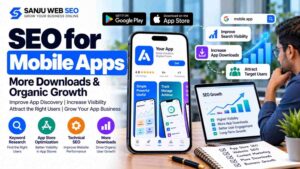

SEO for IT Companies Should Start With the Problems Businesses Need to Solve
SEO for IT Companies should help businesses discover the right technology partner when they are researching software, IT services, infrastructure, cybersecurity, or digital transformation. Unlike many consumer purchases, B2B technology decisions often involve several stakeholders, detailed technical questions, budget discussions, and a longer evaluation process. A potential client may visit your website multiple times before requesting a consultation or sharing a project requirement.
Therefore, an effective IT company SEO strategy needs more than a homepage with a list of services. It should connect service pages, technical resources, industry-specific solutions, case studies, and clear enquiry paths. Each page should answer a genuine question that a prospective client might ask before choosing an IT provider.
Understand How Clients Search for IT Services
Business buyers rarely use one search phrase throughout their decision-making process. A startup might search for a software development company, while an established organisation may look for cloud migration, enterprise application development, managed IT support, or cybersecurity consulting. These searches represent different business requirements and should lead to relevant pages.
Keyword research should identify the services your company actually delivers, the problems your customers face, and the terminology they use. Group closely related searches when they share the same intent. However, create separate pages when the services require different expertise, deliverables, or buying decisions. This makes the website more relevant to potential clients and gives each important URL a clear purpose.
Build Service Pages Around Actual IT Capabilities
A service page should explain what your IT company does, which problems it solves, and how clients can engage your team. Broad descriptions such as “innovative technology solutions” rarely provide enough information for a decision-maker evaluating providers.
Instead, explain the service scope, implementation approach, deliverables, technologies used where relevant, and the types of organisations that may benefit. A company offering cloud consulting should explain its actual cloud capabilities rather than relying on generic software development language. Similarly, managed IT support deserves its own clear explanation of coverage, response processes, and ongoing responsibilities.
Use SEO for IT Companies to Target Specific Technology Services
Technology buyers often search for a particular capability rather than a general IT provider. Searches may involve custom software development, mobile applications, API integration, cloud infrastructure, data engineering, cybersecurity, or enterprise system implementation.
Dedicated service pages can address these requirements in meaningful detail. Each page should explain the business problem, the available approach, important considerations, and the expected scope of engagement. Avoid creating separate pages for every minor keyword variation when the underlying service is identical. A smaller set of comprehensive, relevant pages is often more useful than a large collection of repetitive URLs.
Explain Your Technology Stack Without Overloading the Reader
Technical decision-makers may want to know whether your team works with specific programming languages, frameworks, cloud platforms, databases, or enterprise systems. These details can help them determine whether your company has the capabilities required for their project.
However, simply listing dozens of technologies does not establish expertise. Explain how particular technologies fit into the solutions you deliver, and mention only tools your team genuinely uses or supports. Where appropriate, connect technology pages to relevant service pages and project examples. This gives technical buyers useful context without turning the website into an unstructured list of keywords.
Create Industry-Specific Pages for Relevant IT Solutions
Different industries face different operational and technical challenges. A healthcare organisation may require secure systems and reliable integrations, while a logistics business may need tracking platforms, workflow automation, or data visibility. Financial services, manufacturing, retail, and education can have their own technology requirements.
Industry-specific pages can address these differences when your company has relevant experience and a genuine service offering for that sector. Explain the operational challenges, applicable solutions, and implementation considerations. Avoid publishing dozens of pages that merely replace one industry name with another. Each page should provide enough distinct information to justify its existence.
Use Case Studies to Demonstrate Real Project Experience
Prospective clients want evidence that an IT provider can deliver the work it describes. Case studies can demonstrate how a company approached a genuine technical challenge, managed implementation, and addressed the client’s requirements.
A useful case study explains the initial problem, the scope of work, the solution, important constraints, and the outcome. Quantitative results should appear only when they can be substantiated. If a project involved confidential information, obtain permission before publishing identifying details and remove sensitive information when necessary. Honest project evidence is more persuasive than unsupported claims about guaranteed results.
SEO for IT Companies Must Address Security and Reliability
Security, reliability, and data handling can influence the choice of an IT provider, especially when a project involves business-critical systems. Potential clients may want to understand your security practices, maintenance responsibilities, backup approach, access controls, or incident response procedures.
Publish information that accurately reflects your company’s capabilities and policies. Certifications should be named only when the organisation genuinely holds them, and compliance claims should match the applicable scope. Clear explanations help prospective clients evaluate your approach without creating misleading expectations. They also allow searchers to find answers to important technical and operational questions before contacting your team.
How SEO for IT Companies Makes Technical Content Useful to Business Decision-Makers
IT buyers do not all have the same technical knowledge. A CTO may want implementation details, while a business owner may need to understand costs, operational impact, project risks, and expected outcomes. Content should accommodate both audiences without oversimplifying important technical issues.
Create resources that explain complex subjects in accessible language. For example, an article about cloud migration can discuss planning, dependencies, downtime considerations, and ongoing management. A guide to software integration can explain how systems exchange data and why compatibility matters. These resources can support informational searches while helping potential clients understand the value and scope of your services.
Improve SEO for IT Companies With Clear Project Enquiry Paths
A potential client should not have to guess what to do after reading a service page. Clear calls to action can invite visitors to discuss a project, request a consultation, share technical requirements, or ask for a proposal.
The enquiry process should request useful information without creating unnecessary friction. Depending on the service, this might include project objectives, existing systems, preferred technologies, expected timelines, or support requirements. A well-designed form helps the sales team understand the opportunity while allowing the prospect to explain their needs. Avoid promising instant quotations when a meaningful estimate requires technical discovery.
Build Trust With SEO for IT Companies Through Company Information and Expert Profiles
B2B technology buyers often evaluate the people behind a service as carefully as the service itself. Company history, leadership profiles, relevant experience, team responsibilities, and communication practices can help establish credibility.
A detailed About Us page can explain your organisation’s background and approach. Team profiles should describe genuine expertise and responsibilities rather than using generic claims. Where possible, connect expert profiles to relevant articles, technical resources, or projects. This creates a more coherent picture of the people responsible for delivering the work.
Connect SEO for IT Companies With Local Search When Relevant
Some IT companies primarily serve international clients, while others depend on local businesses and regional contracts. Your SEO strategy should reflect the markets you genuinely serve rather than targeting every city without a clear commercial reason.
For companies with an eligible local business presence, an accurate Google Business Profile can support branded and location-based discovery. Business details should remain consistent across the website and profile. Google’s official Business Profile resource explains how businesses can manage their presence on Google Search and Maps. Local landing pages should be created only when they offer relevant service information for that market.
Use Internal Linking to Connect Services and Expertise
Internal links help visitors move from a general service description to more detailed information. A software development page might link to relevant case studies, technology explanations, or integration services. Similarly, a cloud consulting page can connect readers with migration resources and managed support information.
This structure also helps search engines discover the relationships between important pages. Choose descriptive anchor text that fits the surrounding sentence naturally. For broader digital growth planning, IT businesses can explore digital marketing services to understand how organic search can work alongside other acquisition channels.
Strengthen Technical SEO for IT Company Websites
An IT company website should demonstrate the same attention to detail that clients expect from its technology services. Broken links, inaccessible pages, confusing navigation, slow loading, duplicate URLs, and incorrect indexing settings can weaken the site’s overall performance.
Technical checks should cover crawlability, indexing, canonical URLs, XML sitemaps, mobile usability, redirects, page speed, and structured data where appropriate. Important service pages should be reachable through logical navigation and internal links. After significant website changes, review the affected URLs and monitor search performance to identify any technical problems.
How SEO for IT Companies Improves Website Speed and Mobile Usability
Decision-makers may research potential providers on desktop computers, laptops, tablets, or mobile devices. The website should remain readable and functional across these environments. Slow loading, crowded layouts, difficult forms, and intrusive elements can interrupt the research process.
Optimise images, reduce unnecessary scripts, review caching, and test important templates on different screen sizes. Service pages, case studies, and contact forms deserve particular attention because they often influence commercial enquiries. Performance improvements should be measured rather than assumed, especially after technical changes.
Publish IT Content That Supports the Buying Process
A sustainable content strategy should answer questions that appear at different stages of B2B research. Early-stage visitors may need an explanation of a technology, while later-stage buyers may compare providers, implementation approaches, or service scopes.
The following table connects search intent with useful content types.
| Search Intent | Recommended Content | Purpose |
|---|---|---|
| General IT service search | Dedicated service page | Explain capabilities |
| Specific technology query | Technology resource | Clarify technical relevance |
| Industry-related search | Industry solution page | Address sector requirements |
| Provider comparison | Comparison or evaluation guide | Support vendor selection |
| Project feasibility question | Technical guide | Explain implementation considerations |
| Proof of experience | Case study | Demonstrate actual project work |
| Security-related question | Security or process page | Explain verified practices |
| Support-related search | Managed support page | Clarify ongoing services |
| Budget-related research | Pricing approach or project guide | Explain cost factors |
| Ready-to-hire search | Contact or consultation page | Generate qualified enquiries |
This content map gives each page a clear role and reduces the risk of publishing multiple articles that answer the same question. It also helps the marketing and sales teams identify the information prospective clients need before they request a proposal.
Measure SEO for IT Companies Through Qualified Leads
Ranking improvements matter, but an IT company should also evaluate whether organic search attracts suitable business opportunities. A large increase in traffic may have limited value if the visitors need services your company does not provide.
Track organic impressions, clicks, service-page performance, enquiry submissions, and qualified leads where reliable measurement is available. Search Console can reveal the queries that bring visitors to the website, while analytics and CRM data can help connect enquiries with business outcomes. Use these findings to improve pages that attract the right audience and reconsider content that generates irrelevant traffic.
Keep Service Information Accurate as Your Business Evolves
IT companies frequently introduce new capabilities, update technology stacks, change service packages, and refine their target industries. Website content should reflect these changes rather than continuing to promote outdated offerings.
Review important service pages, team profiles, case studies, technical resources, and contact details regularly. Remove unsupported claims and update information when the actual service scope changes. A content review should improve accuracy and usefulness, not simply refresh publication dates. Consistent maintenance helps prospects understand what your company can currently deliver.
Build Long-Term Authority Through Professional Knowledge
Technology buyers often research a provider well before making contact. Helpful technical articles, thoughtful explanations, project insights, and accurate service information can keep your company useful throughout that evaluation process.
Professional activity can also support brand discovery beyond your website. IT leaders and technical specialists can share relevant insights through Sanju Web SEO on LinkedIn. For your own IT company, use the appropriate company or professional LinkedIn profile to share original expertise, explain technical developments, and direct interested readers to relevant website resources. External visibility should reinforce the website’s expertise rather than replace it.
CTA: Turn IT Service Searches Into Business Opportunities
An effective SEO strategy for an IT company should connect technical expertise with the questions prospective clients ask before choosing a provider. Clear service pages, credible case studies, useful technical content, sound website performance, and straightforward enquiry paths can work together to attract more relevant opportunities.
If your website is attracting visitors but not enough qualified enquiries, the issue may involve search intent, service-page structure, technical performance, or the way your expertise is presented. Contact Sanju Web SEO at +91 9302110432 to discuss your SEO requirements and develop a strategy focused on sustainable visibility and relevant business leads.
FAQ’s:-
Q1. What is SEO for IT Companies?
SEO for IT Companies is the process of improving an IT business’s website so potential clients can discover its services, technical expertise, and relevant resources through search engines. It includes keyword research, service-page optimisation, technical SEO, internal linking, content development, and performance measurement. The goal is to attract relevant business prospects and help them understand the company’s capabilities before making contact.
Q2. Which keywords should an IT company target?
An IT company should target keywords related to its actual services, technologies, target industries, and customer problems. Examples may include software development, cloud consulting, managed IT services, cybersecurity, or system integration. The best targets depend on the company’s capabilities and market. Keyword research should also distinguish between informational searches and searches that indicate a potential need to hire a provider.
Q3. Why do IT companies need separate service pages?
Separate service pages help explain different capabilities, deliverables, technical requirements, and customer needs. A visitor researching cloud migration expects different information from someone looking for mobile application development. Dedicated pages can answer those questions more precisely, provided each page offers distinct value rather than repeating the same content with minor keyword changes.
Q4. How can case studies support IT company SEO?
Case studies provide evidence of actual project experience and help potential clients understand how a company approaches technical challenges. Useful examples explain the problem, scope, solution, and substantiated results. They can also support internal linking from service pages and demonstrate expertise to prospective customers. Confidential information should be protected, and results should never be invented.
Q5. Does technical SEO matter for an IT company website?
Yes. Technical SEO helps search engines crawl, understand, and index important pages. An IT company should review page speed, mobile usability, internal links, redirects, canonical URLs, XML sitemaps, and indexing settings. Technical problems can prevent valuable service pages from performing as intended, regardless of the quality of the written content.
Q6. How can an IT company attract more qualified leads through SEO?
Qualified leads are more likely when the website targets relevant service searches and clearly explains the company’s capabilities. Detailed service pages, industry-specific solutions, credible case studies, technical resources, and clear enquiry forms can help attract and qualify prospects. Performance should be assessed through relevant enquiries and business opportunities, not website traffic alone.
Q7. How long does SEO take to show results for an IT company?
The timeline depends on competition, website condition, existing authority, content quality, target keywords, and implementation consistency. Some improvements may become visible sooner, while competitive service terms can require sustained work. No responsible SEO provider can guarantee a particular ranking or lead volume by a fixed date. Progress should be evaluated through measurable visibility and enquiry trends.
Q8. Should an IT company publish technical blogs?
Technical blogs can help answer questions that potential clients research before selecting a provider. Useful subjects include implementation challenges, software integration, cloud migration, security considerations, and technology comparisons. Articles should provide accurate information and connect naturally to relevant services. Publishing content simply to increase word count is less useful than answering real customer questions.
Q9. How should an IT company measure SEO performance?
An IT company should monitor organic impressions, clicks, target keyword movement, service-page engagement, indexed URLs, enquiry submissions, and qualified leads where tracking is available. Search Console can show which queries attract visitors, while analytics and CRM records can help evaluate commercial outcomes. These measurements make it easier to identify opportunities and prioritise improvements.
Q10. How can Sanju Web SEO help an IT company?
Sanju Web SEO can support IT companies with keyword research, service-page optimisation, technical SEO, content planning, internal linking, and organic performance analysis. The strategy should reflect the company’s real capabilities and target customers. Its purpose is to improve relevant search visibility and create a clearer path from search discovery to qualified business enquiries.